🥪 #276 - Making a run for it

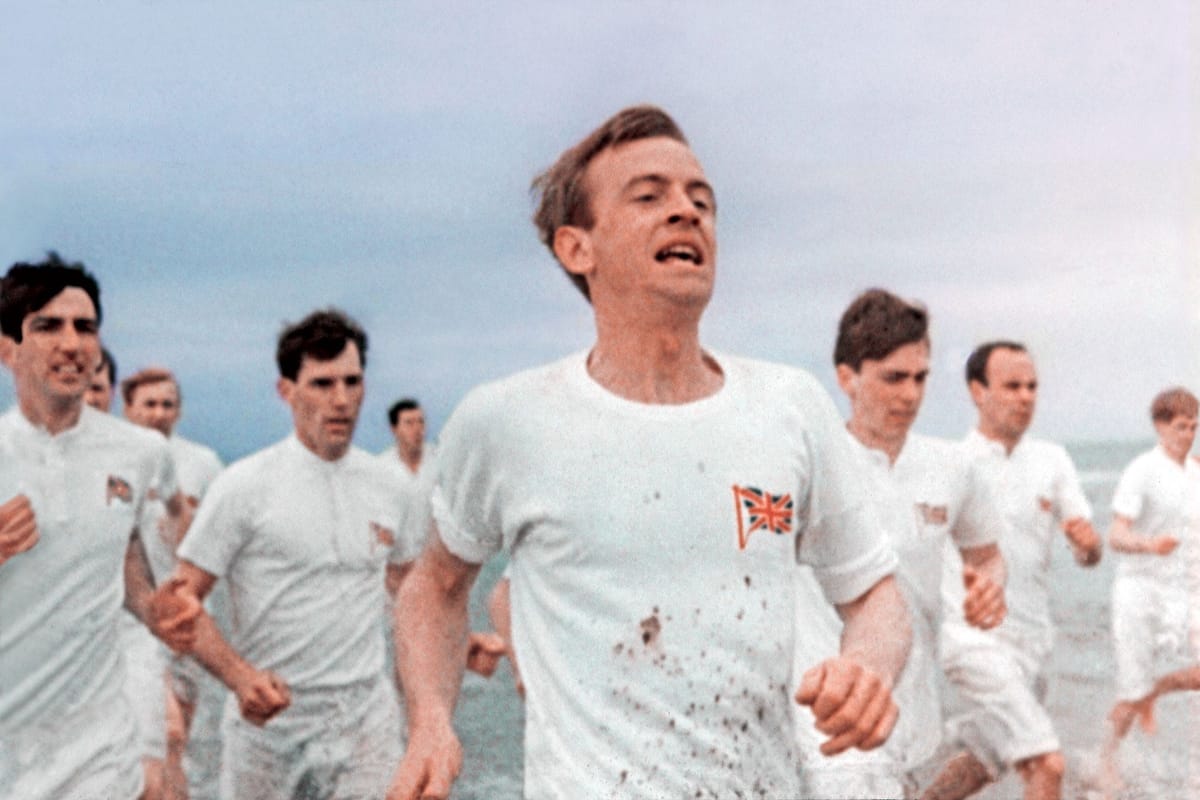
Earlier this week we did a close reading of the sequence in Ted Lasso where Roy Kent quits his TV job and rushes back to Nelson Road to give coaching a chance. Let's pull back a little bit to talk about the overall impact of a climactic run in a story, and about why running and filmmaking go together like bacon and eggs.
Via Nerdwriter, we get a video essay on how the rush toward love in romantic comedies is also about barreling towards meaning. The argument pivots on the idea that in a world where humans are responsible for giving meaning to their actions, finding romantic love is one relatable way people solidify their identity and cultivate purpose.
We see it so often because it feels relatable. It conveys a desire in clean, visually dynamic terms.
Irek Szndala draws connections from the photography of Eadweard Muybridge capturing horses at full gallop to Trainspotting and Forrest Gump to celebrate the ways cinematography and running complement each other. Diego Tobias gets into endocannabinoids, dopamine, and emotional clarity when talking about the benefits of running. While audiences aren’t running themselves, there is a strong empathetic connection between the physical act of running, expressed by Tobias as:
Because in the simplest, purest way—running reminds you of who you are, and who you're still becoming.
Running grounds the self, and in a story its physicality connects the progression of a character's identity with literal forward momentum.
Aimee Ferrier points out how Antoine Doinel’s lonely run toward the sea at the end of The 400 Blows celebrates the freedom of movement, but also ends on an ambivalent note. What happens when a character runs out of land to run across?
Going back to the Nerdwriter video, isn't the big ecstatic run a cliché? Does it feel a little sweaty to put it into what you're writing?
Just because it's been done before doesn't mean it can't be worth doing again. Take as an example two clips, one referencing the other, showing a character running and dancing to David Bowie's "Modern Love."
First is Mauvais Sang where the dance takes place in dark empty streets, giving the moment a staged, surreal feeling.
Contrast that with Frances Ha, where our protagonist improvises a joyous set of steps while weaving through pedestrians and traffic.
This isn't repetition—it's rhyme. Frances Ha is deliberately calling back to Mauvais Sang, but the differences express details about the character, the tone of the story, and the intention behind the moment.
Do you have a character who needs to get their zoomies out? Why not let them and see where they run?
👋 Are you new here?
Inneresting is a weekly newsletter about writing and things that are interesting to writers. Subscribe now to get more Inneresting things sent to your inbox.
And if you can't wait until next week for more Inneresting, check out the Quote-Unquote Apps Blog where we keep previous issues and other posts about screenwriting and things interesting to screenwriters.
In case you missed it...
In the most clicked link from our last issue, we learned about one of the most re-purposed props in all of science-fiction, “Dual Generators with Rotating Neon Lights inside an Acrylic Tube.”
What else is inneresting?
- V.H. Belvadi believes in Times New Roman, and doesn’t care who knows it.
- How a fan theory about Leonard Cohen's "Hallelujah" starts out a little silly, but winds its way to a deeply resonant reading of the song.
- The Resonant Computing Manifesto, a pledge to develop software focused on what the actual user needs and how it can best adapt to improve their lives.
And that’s what’s inneresting this week!
Inneresting is edited by Chris Csont, with contributions from readers like you and the entire Quote-Unquote team.
Are you enjoying this newsletter?
📧 Forward it to a friend and suggest they check it out.
🔗 Share a link to this post on social media.
🗣 Have ideas for future topics (or just want to say hello)? Reach out to Chris via email at inneresting@johnaugust.com, Bluesky @ccsont.bsky.social, or Mastodon @ccsont@mastodon.art