🧐 #280 - We play to a sophisticated audience

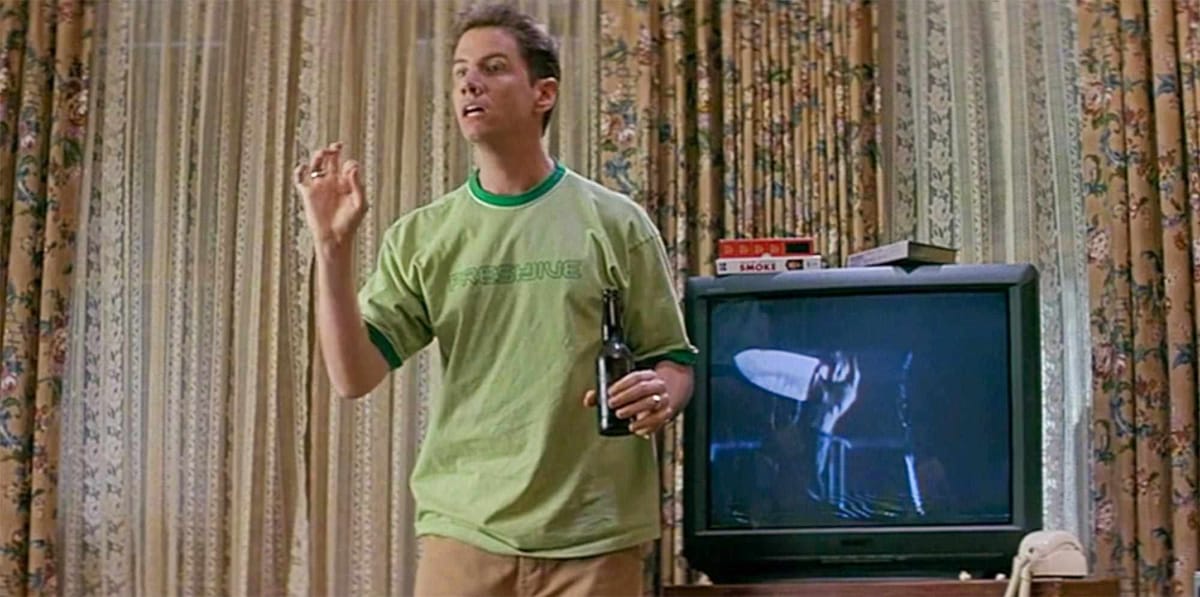
If there's one thing the internet has done for the general public's savviness with entertainment, it's bombard them with clickbait-sized helpings of trope education.
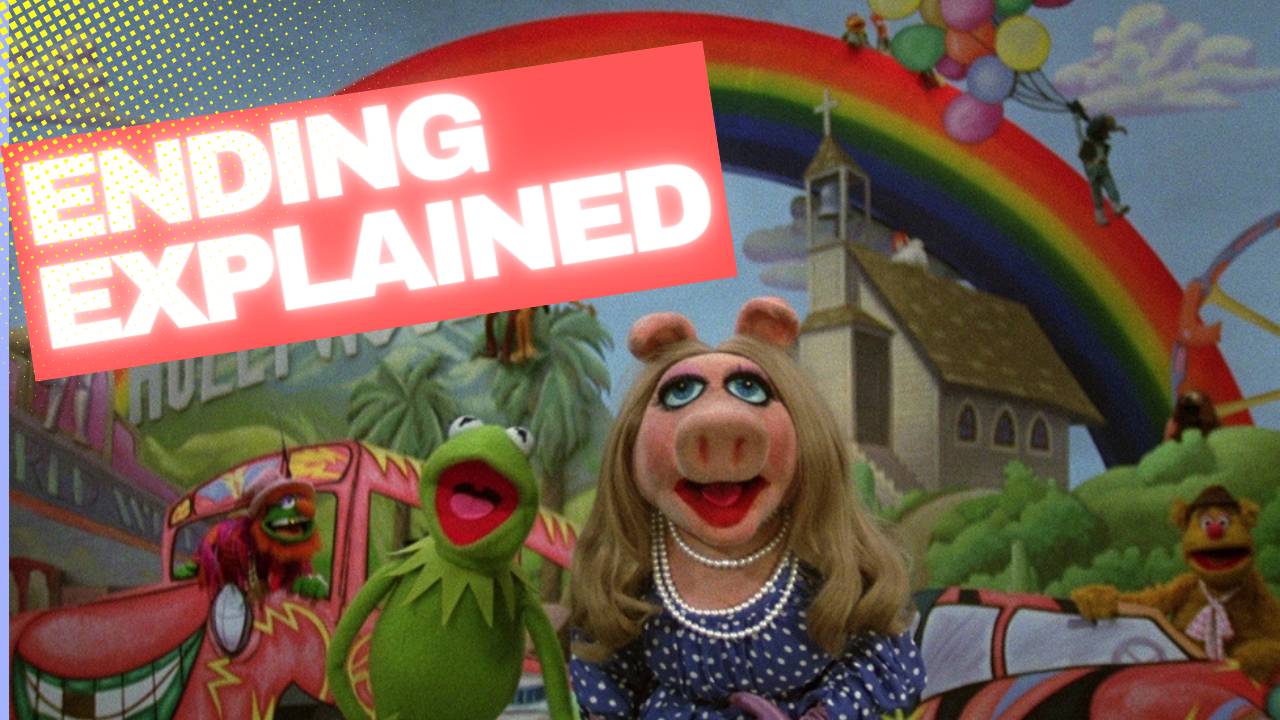
But if there are two things, that second one is increasing how much we talk about what we watch, read and listen to. Call it trope awareness, genre savvy, or metatextual literacy.
Audiences ask more from their stories, and storytellers have opportunities to leverage that knowledge.
Take for example the Star Trek Voyager episode "Eye of the Needle," where the crew discovers a wormhole that might offer them a shortcut back home.
Playback Pending goes Act by Act, showing how the show's audience being aware of the premise (a starship lost in distant space that would have to spend 75 years to travel home) and the nature of series television (they can't get home before the end of the first season) creates opportunities for the show's writers to create a surprising story out of what could have been a too-convenient coincidence.
One way to illustrate the opposite attitude, where a creator insults their audience's intelligence and steals their attention comes from Cal Newport's post on influencers demonstrating their complicated daily routines:
This genre seems to work, in part, because the instructions it provides are hard enough that you can believe them capable of delivering real rewards, and yet are also sufficiently tractable that you can imagine yourself following them – a sweet spot that’s compulsively consumable.
Consider how the questions your audience will ask to test the plausibility of your story relate to what characters in the story might ask. One simple measure of passing muster: Does this seem like bullshit? Harry Frankfurt helps us define the concept of bullshit, and the difference between creating a vague sense of a counter-narrative differs from lies that attempt to conceal a specific truth.
Carl Sagan created a series of questions he called a Baloney Detection Kit for evaluating scientific claims. While he might consider applying those tools to fictional storytelling a misuse of his ideas, I'm fairly confident Sagan's ghost doesn't believe he exists, and so Carl will not haunt me in retribution.
So let's dig in to how these rules for questioning ideas presented as facts can make for more believable storytelling.
Wherever possible there must be independent confirmation of the “facts.”
What do you want the audience to believe? What do they need to see, hear, or have explained to make them feel secure that in the world of your story, these are the baseline facts?
Encourage substantive debate on the evidence by knowledgeable proponents of all points of view.
If there are multiple characters that have a stake in the story, letting them have conflicting ideas or plans can show the audience the path your story is on isn't arbitrary.
If you're doing research as part of your writing process, don't use just one source. Give yourself a broad range of possibilities to consider what makes sense for the tale you're telling.
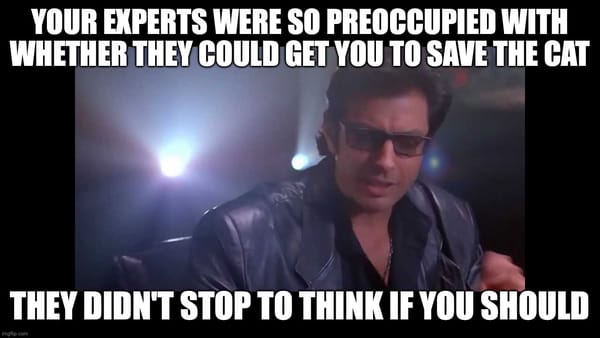
Arguments from authority carry little weight — “authorities” have made mistakes in the past. They will do so again in the future.
Characters: If an authority figure says something that you know doesn't make sense, you can go against it.
Writers: You don't need to save any cats if it doesn't make sense for your story.
Spin more than one hypothesis. If there’s something to be explained, think of all the different ways in which it could be explained. Then think of tests by which you might systematically disprove each of the alternatives.
This is good for the outlining process and for characters trying to solve a difficult problem. Your first idea isn't always the best idea, and the same goes for your characters.
Try not to get overly attached to a hypothesis just because it’s yours. It’s only a way station in the pursuit of knowledge. Ask yourself why you like the idea. Compare it fairly with the alternatives.
This can apply to stubborn characters, but it's also a good reminder for writers getting outside feedback. Make space for yourself to consider suggestions and criticisms without letting your ego weigh in.
See if you can find reasons for rejecting it. If you don’t, others will.
Those others could be characters in your story or the audience themselves. Is there a way to present alternative ideas within the story? Are there characters who disagree and have a different interpretation of events or a competing plan of action? How will the story show which version is correct?
If there’s a chain of argument, every link in the chain must work (including the premise) — not just most of them.
In other words, plot holes. When looking at the sequence of cause and effect in your story, are there steps where you ask the audience to suspend a little too much disbelief? Are these weaker links enough to break the chain? Is there an alternative that would feel more consistent?
Occam’s Razor. This convenient rule-of-thumb urges us when faced with two hypotheses that explain the data equally well to choose the simpler.
Does your story benefit from a complicated logic that requires a great deal of narrative energy to explain to the audience, or would it be better to reduce your idea to its essential components?
Here's a test for this. What do you know about The Force in the Star Wars stories? Take a moment and see how much you have tucked into the folds of your brain.
Alright, now how much of that information came from A New Hope?
The Force is what gives a Jedi his power. It's an energy field created by all living things. It surrounds us and penetrates us. It binds the galaxy together.
– Obi-Wan Kenobi's entire explanation of The Force
All of this is an attempt to answer some basic questions about writing: What does your audience already know? What do they need to know? How can you honor their intelligence while still guiding them through your story?
👋 Are you new here?
Inneresting is a weekly newsletter about writing and things that are interesting to writers. Subscribe now to get more Inneresting things sent to your inbox.
And if you can't wait until next week for more Inneresting, check out the Quote-Unquote Apps Blog where we keep previous issues and other posts about screenwriting and things interesting to screenwriters.
In case you missed it...
In the most clicked link from our last issue, Blackbird Spyplane fights one of these battles by actively retraining his mental capacity for sustained attention, and to stop living each moment like it could be mined for content.
What else is Inneresting?
- An evergreen post from Cory Doctorow on Suspense Files and keeping track of other people’s to-do lists:
“The point of a suspense file isn't to nag others into living up to their commitments, it's to form a network of support among collaborators where we all help one another make those conscious choices about what we're not going to do, rather than having the stuff we really value slip away because we forgot about it.”
- ICYMI, we're kicking off Villaintine's Month at the Quote-Unquote Apps blog, starting with a post about Into the Spider-Verse and creating a special kind of chemistry between hero and villain.
- Grief, pub grub, and Monty Python: Vida Adamczewski tells a story about making individual meat pies for informal funeral catering.
And that’s what’s inneresting this week!
Inneresting is edited by Chris Csont, with contributions from readers like you and the entire Quote-Unquote team.
Are you enjoying this newsletter?
📧 Forward it to a friend and suggest they check it out.
🔗 Share a link to this post on social media.
🗣 Have ideas for future topics (or just want to say hello)? Reach out to Chris via email at inneresting@johnaugust.com, Bluesky @ccsont.bsky.social, or Mastodon @ccsont@mastodon.art
If you don't know what to write...
write a letter to your past self. Forgive them for something you wish they hadn't done (but they had no way of knowing better at the time).