🕹️ #282 - Playing games with your audience
A player and a viewer are two entirely different types of audience, right? Of course we're going to say no. You understand how this kind of tease works.

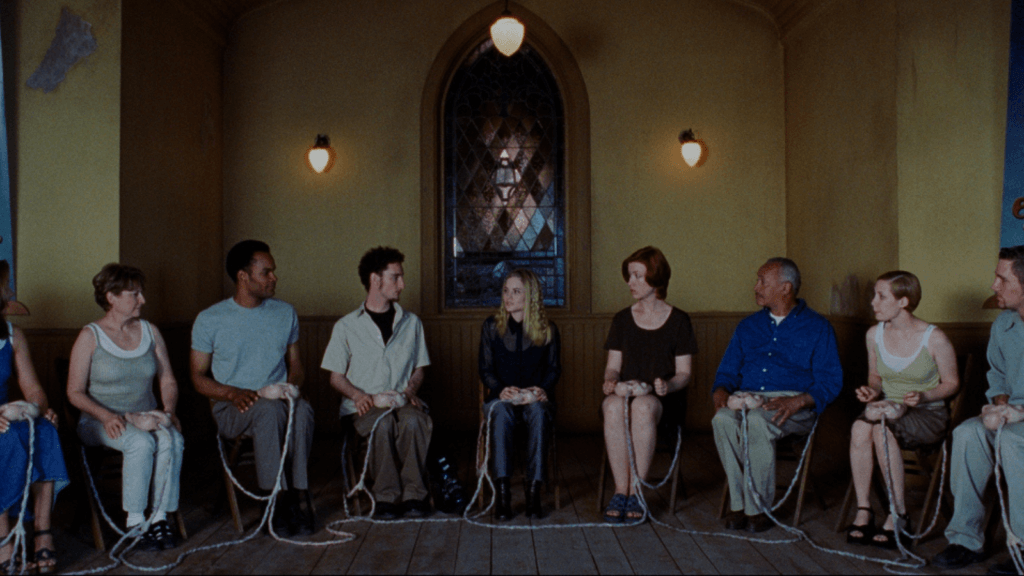
Since before Roger Ebert declared video games can never be considered art, there’s been tension between the worlds of storytelling and interactive media. But this isn’t just a one-way street where games evolve by finding ways to bring more storytelling elements into game design.
What tactics that game designers use could be helpful for writers? Are there ways of thinking like you’re writing for a player helpful in engaging an audience?
A series of interesting choices
Sid Meier (of “Civilization” and “Pirates” fame) gave a talk at the Game Developers Conference breaking down how games are all about creating “a series of interesting choices,” and how he describes the layers of what makes for a more engaging player decision:
- Tradeoffs: There is no “right” choice, but there are pros and cons that depend on personal preference.
- Situational: What about the player’s environment or level of experience helps them make a choice on what to do next?
- Personal: Based on the gamer’s preferred way to play.
- Persistence: A choice has an impact for a certain amount of time, and decisions with long-lasting impacts should make it clear that this choice carries weight.
When does your protagonist need to make choices, and what kind of options are presented? How do the choices you present your protagonist allow opportunities to inform the audience about their personality and backstory?
Look at Neo’s decision in The Matrix to go on a rescue mission to bring Morepheus back after he’s captured by the machines:
- The Tradeoff: Neo decides that risking his own life isn’t as important to the human resistance as it is to ensure Morepheus continues to inspire others with his leadership. They can’t simply unplug Morepheus and kill him before he gives up all his secret knowledge to the machines.
- Personal: Neo’s decision is built on his own belief that he is not The One, which is informed by the experiences he’s had throughout the story to this point.
- Situational: Decisions need to be made about how to go into The Matrix and extract Morpheus, leading to the iconic line “Guns. Lots of guns.”
For some additional juice on these interesting decisions, Neo isn’t making these choices in a vacuum. He needs to convince Trinity and Tank that this is the best course of action.
Lives are at stake, and the consequences of these choices could be final, so it’s important that the story takes time to show the characters understand that before they go running, kicking, and shooting their way into danger.
What are the key decisions you’re forcing your characters to make? Are they the kind of decisions anyone could quickly make in that position, or is there something unique about this character in this moment that sets this course of events in motion?
One Good Game is Better than Two Great Ones
In Soren Johnson’s recap of Sid Meier’s design maxims, he points to the game Covert Action, which attempted to mesh together action based heist sequences with collecting clues and solving a larger mystery:
Individually, each part could have been a good game. Together, they fought with each other. You would have this mystery that you were trying to solve, then you would be facing this action sequence, and you’d do this cool action thing, and you’d get out of the building, and you’d say, “What was the mystery I was trying to solve?”
Do you have too much story? Are you trying to craft something with massive intersecting plot lines, a cast of hundreds, and a deep lore going back thousands of years? Or are you trying to fuse two genres but find it difficult to balance them, like a horror comedy or a sci-fi musical?
What’s the essence of one story you want to tell? Does it need all those competing forces, or is there a version where you can focus yourself on delivering the best possible version of a single simple idea?
Go your own way
In Caleb Compton’s spotlight article on Nintendo’s Shigeru Miyamoto (the creator behind Mario, Zelda, and Nintendogs), he points out:
[Miyamoto] doesn’t design games simply to follow trends, or make design decisions based on focus groups. Instead, he tries to make the types of games that he himself would like to play. He believes that if he himself finds the game to be fun, others will as well.
This echoes part of the Scriptnotes book chapter on Deciding What to Write: “You should only write the thing you desperately wish you could watch. It needs to be something you would drag your friends to see.”
Riding the coattails of others or trying to guess on upcoming trends isn’t a step toward finding something that you, personally, will be invested enough in to see through to the end.
Miyamoto would probably not approve of levels like this.
Finding the right balance for your audience
Games need to be easy enough that anybody can learn them, but challenging enough that players need to work hard to complete them. Games need to provide a balance between constantly introducing new challenges for the player, as well as providing moments of ease and repetition so the player can relax and breathe.
— “How the Creator of Mario Designs Games”
Desert Hat finds a connection between Miyamoto’s understanding of difficulty in game design to Mihalyi Czicsentmihalyi’s idea of flow state. If your audience feels anxious from an overwhelm of information, or needing to work hard to put the pieces of the story together and understand what they’re seeing, following those moments with a distinct drop in activity helps them re-establish an engaged “flow state” of attention.
Case in point, the pacing of action sequences in Mad Max Fury Road. Rossatron highlights the balance between fast-paced, maximalist action, and slower moments where characters and the audience can catch their breath (like the beat where Max pauses to pull a crossbow bolt out of his hand).
For a more direct example from the film, see this sequence, where after the high intensity of winching the war rig out of the mud while being shot at, there’s a pause where Max takes care of some of their pursuers off screen. It’s not cheating the audience out of another action sequence, it’s allowing the audience to cool down (just like the engines) and insert a little gallows humor (“That’s not his blood.”) to avoid the story staying up at one punishing volume.
Remembering you are not your audience
When a game designer plays a game that they made they are experts by default, and that can make it difficult to determine how a new player would actually handle the game. To counteract this, Miyamoto has suggested developers switch their right and left hands while playing, to simulate the difficulty of being a new player.
When you write a story, you bring everything you know about writing with you, and all the stories you’ve ever been exposed to. But you aren’t allowed to assign outside reading to your audience so they can follow your chain of influence to “really understand” what you’re going for.
We can also tie this to another quote from Sid Meier: “The player shouldn’t have to read the same books the designer has read in order to be able to play.” To combat this, Meier suggests holding off on deep research until the basic shape of the game is finished.
Do you get stuck in the outline phase? Do you get stuck before the outline, finding more and more knowledge you feel you need to educate yourself on before you’re allowed to start?
Can you give yourself permission to go back and fix things after one or two drafts? There will always be more to learn. But without building a framework of a story, you’ll never know when to stop, or what specific information you need to find.
To illustrate when this particular cart gets in front of the horse, watch this scene from A Mighty Wind where The Folksmen spend so much time explaining the origins of their Spanish Civil War song “The Skeletons of Quinto” they run out of time to play it:
One other point of contact between games and storytelling is the Choose Your Own Adventure book series.
Gregory Bratton dissects The Case of the Silk King, tracing its decision tree and rating the different possible endings. One of the most applicable takeaways Bratton finds in this analysis?
The first choice isn’t the only important one
You as the protagonist have to make a choice at the beginning of the book, in this case to rush to an international flight provided by a mysterious figure or to wait and do more research on the case before pursuing it further. Both of these choices can potentially lead to a “good” ending.
It highlights an important aspect of non-interactive storytelling: Even if a protagonist is doomed, it’s never the result of a single choice, but a series of actions and consequences.
If a single act at the beginning of the story sets a character on an unalterable course toward doom, the audience can feel cheated. Even if the story affirms that fate was in control, a protagonist without opportunities to exercise their own agency floats along like an unoccupied innertube on a lazy river.
Consider the examples in Dune or Avengers Endgame. In both situations, heroes are presented with knowledge of the future where their actions are not strictly inevitable, but that there is a narrow path toward the goal they seek.
Paul Atreides takes up the mantle of the messianic figure Lisan al-Gaib because he recognizes that it is the only way to avoid the complete extinction of humanity throughout the galaxy. Maybe. Tony Stark sacrifices himself after trusting that it leads to the only path to defeat Thanos in that moment, as well as to rewrite the suffering caused by “The Snap.” It’s less being directed by the hand of fate than it is an acknowledgement that there are clear pivot points, where one choice decisively closes some doors and opens others.
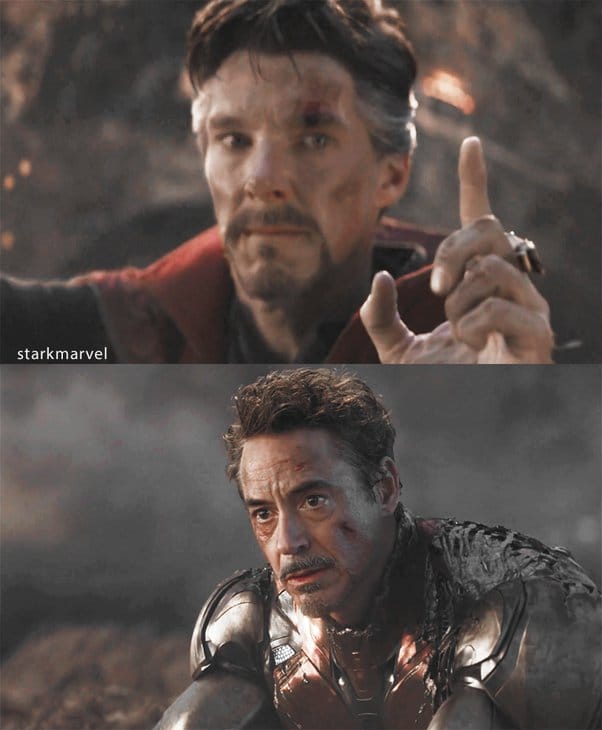
But those opportunites come later in each of those narratives, after characters have time to try other options, avoid their call to act, or wrestle with their disbelief in a destined future.
When characters run out of choices, they run out of story.
👋 Are you new here?
Inneresting is a weekly newsletter about writing and things that are interesting to writers. Subscribe now to get more Inneresting things sent to your inbox.
And if you can't wait until next week for more Inneresting, check out the Quote-Unquote Apps Blog where we keep previous issues and other posts about screenwriting and things interesting to screenwriters.
In case you missed it...
In the most clicked link from our last issue, we shined a spotlight on WikiFlix: A free, no sign-up required site for streaming films in the public domain.
What else is Inneresting?
- For a further deep dive on the style and history of the series, check out The Enduring Allure of Choose Your Own Adventure Books by Leslie Jamison.
- At the intersection of 1984 and Phineas & Ferb you'll find this week's Villaintine's Month post about villains who might not exist.
- Sometimes you tell on yourself when you're trying to educate the youth on the tragedy of Conan O'Brien.
And that’s what’s inneresting this week!
Inneresting is edited by Chris Csont, with contributions from readers like you and the entire Quote-Unquote team.
Are you enjoying this newsletter?
📧 Forward it to a friend and suggest they check it out.
🔗 Share a link to this post on social media.
🗣 Have ideas for future topics (or just want to say hello)? Reach out to Chris via email at inneresting@johnaugust.com, Bluesky @ccsont.bsky.social, or Mastodon @ccsont@mastodon.art
If you don't know what to write...
give your protagonist a mystery gift. Something they desperately want, but sent to them with no return address or identifying information on the sender. Will they accept it and move on, toss it in the dumpster, or search for clues?