🍰 #284 - Layered Narrative Structures
This week's newsletter covers examples of layered storytelling, looking at the how and why of stories that play with the audience's understanding of what they're seeing.

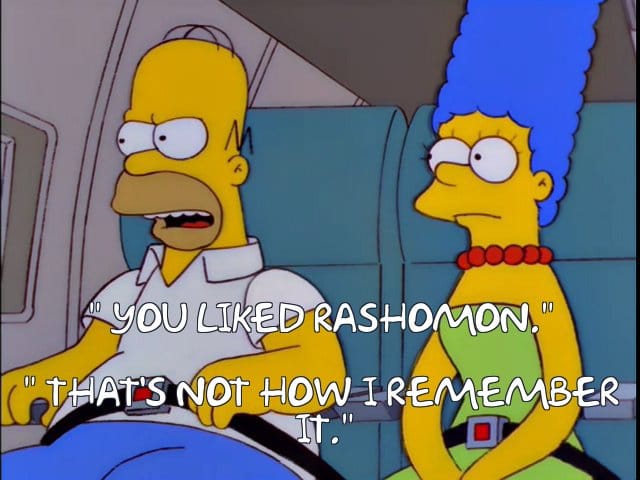
Sometimes there's more than one story being told. It could be a microcosm of a larger event, letting us see things more clearly at a different scale. It could be seemingly unconnected events with a moment or a person shared between them. Maybe competing interpretations of the same event?
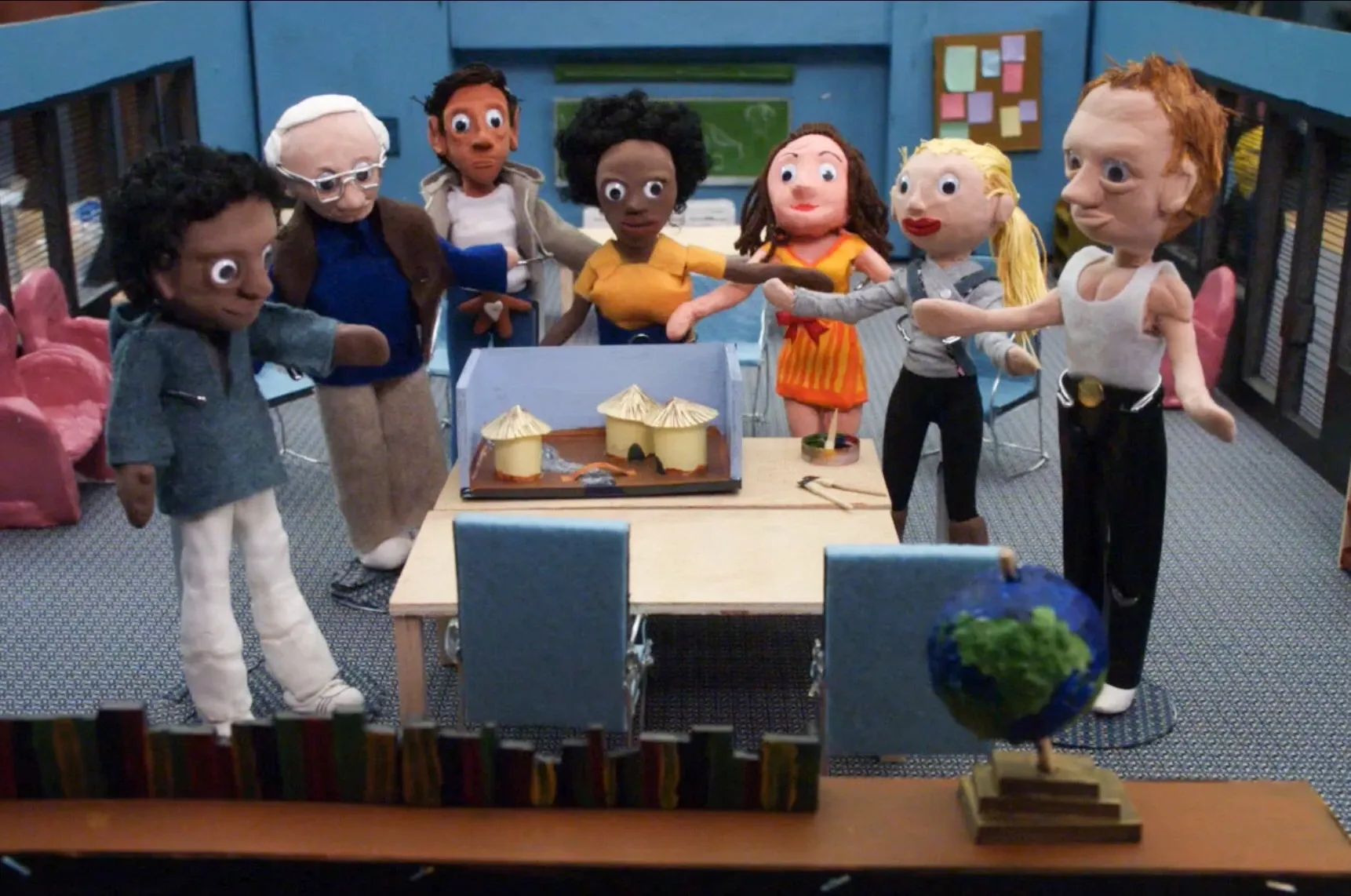
ANNIE
I can’t believe this is our twentieth and final anthropology diorama of the year.
BRITTA
I can’t believe our assignment is making a diorama of us making our nineteenth diorama.
We're looking at some examples where the story has more than just one beginning, middle, and end. Going beyond twist endings, some storytelling styles create a different sense of narrative architecture throughout the experience.
And because your editor never met a food analogy he didn't like, we'll group these story types gastronomically.

Tiramisu
These are parallel stories that can mix together, but also have distinct layers. They're presented in a way where the audience sees clear separations between the two plus stories being presented.
And all the individual components benefit from being presented together, complimenting each other.
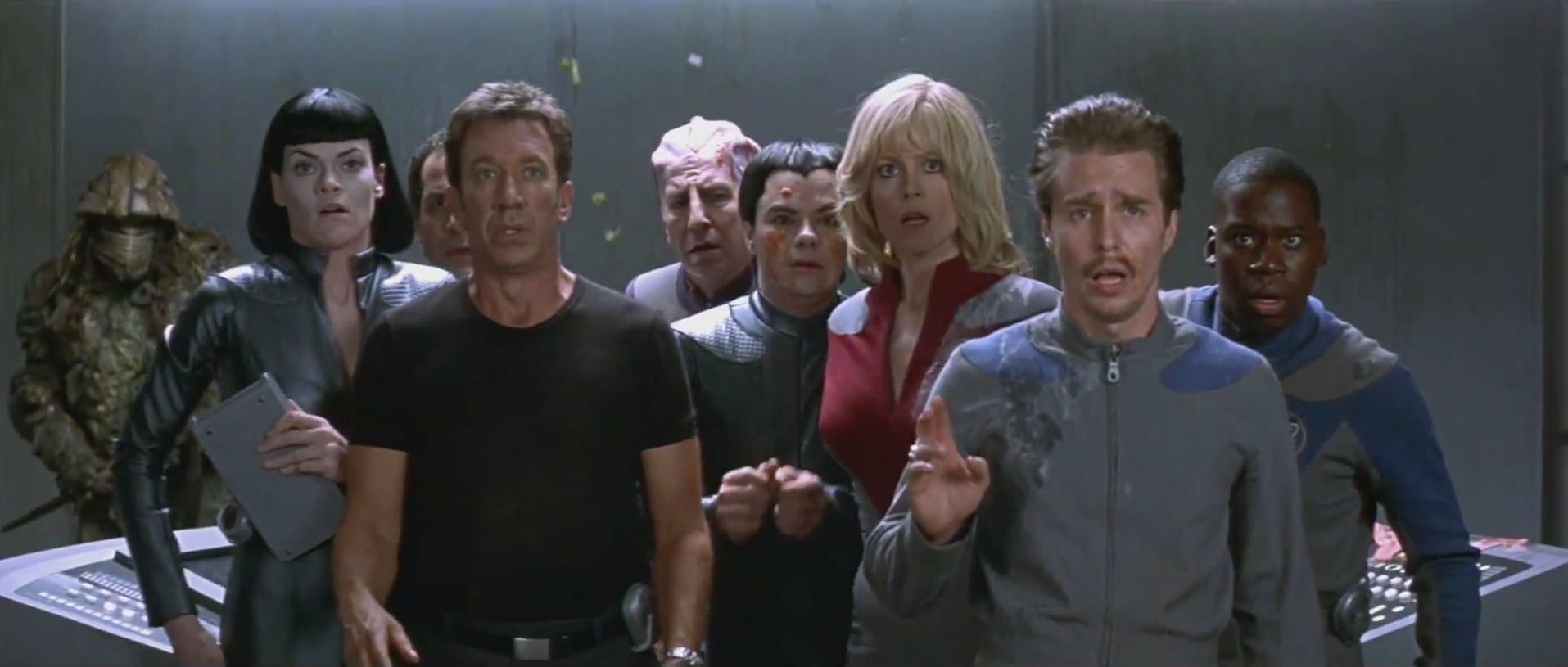
Galaxy Quest
The cast of the long-cancelled Galaxy Quest make their rounds at sci-fi conventions and other public appearances until they're taken aboard an actual alien ship. These aliens received the broadcast signals of the old show from lightyears away and assumed (because their society has no concept of lying), that these were historical documents.
When faced with a threat from an evil alien warlord, they built an exact replica of the crew's ship and abducted them from Earth to play out their roles from the show, but with real stakes.
The two layers of the story continually interact as fiction and reality blur. For example, Guy who only had a small part on the show as an "expendable" ensign assumes that TV rules apply and he's the most likely to die. Characters begin playing their familiar roles, only to be reminded time and again that it was just a TV series and none of them are qualified for actual interstellar warfare.
Dave Trottier shares a a wide-ranging look at the film's lessons for writers.
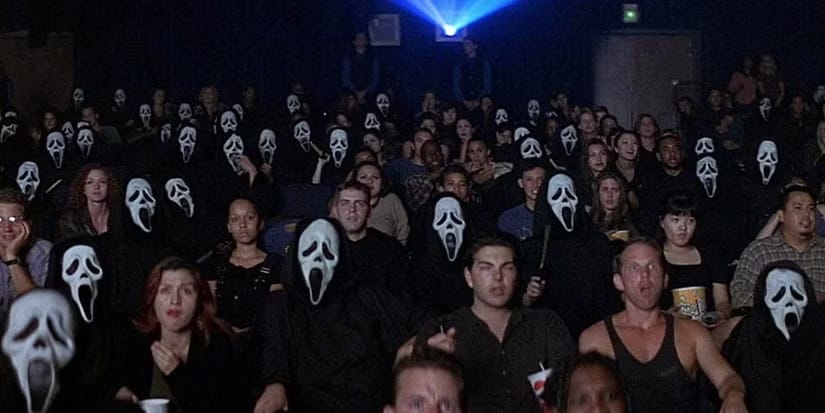
Scream(s)
The first Scream plays on the self-awareness of the VHS generation. It's a slasher movie where a group of teens watching a slasher movie talk about the "rules" for staying alive inside a slasher movie.
But the sequels add another level to this. In the universe of Scream, the original film's story is adapted into a slasher film called Stab. And as the Scream franchise continues to make sequels, so to does the fictional Stab franchise.
This fictionalization of the "real" stories motivates several of the killers in the sequels, tying together the influence of the characters' backstories, their fictional representation (in the fictional universe), and how it all relates to the current horror tropes the series touches on.
But in all those instances, there are clear lines within the world of the story that separate what is their reality and what counts as fiction.
For a deep dive into this metatextual gumbo, check out Valerie Wee's essay "The Scream Trilogy, 'Hyperpostmodernism,' and the Late-Nineties Teen Slasher Film"
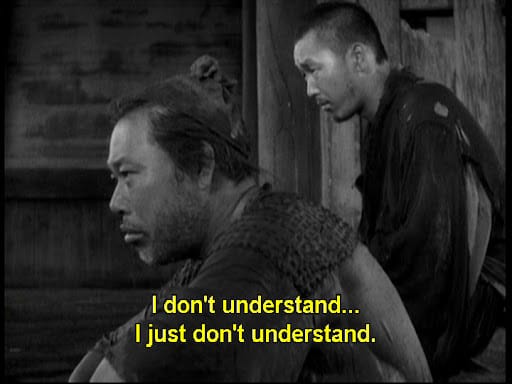
Rashoman
Three men, waiting under the awning of a gate for a rain storm to pass, discuss a trial concerned with finding the killer of a samurai. As they discuss the evidence, each witnesses' statement is dramatized as a separate flashback. In each flashback, the same actors play out variations on the same basic story beats.
The variations aren't just a search for truth and guilt, but eventually reveal that one of the men who was a witness in the trial lied during his testimony. Only after he comes clean does the audience see how the threads connecting all the possible versions tie together.
There are clear delineations between each thread of the plot, and an in-story purpose to justify the fractured narrative style.
David Thorburn shares a lecture at MIT putting Rashoman into a historical context, while Clint Gage, Alex Stedman, Siddhant Adlakha and Casey Redmon take a multi-viewpoint look at what makes Rashoman unique and influential.

The Turducken
There's a hierarchy to the different stories, like framing devices or a dream within a dream. The layers can sometimes intermingle, but need to be understood as having a nested order.
There's a richness to serving all the layers together, however each layer doesn't have an equal proportion.
A play within a play (within a play)
Rosencrantz & Guildenstern Are Dead
Two minor characters from Shakespeare's Hamlet get to take center stage as this absurd story shifts perspective on the events of that play.
And within the play Hamlet, there are the group of players that Hamlet hires to perform a play that mimics the story of his uncle's murder of his father. Within Rosencrantz & Guildenstern Are Dead, the players preview this performance.
Two minor characters get to have their own story where they wrestle with existential dread and feeling like characters in someone else's story while moments from that larger story continually pull them in and force them to confront their lack of agency and purpose.
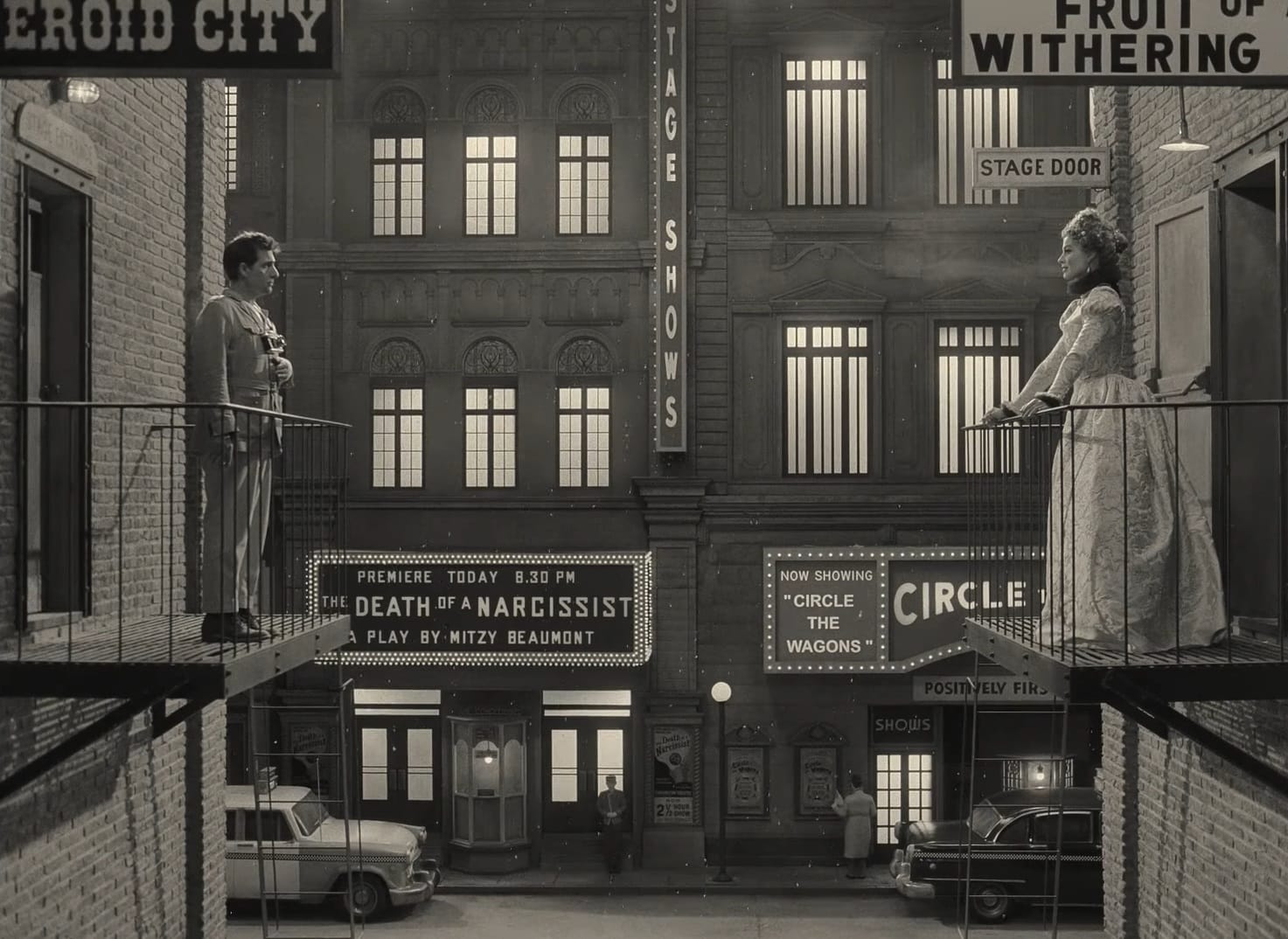
Asteroid City
There are two separate fictions nested inside each other, best explained by describing one of the acting challenges presented:
- Real life actor Jason Schwartzman plays actor Jones Hall. (Turkey)
- Jones Hall in the world of the television broadcast is an actor who was in love with the playwright of Asteroid City, who has recently died. Hall wrestles with his grief at the loss of his partner throughout the production. (Duck)
- Jones Hall plays Augie Steenbeck, a war photographer and widower in the play Asteroid City. Augie is traveling with his children and has yet to break the news to them that their mother has died. He wrestles with the grief of losing his wife. (Chicken)
- Jones Hall in the world of the television broadcast is an actor who was in love with the playwright of Asteroid City, who has recently died. Hall wrestles with his grief at the loss of his partner throughout the production. (Duck)
In a sequence that unifies these moments, Hall argues with the director about the reason why Augie burns his hand on a hot plate. Augie, in the play, also doesn't know why his character puts his hand on the hot plate. In the confusion of the moment, Hall actually puts his hand on the hot plate while performing, making it so that he and Augie are both now actually burned.
Throughout the film, it's shown how the actors have difficulty understanding their roles as they play people who have difficulty understanding what they're doing in their lives.
Frostbyte Freeman puts Asteroid City alongside Wes Anderson's other films to argue that along with frequent use of nesting narrative, these films all end with a confrontation with a monster.
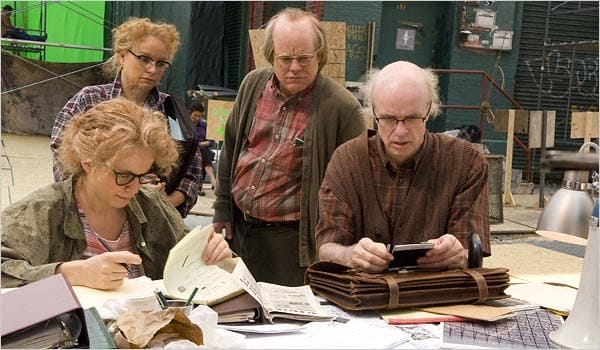
Synecdoche, NY
Theater Director Caden Cotard pours his MacArthur Fellowship into a massive play celebrating everyday life, attempting to cast a group of people to improvise their characters inside a hangar turned into a model of the city outside.
Through years of adding more and more layers to the production, Caden eventually begins casting doppelgängers of himself and others, and even becoming a different character entirely, relinquishing his role as director.
The entire story highlights the kind of recursive navel-gazing that can happen when an artist makes an autobiographical work without any limitations, as well as blurring lines between performance and reality by showing ways "real life" can be just as much of a constructed performance as acting.
Chris Lambert's painstaking dissection of the film peels apart the layers, the imagery, and looks to see how it all ties together.

Hyper-Realistic Cakes
You may not be completely fooled after spending some time studying it, but you hesitate. There's craftsmanship and artistry causing you to distrust your senses.
These stories make a deliberate attempt to confuse the audience, sometimes playfully, and create a sense of cognitive dissonance between what you see and what you believe the story to be.
At its best, this type of layered storytelling makes it fun to try and understand what it is you're actually seeing.
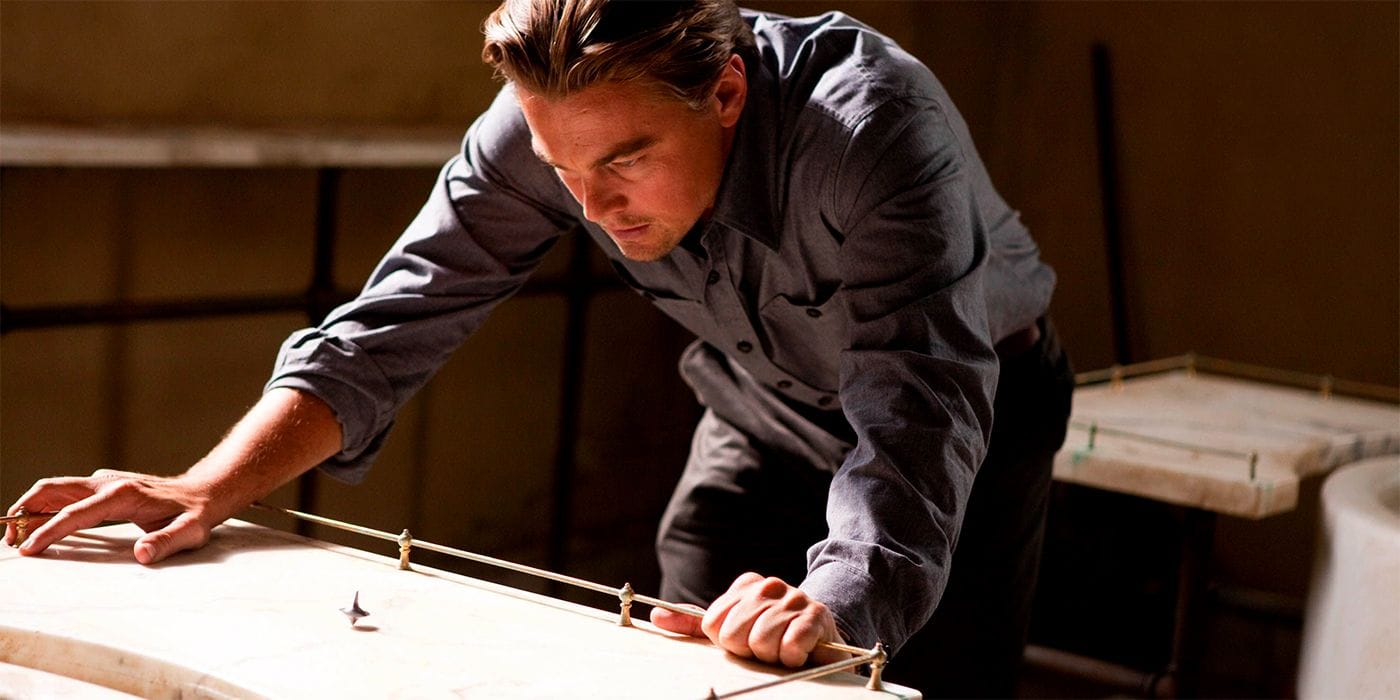
Inception
An elevator pitch for this story could sound like a heist film with a twist. And it is.
But heist films don't usually leave a lingering sense of doubt about whether or not the crew succeeds. And they don't usually lead to years of debate about whether or not the film's final scenes were real or imagined.
Inception creates room for doubt while still telling a direct story. It's the flashbacks and explanations about Cobb's early experiments with the dream-visitation tech that create the idea that there's a limbo where people lose all sense of what is real and where they are. The totems reinforce the notion that without some kind of safeguard, the people inserting themselves into other people's minds would have no way to be sure when they're fully out in the real world.
For a specific look at totems, and why Cobb's top is a misdirection, Poggy explains the rules and how Cobb breaks them in this video essay.

Inland Empire
Nikki Grace is an actress cast in the film On High in Blue Tomorrows, a script whose previous production failed (and is rumored to be based on a cursed folk tale). Acting opposite leading man Devon, the two find on-set chemistry in the romantic drama.
But also they have an off-set affair. Maybe. Nikki isn't clear on this, because she starts having difficulty telling Devon apart from his character.
And then there's the time loop where she runs through a doorway and finds herself in the background of an earlier scene between her and Devon. And the series of scenes involving hypnotism, the 1930s, a murder plot, and more.
David Lynch made a movie about "A woman in trouble." That much is clear!
Matt from A Mind for Madness breaks down a scene from a film to suggest the key to understanding it involves a technique that bends, but doesn't break, the fourth wall.
I Saw the TV Glow
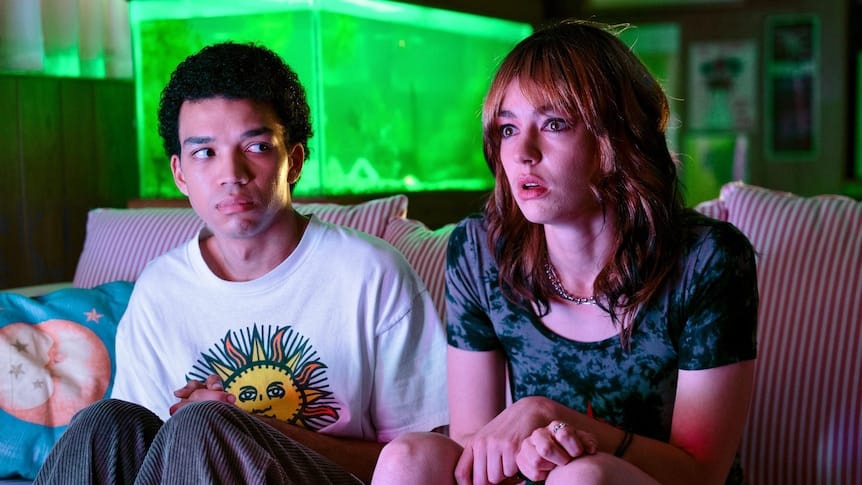
Owen and Maddie become unlikely friends when Maddie invites Owen into her fandom over in-world teen TV show "The Pink Opaque." The two watch nearly every episode together, bonding over a shared enjoyment of the show's psychic best friends who fight a mysterious Mr. Melancholy from the Midnight Realm.
Until one day that Maddie disappears, leaving Owen without a key anchor. Owen drifts for a few years until Maddie returns with a shocking revelation: "The Pink Opaque" was never a show, but their real lives. All of this that they're experiencing is an illusion created by Mr. Melancholy to make them forget that they're the psychic protagonists who can fight him.
But that's probably not true. Maybe. There's a bleed between these stories and what seems real. Owen's an unreliable narrator. The memory of watching the show with Maddie sharply contrasts with Owen watching "The Pink Opaque" again as an adult and seeing it as a much tamer, more cheesy show.
But something still nags at Owen. Something won't let go.
Christ from Electric Literature considers the angle of how childhood obsessions act as a flawed coping mechanism, and how this plays out with the characters. Meghan Cherry scans the text to suggest how its layers of reality are a form of transgender mythmaking.
Takeaways
- What about the characters in the story suggests a narrative might have multiple perspectives or layers? Is there a part of the protagonist that feels like a single beginning-middle-end trajectory doesn't relate to how they experience the story?
- Is the story told first-person, always privileging the protagonist, or is there a need to see things from other points of view? Is there a reason for the main character to seek out other explanations or versions of events?
- Does a character find themself at the meeting point of multiple "worlds?" What similarities are there between these two separate ways of being? What totems, images, or ideas could be seen as part of either one?
👋 Are you new here?
Inneresting is a weekly newsletter about writing and things that are interesting to writers. Subscribe now to get more Inneresting things sent to your inbox.
And if you can't wait until next week for more Inneresting, check out the Quote-Unquote Apps Blog where we keep previous issues and other posts about screenwriting and things interesting to screenwriters.
In case you missed it...
In the most clicked link from our last issue, Adam Bonica shows us what America could look like if it followed the example of its peer nations in "The Wall Looks Permanent Until It Falls."
What else is Inneresting?
- Matt Turner charts the history of the video game cut scene and the give-and-take relationship between movies and video games.
- Evan Puschak (from Nerdwriter) takes a close look at the painting of John Singer Sargent.
- Anil Dash questions how Apple's pivot to supporting video podcasts alters the open standard podcasting is based on.
And that’s what’s inneresting this week!
Inneresting is edited by Chris Csont, with contributions from readers like you and the entire Quote-Unquote team.
Are you enjoying this newsletter?
📧 Forward it to a friend and suggest they check it out.
🔗 Share a link to this post on social media.
🗣 Have ideas for future topics (or just want to say hello)? Reach out to Chris via email at inneresting@johnaugust.com, Bluesky @ccsont.bsky.social, or Mastodon @ccsont@mastodon.art
If you don't know what to write...
put a character in a waiting room. Doctor's office, DMV, bank lobby... wherever makes sense. Who is someone that they already know that would be the last person they would want to be stuck waiting with? Got it? Now make the two of them wait together.