Meeting true evil for the first time
Wrapping up Villaintine's Month, we're looking at what happens when an innocent meets a being of pure evil for the first time.

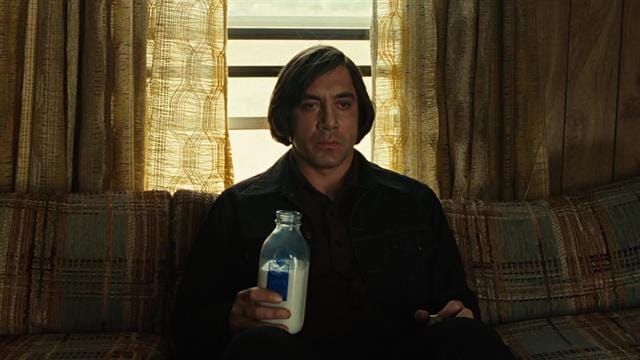
Some villains go beyond simply being the antagonist or a bad person. They're more like the climate than the weather: Not a sudden shift, but a persistent force.
They're not misunderstood, or doing the wrong thing for good reasons. There was no single bad day that made them break bad.
A few examples of this in practice can help shed some light on how to create these shadowy figures.
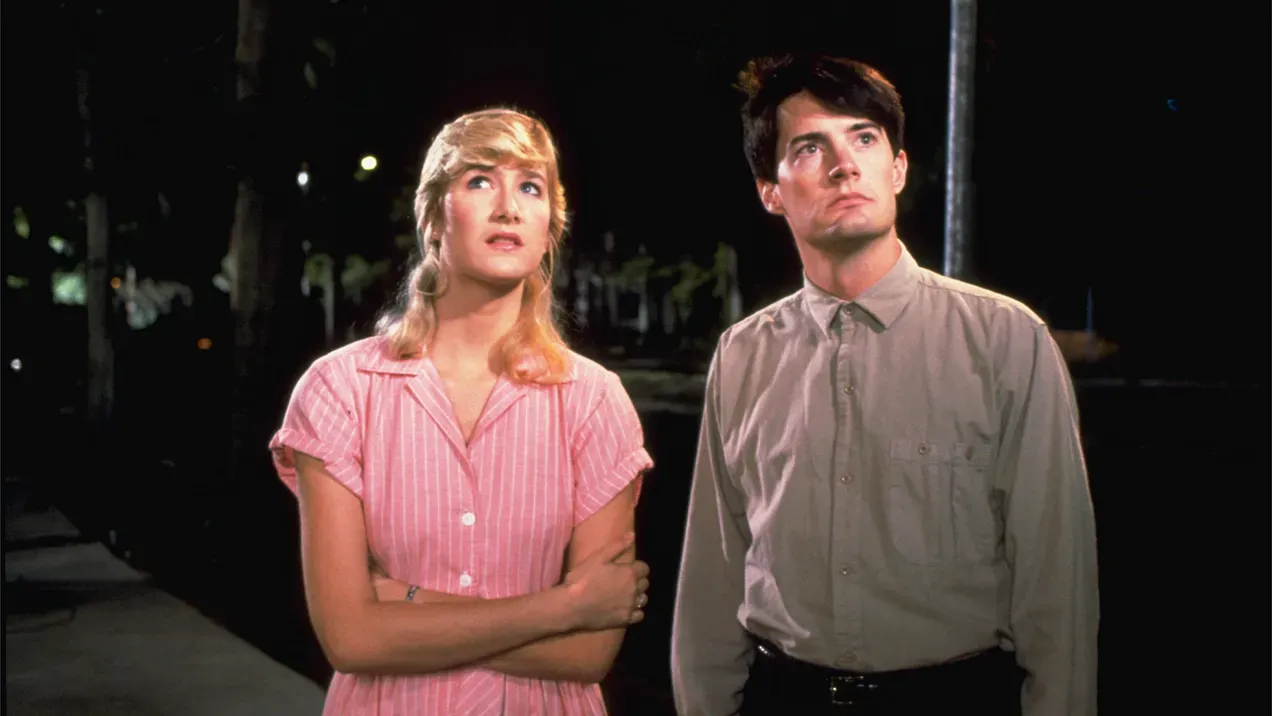
Sharp contrast with an innocent protagonist
Characters making first contact with a deeply evil individual are often innocent and naive. They were in some way sheltered from evil, leaving them ignorant to how terrible things could be.
In Night of the Hunter, the two main characters are the children of a widowed woman about to become a serial killer's next victim. With Blue Velvet, Jeffrey and Sandy may not be as young, but there's a level of "aw shucks" goofy innocence to their characterization that shows how their encounter with the film's Frank is part of a tumultuous coming-of-age and a recognition that even a sleepy little community like Lumberton can have a seedy underbelly.
And then we have Ed Tom Bell...
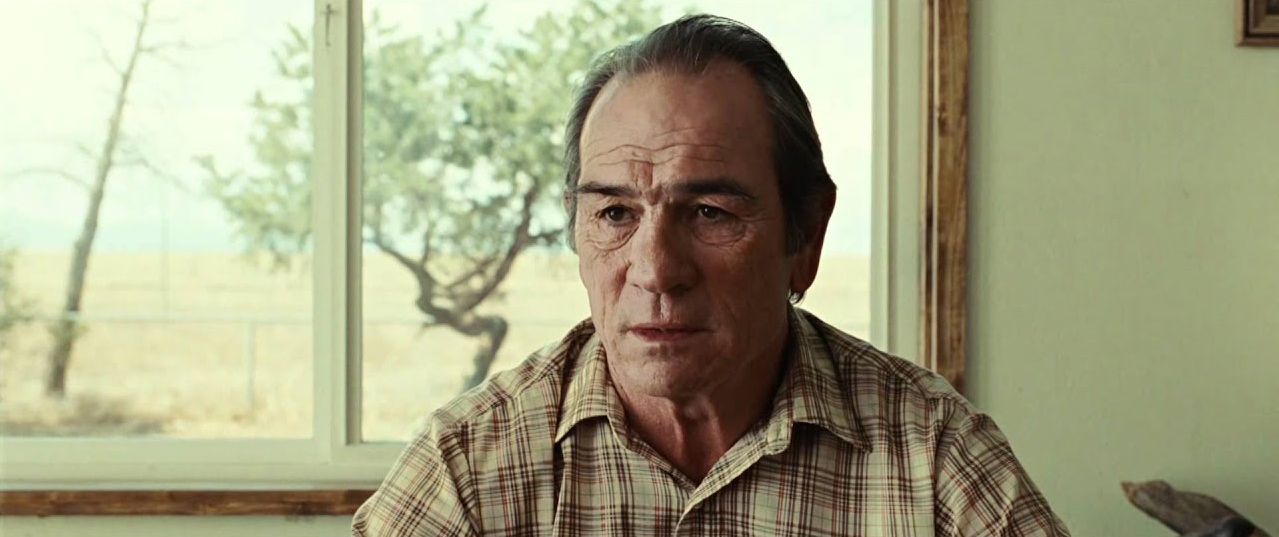
No Country for Old Men features a law man on the trail of a monster who feels like he's seeing something utterly inexplicable based on his previous experience.
Ed Tom Bell has a dream about his father, recognizing that he's now older than his father ever got to be. A grown man old enough to retire still sees himself in his dreams as a child compared to his father. It's a kind of arrested development that shows how relative innocence comes from perspective and experience and not just age.
His conversation with his cousin Ellis also shines a light on this, with Ellis telling him a story of another of their relatives, a law man gunned down by criminals on his doorstep. Ellis sees Bell wrestling with something, but chides him for thinking it's anything especially difficult or novel. By comparison, Ellis has made his peace with the evil in the world.
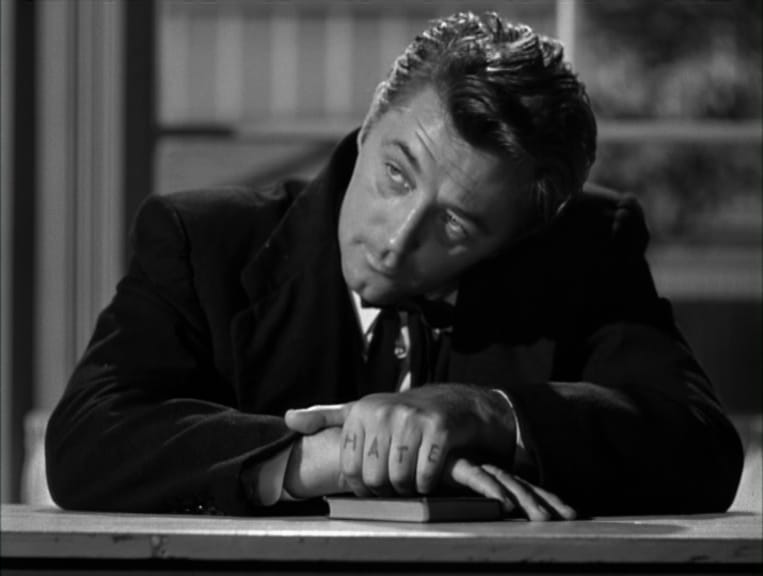
An affront to reason and expectation
Night of the Hunter’s Harry Powell casts himself as a preacher, and even manages to do a pretty convincing job with his deep, commanding voice and non-traditional sermons. The knuckle tats should be raising some eyebrows, but he gets past that. There's a disconnect between his presentation as a man of God and the reality that he's trying to find a big stash of money hidden with a widow's children.
Sheriff Bell can't wrap his head around the specifics of the crimes of Anton Chigurh (literally putting him off his breakfast), and the whole case acts as a constant source of befuddlement.
Jeffrey and Sandy keep looking into what's going on with Frank, and why he's threatening Dorothy, but the more they see, the deeper their fear grows:
"Why are there people like Frank? Why is there so much trouble in this world?"
–Jeffrey Beaumont
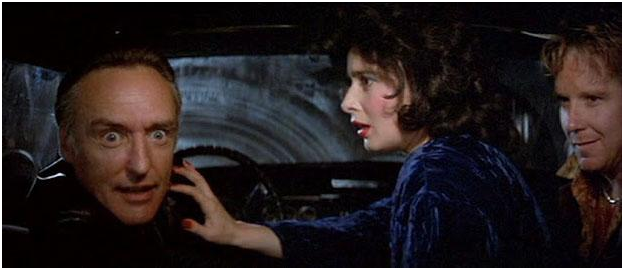
In this quiet town, there's a man who drives too fast, screams and fights, and also cries at the sight of an associate lip-syncing Roy Orbison. He is chaos, an unconfined and raging Id, and the audience experiences that alongside Jeffrey.
The gravitational pull toward evil
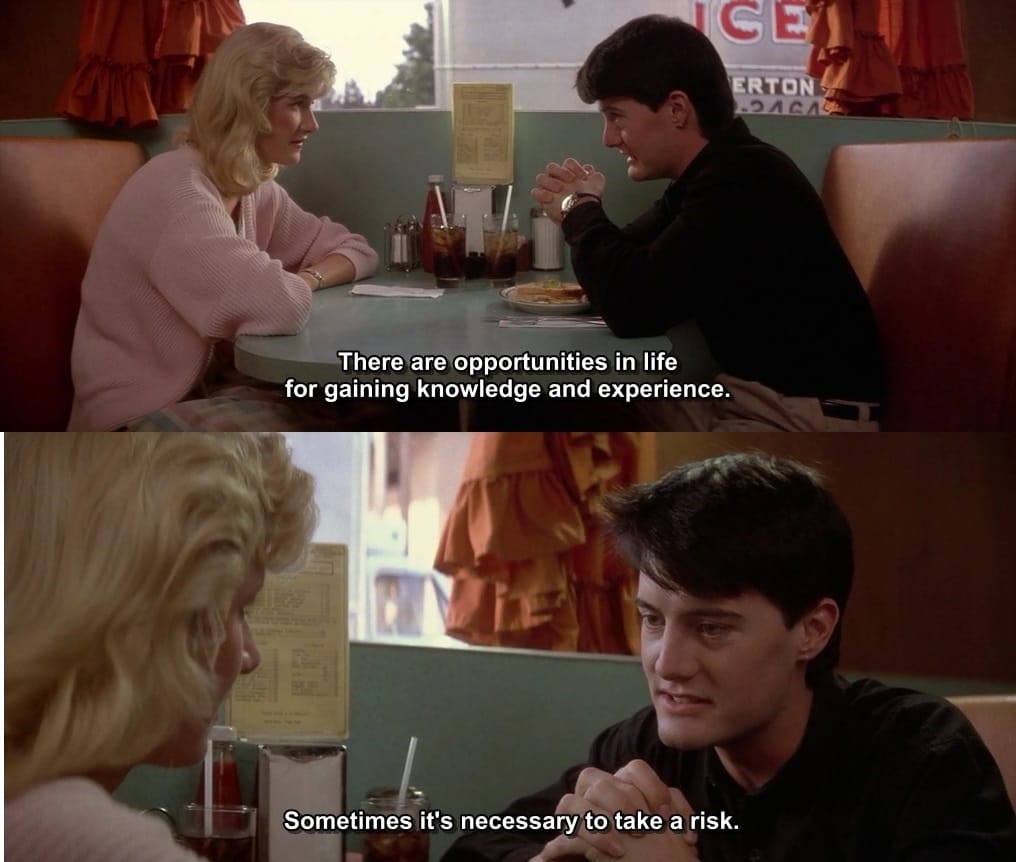
Curiosity. The seductiveness of unrestrained exercises of power. That compulsion to stare directly at the horrific thing unfolding before you. Deeply evil villains drag a protagonist (and sometimes the audience) toward them.
Even after committing murder, Harry Powell maintains a charm that sucks in and bamboozles people into believing he's following a holy mission.
No Country for Old Men also does this with the audience. Chigurh's scenes are tense, and hold a promise of potentially making him more understandable. His quiet, slow, confident tone as he commits gruesome acts of violence. His cryptic, self-assured dialogue. The sense that he has some kind of code underlying his actions. But the dots refuse to connect, no matter how closely we study him. Anton Chigurh is.
And with Frank, his utter strangeness makes it feel dangerous to take your eyes off him. His gang of chuckling thugs appreciate his curdled charisma, but when Jeffrey takes a "joyride" with Frank he sees that there's an ever-present threat of violence even with a seemingly anodyne question like "What kind of beer do you drink?" Jeffrey spends the entire story getting closer to Frank and Dorothy, inserting himself into their world even as he sees the danger closing in on him.
Evil takeaways
So what can we draw from when writing a character so unrepentantly evil? Ask yourself some questions.
- What binds the villain to the protagonist? Is the protagonist in the way of the villain's goal, or is there an element of curiosity that the protagonist can't shake? The audience needs a reason to believe the protagonist wouldn't walk (or run) away.
- What doesn't the protagonist know about the world that encountering the villain could teach them?
- How does evil put on a show for the audience? It's not merely about body count, or how many life sentences the villain would earn for their crimes. How does their behavior deviate from accepted norms? What do they take pleasure in that others would find grotesque?