Scriptnotes Recap: Ep. 724 - Opening Sequences with Joachim Trier

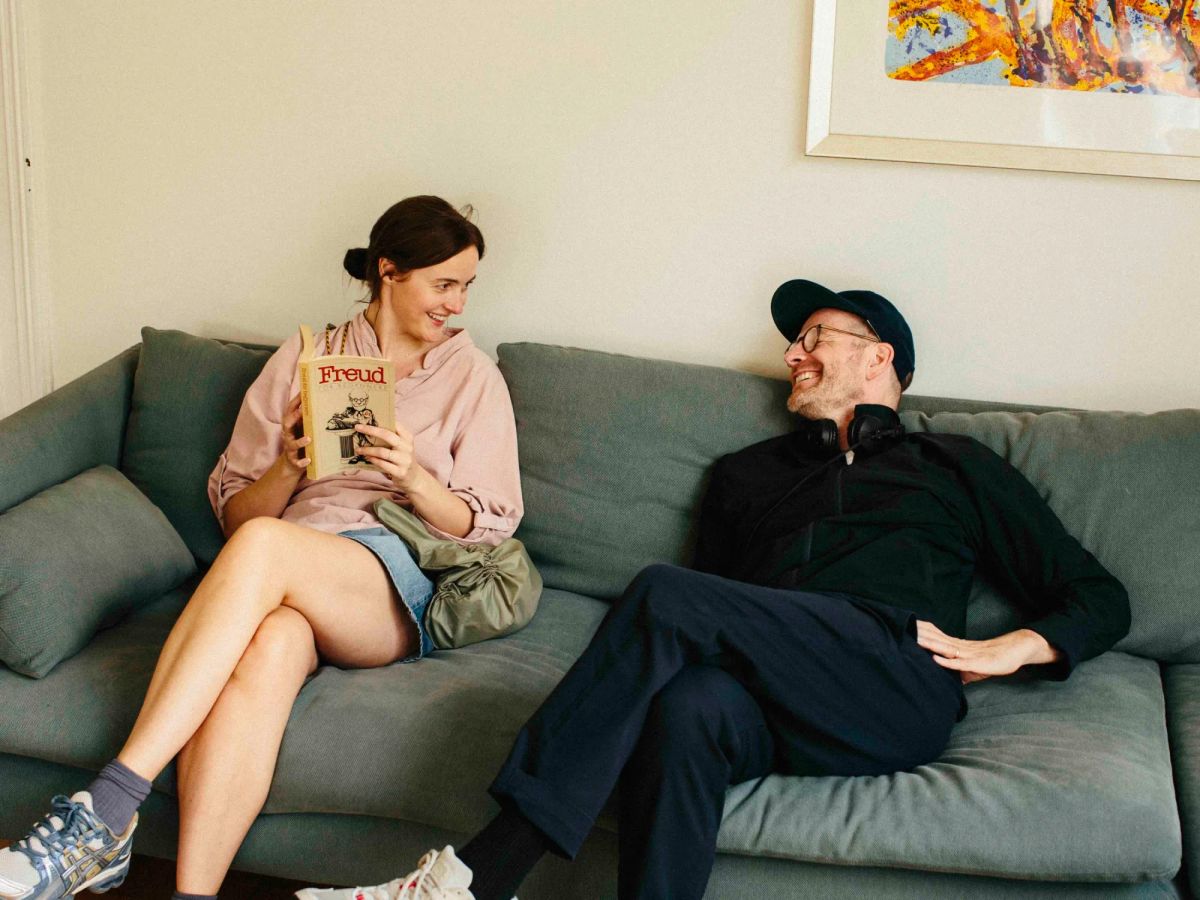
If you clicked on this and you haven't seen any Joachim Trier movies, go watch a Joachim Trier movie. Any of them. You can't go wrong.
And now you're back. What a movie, right?
Joachim and his co-writer Eskil Vogt make movies for people who have screwed up in their lives. Fortunately for them, that's most people. And the more life you live, the more you appreciate how astounding their observations about people really are. If stories are about characters changing, Joachim and Eskil are masters at articulating how actual change presents itself.
Joachim is also an incredibly poetic filmmaker, which gives his grounded character dramas this touch of magic. I often think that's something ineffable, a mental spark that can't be taught, and even if it could it would be the secret any artist would protect at all costs.
But not Joachim. He came on the podcast he laid his process bare, happily pulling apart the dramaturgical reason behind every choice he made throughout his new film Sentimental Value. It was thrilling, and had just as transformative of an effect on me as one of his movies.
Honestly, just listen to it! Okay, fine, you can read a bit of our interview first:
The Writing Process: How to Build a Story
John: What is the discussion before there’s any words put on paper? What was the impetus behind Sentimental Value?
Joachim: It started with wanting to talk about siblings, two sisters, two adults who are negotiating how come they feel so different about who they are as a family and why are their experiences so individually different from each other. That was some early stuff, the mystery of how we become who we become in a family.
The way we work is that we sit for about a year in a room together, Eskil and I. We meet every morning and we work from 9:00 until 4:00 or 5:00 in the afternoon, every day on the weekdays. Some days we feel terrible. We don’t feel we’re doing much and other days everything happens in two days. The ideas and structure just rush in.
After we have structured everything and come up with what we want to do, there’s two or three months where Eskil actually writes it out. Then I go out of the room and I edit, I look at it, I come back into the room sometimes. Then finally we have a reading phase. We turn off the cell phone, we read it through to get a cinematic experience of reading it through in real time. Then we restructure a lot together.
That time is the most productive because you suddenly have to rewrite something quickly, you have to come up with new ideas, you have to change the structure. Then we go into the world and pretend it’s our first draft.
John: What are you actually doing? You’re saying 9:00 to 4:00 every weekday. Is it all conversations? Are you mapping stuff out on a board?
Joachim: What we’re aiming for is to find our own connection to the material. We let a lot of stuff come up. Very often we start out with three, four different directions we want to explore. Then, after a couple of months, we see we have much more material or more yearning to tell something in a specific direction rather than something else.
We want it to be cinematic. We want to have conceptual, formal scenes that we play around with, almost like set pieces. We gather material, a lot of material, almost like actors exploring the life of characters and then just playing those few scenes.
The structuring is something we almost want to hang our material and our characters on. I know there are wonderful screenwriters who are like, “I got the story, now I illustrate it.” We work the other way around. We want the material and the characters to come first.
The Opening Sequence: How to Introduce a World
John: I specifically want to focus on how you introduce the audience to both the world and to the characters. The opening sequence is brilliant.
It is about six pages of script. It’s an unusual choice to spend the first six minutes of your film establishing a place rather than the individual characters you’re going to be following. What you’re doing so masterfully is saying, this place is going to be important and, most crucially, the people who live in this house and their relationship with each other and with this physical space is going to be so important.
Joachim: When I’m doing talks about screenplays, I always imagine talking to a younger version of myself and I always love when people were speaking straight about what they did. So, I’m going to be very straight now.
This sequence sets up themes, as you were just pointing out, and character, which are the two things that we care the most about. Themes, in my opinion, or motifs are, “This is the area that I want you to think about when we go through the story.” What we’re learning is Nora as a 12-year-old, being the older sister. Parents quite dysfunctional, arguing a lot. She is avoiding describing that even though the film shows it to us by being creative, by telling a story, by being someone who, in a psychodynamic term, sublimate her pain into something creative already as a child, as we all do.
We also learn that the house has had a perspective on time. People come and go. They’re born, they die. Time is short. This story’s about reconciliation. It’s about grown people realizing they don’t have those difficult parents around forever. Within that limited space and time that we have together, how are we going to deal with that? All of that is placed in the background, hopefully not too explicitly, in that first part.
We knew that we want to show a formal playfulness because that’s what we do. There’s that establishing of sense of humor and levity to it, but also the theme. Then also, we cut contrast out straight to a very subjective, intimate, real-time feeling of being backstage, going onstage as an actor and having stage fright and panicking completely, which is the opposite.
We have one post-it note that’s been hanging there for several films: remember contrast. That’s the holy thing. Contrast of scenes, contrast of characters, the formal devices, the character explorations, the unexpectedness.
Script vs. Screen: What the Edit Reveals
John: In the sequences on the page versus what’s in the film, some things have changed. How do you find, as the director who also helped write this film, that balance? When are you taking off your writer hat and putting on your director hat?
Joachim: I feel that I’m developing the same thing all along, and that the writing is such a central aspect of setting up the possibility of directing. Then I see a lot of possibilities. I note it down. We do floor plans. We shoot on video. I often bring it back to Eskil and explain it to him so we can do a quick redraft.
Writing is spatial. Writing for space. The banal example, as all writers feel, is that if a character is in a kitchen and it’s important that they are looking into the fridge as someone says, “I’m going to leave you,” and then they turn around and go to the table, how far that walk is going to be is tremendously important to the dramaturgical weight of that scene.
John: There is a lot more lead up to the theater scene in the script. You were able to just come right to her at that moment. It seems an obvious choice in retrospect because you’ve just established this narration about who she was, but you don’t know that as the writer. Did you think you need more runway for the plane to take off and you didn’t?
Joachim: Yes, that’s exactly it. I find that during the editing of the film with Olivier Bugge Coutté, the editor, his job is to be dialectically opposite to all the establishing. He’s saying, “Do we need this establishing? People are smart. The actors are great." He’s coming in at the other end. It’s a wonderful dialectic always. Eskil always says when we talk that, ultimately, Olivier makes us shine as screenwriters.
There are certain things you think you need to establish. You think you really need to involve people at every step of that staircase. Actually, it’s quite exciting to jump into the middle of it and discover it a bit backwards.
Listen to the full episode on Scriptnotes or wherever you get your podcasts!
The full transcript is available at johnaugust.com