♩ #293 - Beat by Beat
What makes for an Inneresting story beat? Let's break things down as small as possible and see what we find.

Recently Scriptnotes producer Drew Marquardt shared a recap of the podcast's interview with Drew Goddard (Project Hail Mary, The Martian, The Cabin in the Woods). Part of the conversation with Goddard focused on building up scenes from a wide collection of beats:
Beats to me are just moments [...] I tend to just start with moments that I respond to. It could be big or it could be small. It could be just, "Oh, I like when he said that thing to her." It could be, "Oh my God, this giant story turn." I'll put them on a board, and I'll just start noting them. Then at a certain point, I'll go, "I have enough beats," and go, "Okay, let's start trying to put scenes together."
What is a beat?
Goddard starts by thinking in terms of individual moments that can be joined together to create full scenes. These aren't immediately structured into a chain of events, but collected like puzzle pieces.
A beat doesn’t have to be “something happens” in the plot sense. It can be a unit of attention. It’s the thing the scene is asking us to notice, process, feel, or carry forward.
A beat might be:
- a moment that you respond to
- an image
- a line of dialogue
- a reversal
- a character making a choice
- a hesitation
- a look
- a gesture
- a silence
- an interruption
- an entrance
- an exit
- a discovery
- a mistake
- a misunderstanding
- a realization
- a confession
- a lie
- a joke
- a threat
- a promise
- a question
- an answer
- a non-answer
- a change in status
- a shift in power
- a new piece of information revealed
A beat can be almost anything, as long as it’s a distinct moment in a scene or sequence.
Reverse Engineering the Beats
If you wrote a quick synopsis of this scene from Mad Max Fury Road for an outline, it might look like:
= Max catches up to Furiosa's war rig and demands help cutting the chain binding him to Nux. Furiosa, seeing a threat, attacks Max.
It covers the central dramatic tension, but it's not so simple the way it plays out.
Here's just some of the beats that make up this scene:
- Furiosa's prosthetic arm hanging from the war rig door
- Max trudging up with Nux and a car door on his back
- Bolt cutters clipping off one of Immortan Joe's terrifying chastity belts
- Max: "Water."
- Max guzzling water from the hose
- Max holds out his chain to ask for the bolt cutters
- Dag, whispered: "Is that just the wind, or a furious vexation?"
- Furiosa tackles a distracted Max
- Furiosa pulls the trigger on Max's gun - EMPTY.
- Two of the wives yank on the chain to pull Max off Furiosa
- Max uses the car door as a shield
- Nux comes to, starts trying to help Max
- A hidden pistol revealed on the side of the War Rig
- Max fires the pistol into the sand next to Furiosa's head as a threat
There are dozens of individual beats in these four minutes that create visual interest, show a shift in power/control, or shed light on the characters. The way they're mixed together and ordered creates the pacing and flow of the scene.
Mixing your own beats
The House of Tabula's primer on cinematography sheds light on a laundry list of tactics used to compose an image to tell a story. The fundamental question it asks is "What should the audience be looking at, and how do we get them to look at it?"
These tactics also provide a helpful lens for thinking in beats: Who or what are we focused on, and what catches our attention?
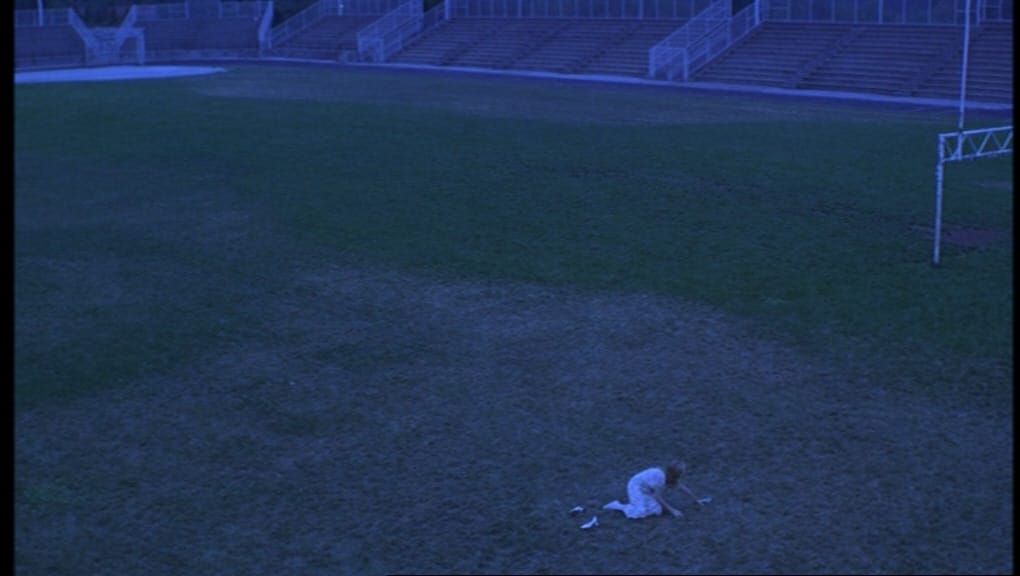
Thinking about scale, like the moment in The Virgin Suicides when Lux wakes up after the dance on the football field, and her realization that she's been left there alone makes her a small speck in an open, empty space.
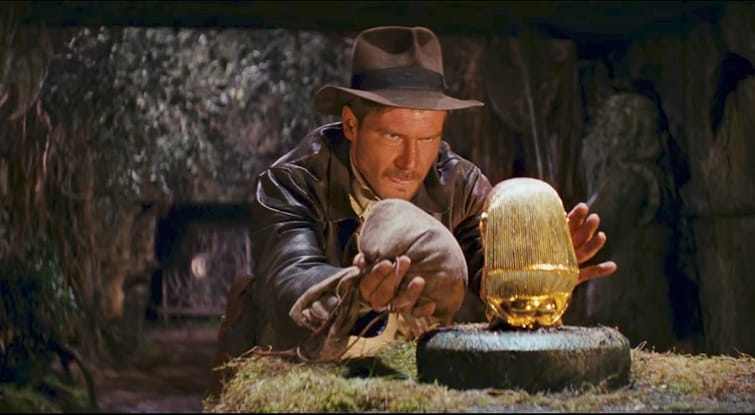
Or an image of tension, like Indy preparing to swap the bag of dirt for the golden idol to avoid setting off a trap in Raiders of the Lost Ark:
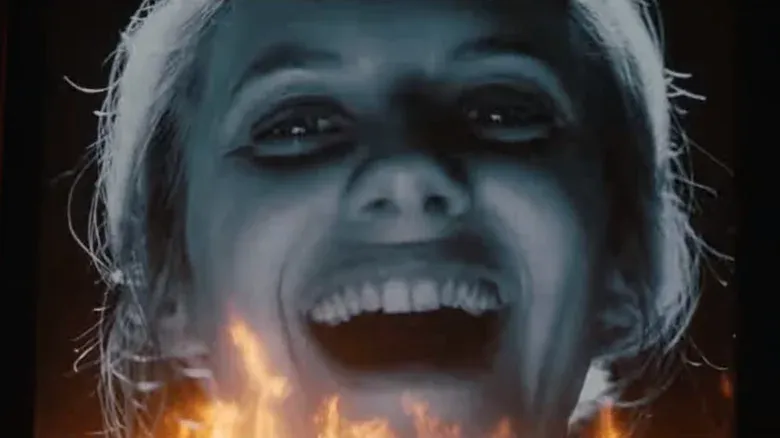
Or manifesting an emotion, like in Inglourious Basterds when Shosanna's larger than life face on a movie screen laughs as flames consume a theater full of the nazis she trapped there:
Permission to think smaller
When writing structure gets discussed, larger chunks of story can take priority, like scenes, acts, and arcs.
The idea Goddard presents in his interview offers another strategy, where a blank page or whiteboard can hold many smaller pieces that don't all need to fit together from the moment you put them down.
Which might help if the weight of the big picture is stalling or stopping you from moving forward and getting words on the page.
👋 Are you new here?
Inneresting is a weekly newsletter about writing and things that are interesting to writers. Subscribe now to get more Inneresting things sent to your inbox.
And if you can't wait until next week for more Inneresting, check out the Quote-Unquote Apps Blog where we keep previous issues and other posts about screenwriting and things interesting to screenwriters.
In case you missed it...
In the most clicked link from our last issue, Robert Lang compiles a list of short experimental films and narrative features with experimental influences.
What else is Inneresting?
- Derek Sivers considers how time creates distance, and your memory of a place may no longer describe it accurately.
- Jonathan W. Stokes on ways to make your audience invest in your hero.
- Manjula Martin still thinks zines are cool.
And that’s what’s inneresting this week!
Inneresting is edited by Chris Csont, with contributions from readers like you and the entire Quote-Unquote team.
Are you enjoying this newsletter?
📧 Forward it to a friend and suggest they check it out.
🔗 Share a link to this post on social media.
🗣 Have ideas for future topics (or just want to say hello)? Reach out to Chris via email at inneresting@johnaugust.com, Bluesky @ccsont.bsky.social, or Mastodon @ccsont@mastodon.art
The home version of our game
- Pick a favorite scene from a movie.
- Watch it from start to finish, uninterrupted, with total focus.
- Watch it again, pausing and writing down anything that feels like a beat to you.
- If you're feeling sassy, calculate the beats per minute.