Scriptnotes Recap: Ep. 728 - Beats to Scenes with Drew Goddard
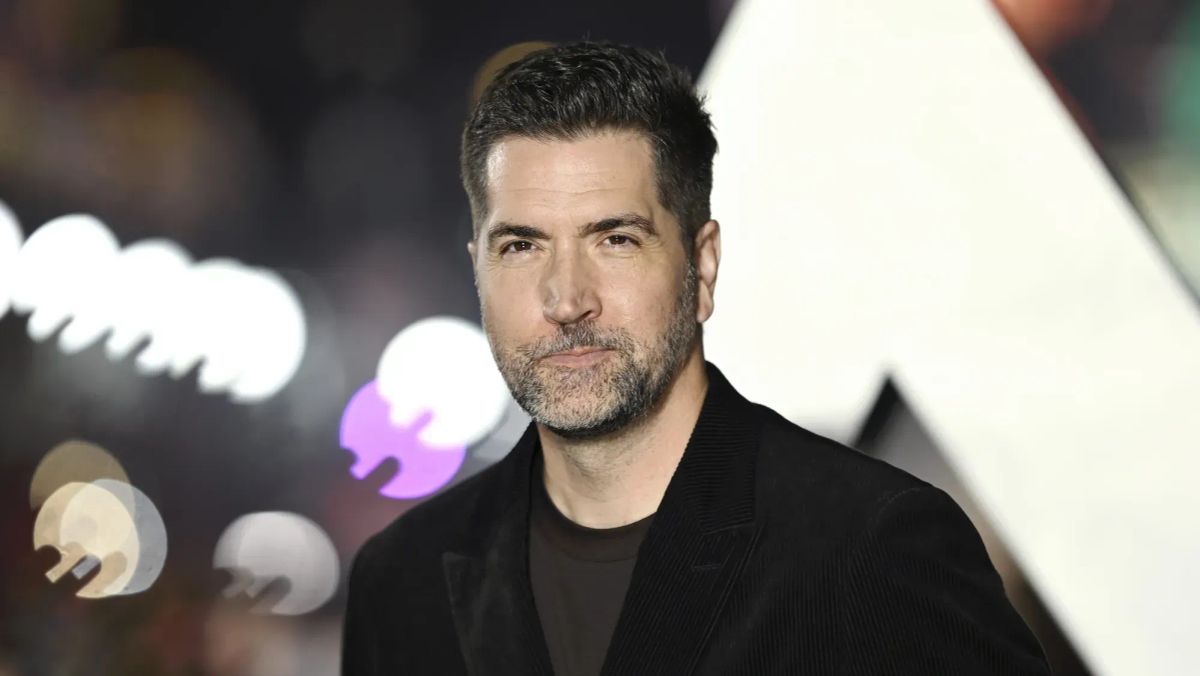
Early on in my Scriptnotes tenure, John slipped during an episode and accidentally called me Drew Goddard. I said, "I wish I was Drew Goddard," to which Craig paused the conversation and very kindly told me that I shouldn't try to be anyone other than myself, because who I am is good enough.
Craig is wrong. I wish I was Drew Goddard.
First of all, he's unbelievably tall. Google "Drew Goddard tall" and marvel at pictures of him towering over Hemsworths and commoners alike. As a bird-boned boy who was constantly reminded by people that "Tom Cruise is your size and people still find him attractive," nothing conjures envy quite like meeting a screenwriter the size of an NBA player.
Second, my god is he talented. Not only can he do any genre, he brings something new to every genre he works in. He always brings a playfulness to his work that is so damn charming. After he left our office I realized he's working on the next Matrix movie, which was immediately followed by the realization that he's the perfect person for the job.
And third, he's so freakin' kind and normal. While we were recording, Drew kept sniffling, and asked to pause to blow his nose. It was late February in Los Angeles, so I said, "Yeah, allergies are the worst this time of year." Drew smiled and casually said, "No, I'm just nervous. Some people sweat, my nose runs." Drew Goddard was nervous?!? And he doesn't mind admitting it?? As someone who records a lot of interviews and has never been totally comfortable on the air, that candor is so refreshing and comforting. Like so many of Drew's heroes, he's just a normal guy doing something extraordinary.
Not only did I love Project Hail Mary (Watched it next to John, cried the whole time, somehow still employed), but now having met Drew, I realized why I really want to be him: he's a true leader. It's worth listening to the whole episode, but it's clear to see how he guides his projects and his writers toward success:
Transitioning from Beats to Scenes
John: What is the basic unit of story? In the outline and treatment phase, it's probably the beat, whereas in the script is the scene. As film and TV writers, how do we move from beats to scenes? I'd argue it's perhaps the fundamental skill in our craft.
Drew: Not to just jump into one of my writers' room speeches, but you're going to hear what I talk about a lot because I do believe our job is to make scenes. At the end of the day, the thing that differentiates us as screenwriters are scenes. I see it a lot with young writers is they will come into a writers' room, and they'll have beautiful grand ideas about what this needs to be about, what the themes are, all these wonderful things that you want from writers. At some point it will get very quiet, and one of the upper level people go, "Yes, but what's the scene?"
Beats to me are just moments. Whether it's an adaptation or not, I tend to just start with moments that I respond to. It could be big or it could be small. It could be just, "Oh, I like when he said that thing to her." It could be, "Oh my God, this giant story turn." I'll put them on a board, and I'll just start noting them. Then at a certain point, I'll go, "I have enough beats," and go, "Okay, let's start trying to put scenes together." That takes a while. Then at a certain point, I'll go, "I have enough scenes to start thinking about structure." It builds out. That could take, in the case of something like Bad Times, years.
John: Something that Sorkin talks about is that when there's an obstacle that forces a new tactic, that's a beat. Basically, when you see a character make a choice, make a change, do a thing, the story has changed because of this incident, that is a beat.
Drew: There was a Daredevil episode — the second episode, which is one of the scripts I'm most proud of — on the board, we were just brainstorming ideas. I wrote "Matt in dumpster." That's it. That was the beat. We go, "What is that?" I'm like, "I don't know, but I like the idea of starting an episode early with our main character nearly beaten to death in a dumpster, and let's just see." That beat goes on the board. It's not a scene yet. We don't even know what we're doing here. It's just, "This sounds interesting."
You put it on the board, and you think about it. It does start to beg the questions like, "How did he get there? What happens next? Who's going to find him?" Now we're starting to shape it. Now we're starting to ask questions that connect. "Oh, if somebody finds him, that is going to suggest the scene." On its core level, this is how we're building story. Really, when I'm saying, "Yes, but what's the scene?" what I'm really saying is, "What are the actors going to do?" Because I know, having done this a long time, that's really what this is about.
John: Going from Buffy to Angel to Daredevil, how detailed do you like the beat planning to be?
Drew: Part of this started on Buffy, where we would spend, if you have a pie chart of how much time a script takes, you would spend 90% working on the story and getting it — not even the outline, just getting the board to a place where you can defend every moment. What it did was it allowed you, when you started writing, to actually be more free. I think there was this thought — part of this is TV, part of this is the grind of every 8 days you need 60 pages — in order to do that, you have to be very clear about what you're shooting early. That got deeply instilled.
I will work on beat sheets or outlines for years. I will do 50 because that's the goal for me. I don't like to do lots of drafts. I think it's much easier to be ruthless when it's in beat sheet form.
Turning an Outline into a Draft
John: You have this incredibly detailed beat sheet or outline, but there's still a fundamental skill of going from that to "This is really what it's going to feel like." Are your outlines that detailed that it's essentially a script but in a prosy form?
Drew: Sometimes, or some scenes are. If I know a scene's really hard or very technical, I don't want to be doing anything other than having fun when I'm writing. I will do the hard parts. Knowing that I'm making outlines for myself, I'm doing the work so that I don't have to worry about that part later. If I know the emotional point of the scene, that's enough. Then I'll get real simple. "Oh, this is what he's going through," because I know that will be fun to write, and I don't have to worry about it.
By the way, part of this is an outline for me to write as the writer. Then there's also the part that you need to do to convince everyone to let you do this. Those are two separate things. On Lost, our outlines ran longer than the scripts. It's really hard to do, because we were still in screenplay format, but without dialogue. That's not something we're proud of. The point is: when I say outline, they're functioning as drafts.
John: It seems like going off to draft, if it was a really detailed outline, it could be incredibly quick because you know exactly what's in there.
Drew: I wish that were true. Every writer that's gone through this is mad at you for saying that right now. Because invariably, you get the outline, and then you're sitting with that blank screen or page in front of you, and you're like, "Oh, God, none of this works."
John: When none of it works, is it the stuff within the scenes, or the flow from scene to scene, or both?
Drew: Or both. Or you start to question your own existential reason for writing this script. That happens a lot where you're like, "Why did we think this was a good idea as a group?" Sometimes you need just the emotional support. That's the other reason writers' rooms are helpful. "No, no, no, no. We all know what it feels like to panic."
John: Now, as a showrunner, you've had situations where a writer is struggling going from "This works as an outline" to "This is working as a script." What do you do?
Drew: I start from a place of compassion because I've been in that writer's shoes. I remember early some of my showrunners saying things like, "It's okay. You might wipe out. It's okay. That's why we do it this way — so if you wipe out, we are all clear on the story, too." It takes the pressure off. This doesn't have to be perfect. In fact, it's not going to be perfect. In fact, there's things that we thought we wanted that you are going to write, and by you writing them, we're going to realize, "Oh, that's wrong."
I think the fear of failure is one of the great things that stops us in our tracks and can really paralyze us as writers. As artists, with actors too — when I'm directing, I want to take fear of failure off the board. "Failure is actually a wonderful part of the process. If we're not screwing something up, it means we're not pushing the boundaries hard enough."
Listen to the full episode on Scriptnotes or wherever you get your podcasts!
The full transcript is available at johnaugust.com