🤼 #291 - Whose side are we on?
This week's Inneresting looks at perspective and audience sympathy. Who are you telling your audience your story is about?

Stories aren't just a list of things that happen. They’re about something. They have a perspective that guides the audience. They pick a side.
For example, Mind of Deo analyzes Troy’s fight between Achilles and Hector to suggest the ways that the staging of this battle manipulates the audience’s concepts of morality, and how it prioritizes competence over being a moral “worthy” person.
The Lion King has crystal clear intentions from its first frame for who this story is about, and who the audience is meant to emotionally connect with:
Is there a better opening sequence in a Disney film? I'll take my answer off the air.
The Circle of Life
What is the audience shown, and how are they shown it? Let's break it down:
- Starting with sunrise. The first image of light in the film is connected to daybreak and the rhythms of the natural world.
- Multiple shots of animals looking up and away at something with alarm, but not fear. All this while we hear the beginning rhythms of the song and vocals that sound almost like a call to prayer.
- From there the shots move with these various herds of animals engaged in a mass migration event. Big and small, predator and prey, all are moving toward somewhere.
- The first time the song's hook comes in ("It's the CIIRRRRCLE OF LIIIIIIFE"), the camera tilts up on Pride Rock, the place the audience later recognizes as the throne/castle of the king.
- Zazu lands at Mufasa's feet and bows. It's both the first specific act deference to authority, and also the first moment the film shows an animal behaving like a human. It contextualizes the previous shots, making them a call to observe the ruler for a special event.
- The lyrics don't directly explain the circle of life concept as Mufasa does later, but at least indicate an idea that this world is bound by a sense of order where all have a preordained role.
- Rafiki hops up and we're introduced to a lion cub. A collective "Oh! This is what we're here for," rushes through the audience. It's announcing the birth of this cub.
- This is further reinforced as Rafiki performs a ceremony anointing Simba with juice and dirt, then picking him up.
- Rafiki holds Simba aloft at the edge of Pride Rock for that iconic moment, and the animals below make some noise!
- And then, the clouds part, and the sun's light shines directly on Simba. The natural world itself selects this cub as special.
- The animals bow to their future king.
- And as the shot pulls back to reveal the scale of this moment, there's a drum beat and a hard cut to the title card: The Lion King
Shivers, right?
This is a moment that uses every element to focus the audience around the idea that this is a story not only about Simba, but about what constitutes The Natural Order of Things. Even before it's clear that we're watching Hamlet with big cats, it's clear this is a story about the divine right of kings and succession.
Speaking of royalty, succession, and cat themes...
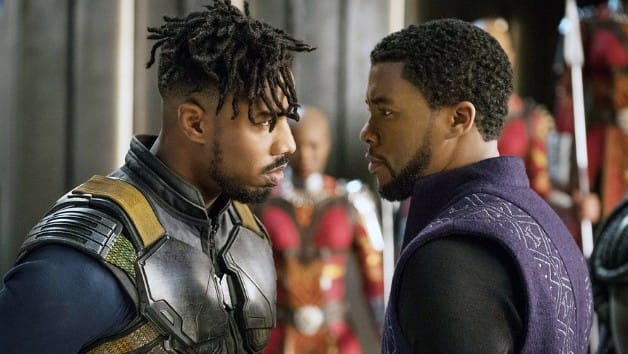
#KillmongerWasRight
Cinema Therapy brings in special guest Stacey Harkey to consider that Black Panther's villain, Killmonger, complicates the audience's sympathies.
T'Challa believes that protection ends at survival and isolation. Killmonger sees a broader mandate, and that protection means fighting oppression beyond Wakanda's borders. Cinema Therapy argues that Killmonger's flaw in perspective is how he's not necessarily destroying the systems of colonial oppression, but using them to change who's in power.
And yet, Killmonger still makes a compelling case to T'Challa that the king and Wakanda must change.
Intentional Ambiguity
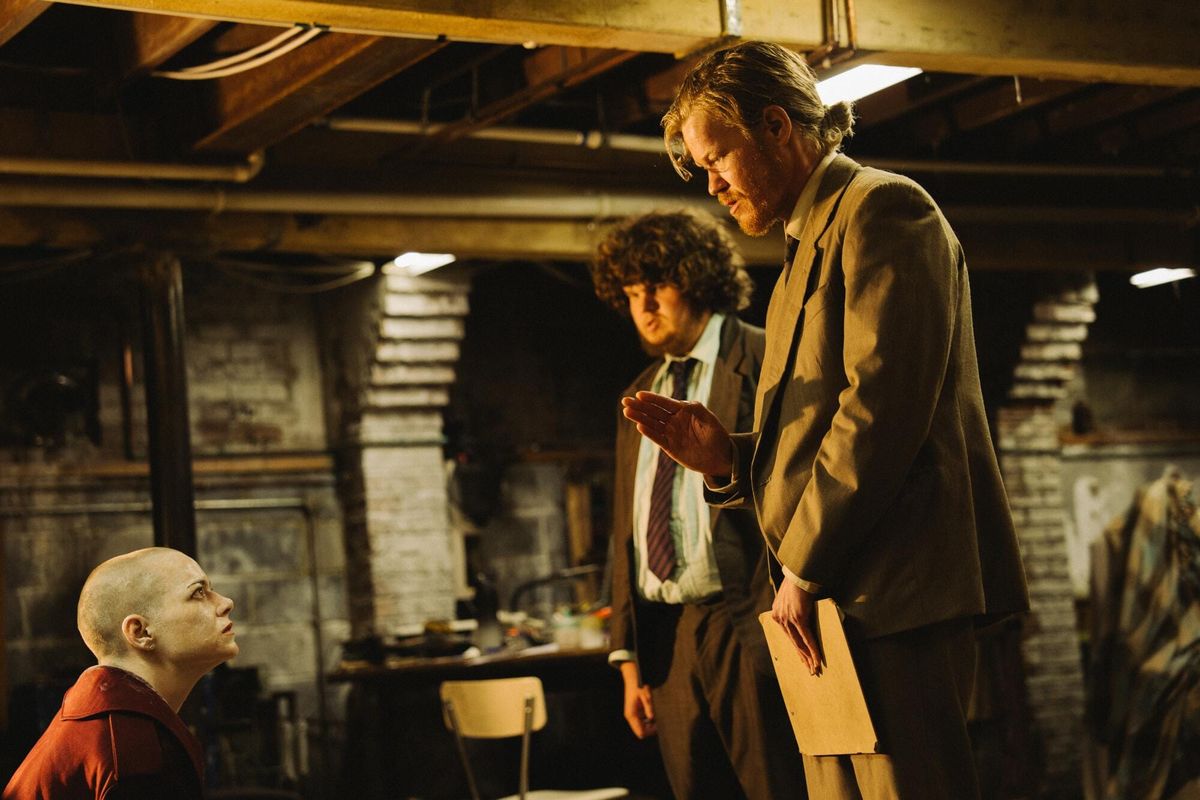
Bugonia pits a conspiracy theorist against the CEO he kidnaps, claiming she's secretly an alien. There are gut reactions about who's "right" in this scenario from that premise, but the more the story unravels, the more an audience's preconceived notions fall apart.
Just One More Thing digs into Bugonia, and how it manipulates the audience’s understanding not only of what story they’re watching, but whether either of the primary characters deserve our sympathy and support.
Whose side are you on?
What are you writing into your story to suggest who the audience should align themselves with?
If you want there to be some ambiguity to that, will it serve your purpose better to refuse to take sides, or to present compelling evidence for different sides at different times with roughly equal energy?
Do you think that the character you align yourself with as the writer is the same one your audience is likely to connect with?
👋 Are you new here?
Inneresting is a weekly newsletter about writing and things that are interesting to writers. Subscribe now to get more Inneresting things sent to your inbox.
And if you can't wait until next week for more Inneresting, check out the Quote-Unquote Apps Blog where we keep previous issues and other posts about screenwriting and things interesting to screenwriters.
In case you missed it...
In the most clicked link from our last issue, Maria Popova shares Sol LeWitt's motivational letter to sculptor Eva Hesse, a call to action for any artist.
What else is Inneresting?
- Tyler Peterson looks at the iconic 1956 film Earth vs. the Flying Saucers to explore how science fiction became a way for processing the post-war trauma of World War II.
- Nathan Go focuses on the endings of short stories to question what an audience wants (and needs) from an ending. Must it be a life-changing epiphany, or can it be something smaller and less concrete?
- 8BitJoystick shares a method for overcoming decision paralysis when you have a long list of things you want to read/watch/play in your limited free time.
And that’s what’s inneresting this week!
Inneresting is edited by Chris Csont, with contributions from readers like you and the entire Quote-Unquote team.
Are you enjoying this newsletter?
📧 Forward it to a friend and suggest they check it out.
🔗 Share a link to this post on social media.
🗣 Have ideas for future topics (or just want to say hello)? Reach out to Chris via email at inneresting@johnaugust.com, Bluesky @ccsont.bsky.social, or Mastodon @ccsont@mastodon.art