🧪 #290 - A Chemical Reaction
This week's Inneresting focuses on character chemistry! No beakers, goggles, or eye rinse station necessary.


Chemistry is fundamentally the combination of elements that by themselves would be relatively stable. When you put them together, they create something volatile and new. That's what we're really talking about with relationships-that fresh substance created when characters are interacting and challenging each other.
As writers, we are emotional chemists. We select and combine characters in scenes, then apply heat and pressure to create something exciting, unstable, and potentially explosive.
–Scriptnotes, Chapter 4: Relationships
In Inside Out, Joy feels like she can run the show with limited help from her fellow emotions. Sadness usually stays out of the way, studying instruction manuals and lying on the floor. Scott Myers looks at the dynamic between Joy and Sadness, pointing to how the film is structured to force the two emotions to directly interact, challenge the protagonist’s assumptions about their co-adventurer, and force the two to work with each other to resolve their conflict.

Charles Xavier and Magneto offer a long-standing clash of ideologies, but married to a friendship that prevents either the separation needed to realize their ambitions. Pop Mythology looks at the conflict between Charles Xavier’s idealsim and Magneto’s pragmatism, and how this central friction is the heart of X-Men stories. Stephanie Williams looks back at the first X-Men film, and how a modern lens may see Xavier’s views as an extension of respectability politics (and how that still makes for a relevant counterpoint to Magneto’s view that mutantkind should expect respect instead of having to earn it).
Consider this sequence from The Silver Linings Playbook where Pat and Tiffany are introduced. Two characters on similar paths get thrown together, and there's a series of reactions. Sometimes they repel each other, but in their conversation about medication, there's a clear pull towards each other. Either one could be the main character of a story, but it's their interaction that creates a dynamic where each finds a person who is both a source of conflict as well as a catalyst for healing.
In Ferris Bueller's Day Off, Ferris needs Cameron. Meaning on the Screen looks to the way that Cameron’s growth over the course of the film is a direct result of Ferris showing an alternative to the constrained, negative view Cameron begins the story with. Contrast this with what PushingUpRoses shows us of the attempt to make a Ferris Bueller spin-off for television. Without centering that essential friction between Cameron and Ferris, and without an earnest desire to break Cameron out of his shell, the character of Ferris Bueller succumbs to his own hype and falls flat.
Finally, a scene from The King's Speech, where Lionel and Bertie meet in Lionel's office:
The scene focuses on two threads: How different these two men are, and how there's the possibility that they can work together productively.
Consider:
- The direct contrast between the drab, empty office space and the status of the king-to-be
- Lionel's loquaciousness vs. Bertie's reserve
- The pessimism of the prince vs. the try anything spirit of Lionel
- Each highlighting the general class differences between them
But bear in mind, even with these contrasts it's no good for telling a story if you can't keep them in the room together. While Lionel pushes a lot of buttons, he makes a dance of offering some deference while still asserting his control of the therapeutic session.
When writing these reactive relationships, what links the odd couple together? Is it a common goal, or a common threat? If they're both working toward the same goal, why haven't they worked together before? If they have a choice in the matter, what compels them to choose to continue this relationship?
👋 Are you new here?
Inneresting is a weekly newsletter about writing and things that are interesting to writers. Subscribe now to get more Inneresting things sent to your inbox.
And if you can't wait until next week for more Inneresting, check out the Quote-Unquote Apps Blog where we keep previous issues and other posts about screenwriting and things interesting to screenwriters.

The Big Screen Bundle
The best writing tools help strip away everything competing for you attention, giving you a single-purpose solution designed for one thing: getting words on the page.
That's why Highland Pro has partnered with Freewrite for a special distraction-free screenwriting bundle from April 15th-April 30! Use code SCREENPLAY26 to get 5% off a Freewrite Alpha, Traveler, or Smart Typewriter to draft without distractions along with 33% off a year's subscription to Highland Pro.
Check out the full breakdown of the Freewrite and Highland Pro workflow!
In case you missed it...
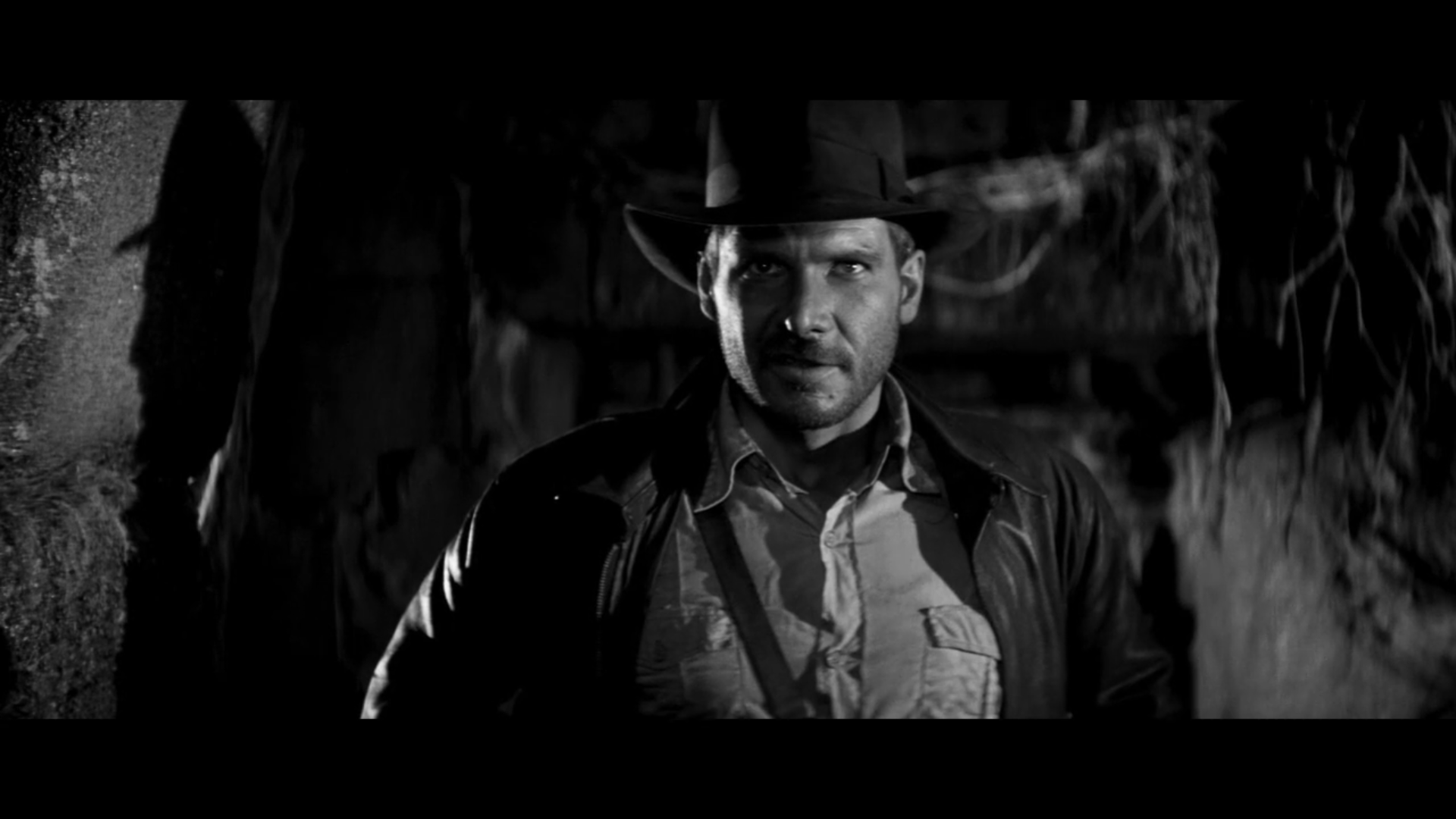
In the most clicked link from our last issue, Steven Soderbergh's silent, black & white edit of Raiders of the Lost Ark made an impression.
What else is Inneresting?
- Anastasia Tsioulcas updates us on the ALA's list of the books most challenged for removal from libraries (and who's doing the challenging).
- Joshua Cohen covers how Sweden is recalibrating its reliance on tech in the classroom and the return of textbooks.
- Maria Popova shares Sol LeWitt's motivational letter to sculptor Eva Hesse, a call to action for any artist.
And that’s what’s inneresting this week!
Inneresting is edited by Chris Csont, with contributions from readers like you and the entire Quote-Unquote team.
Are you enjoying this newsletter?
📧 Forward it to a friend and suggest they check it out.
🔗 Share a link to this post on social media.
🗣 Have ideas for future topics (or just want to say hello)? Reach out to Chris via email at inneresting@johnaugust.com, Bluesky @ccsont.bsky.social, or Mastodon @ccsont@mastodon.art
If you don't know what to write...
reply to this email with an idea for what we should share for Inneresting's 300th issue!