The Mad Dash Toward Love (feat. Roy Kent)

It’s easy to come up with quick setups for when a character needs to run away from something. All it takes is showing them in a place with someone or something they don’t want to be near.

But what about when a character needs to run toward something or someone? When your character needs to close the distance between themselves and their desire, how do you convince the audience that this moment, right now, is exactly the moment for a climactic dash?
Let’s take a look at Ted Lasso episode 2x05, “Rainbow”
What Makes Roy Kent Run
Coming in to season 2, Roy made the difficult decision to retire from playing football. In a rare display of emotion, his press conference announcing his exit brought him to tears. It was a moment of such unprecedented vulnerability that his girlfriend Keeley would rewatch the clip for... reasons.
But Roy wants to show everyone he’s moved on. He won’t come back to Nelson Road to watch a Greyhounds game, even though Ted leaves tickets for him under a fake name every match. He’s got a posh job talking about football on television, which pays well. He even gets himself a new watch. All good things, right?
A brief aside: In another plotline of the episode, team owner Rebecca is chatting with a mysterious stranger on a dating app who quotes Rilke at her. Specifically, “Our deepest fears are like dragons guarding our deepest treasures.”
Hold that one in your heart, because we’ll need it in a minute.
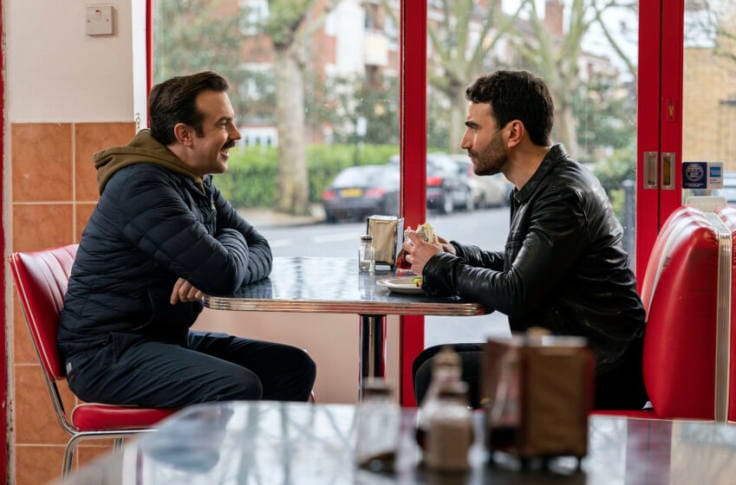
Ted goes to Roy’s favorite Kebab shop to try and persuade him to come back to the team and coach. Or at the very least, help him figure out why current captain Isaac McAdoo can’t get his head in the game.
“If you enjoy doing the whole pundit thing, then by all means, you should do it for the rest of your life.”
–Ted Lasso, being a nudzh (and knows it)
Ted can see something that Roy can’t, or isn’t willing to let himself see. Roy would make an amazing coach. Roy extends the bare minimum, taking Ted and Isaac out to a public field where some young adults from the neighborhood. In a small moment of vulnerability, Roy says this is where he grew up, and where he came to play football.
When Isaac complains that there’s no point in him, a professional, playing a pick-up game, Roy does exactly the thing he says he doesn’t want to do.
“I brought you here to remind you that football is a fucking game you used to play as a fucking kid. ‘Cause it was fun, even when you were getting your fucking legs broken or your fucking feelings hurt. So fuck your feelings, fuck your overthinking, fuck all that bullshit. Go back out there and have some fucking fun.”
–Roy Kent, coaching (doesn't know it)
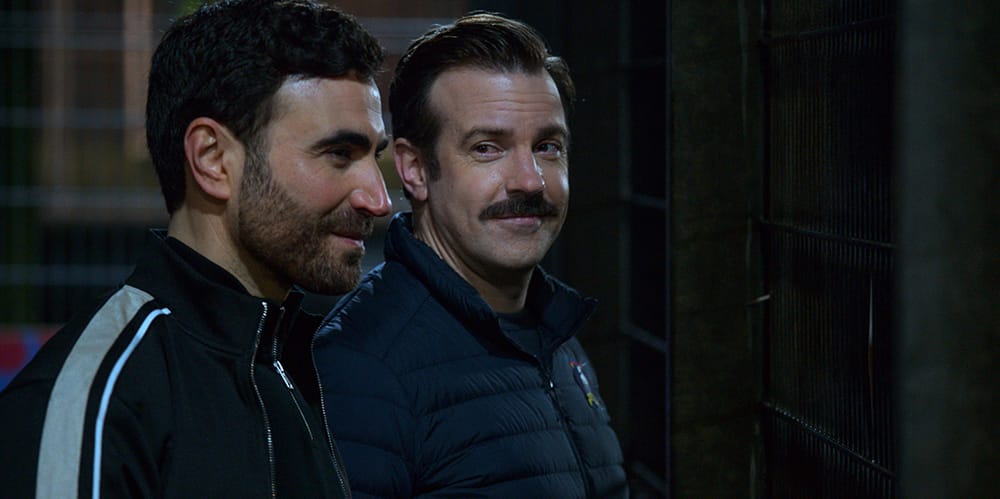
Ted, seeing Isaac come alive after this profane pep talk, makes another pitch for Roy to join the Greyhounds’ coaching staff. He keeps dropping in altered lines from popular romantic comedies, like “You complete our team.”
Because what’s being set up is a moment right out of a rom-com, except that in this story, it’s about a man realizing just how deeply and completely he loves football.
The structure of the mad dash toward love
These aren’t hard and fast rules, but moments that stand in for the basic shape of this kind of sequence.
- Moment of Understanding - Where the audience gets to see the moment the character changes their mind and recognizes who/what they love. It’s not always a lightning bolt of an epiphany, but it lights the fuse for the action to come.
- The Actual Running Part - This is not a decision that can be kept inside. Somebody needs to know and they aren’t here. Even if it’s not just running, there’s a need to move quickly to get to where they are.
- The Arrival - A final hurdle to clear now that the character has made it to the place we want to be, but aren’t yet with who we’re looking for. Sometimes there’s a last challenge or gatekeeper to navigate. A last effort by the story to keep these two apart.
- Sharing the New Understanding - Finally face-to-face, a commitment is made. A vow. An apology. It must be shared, person-to-person. The running closed the physical distance, and now the conversation closes the emotional distance.
Roy’s Moment of Understanding
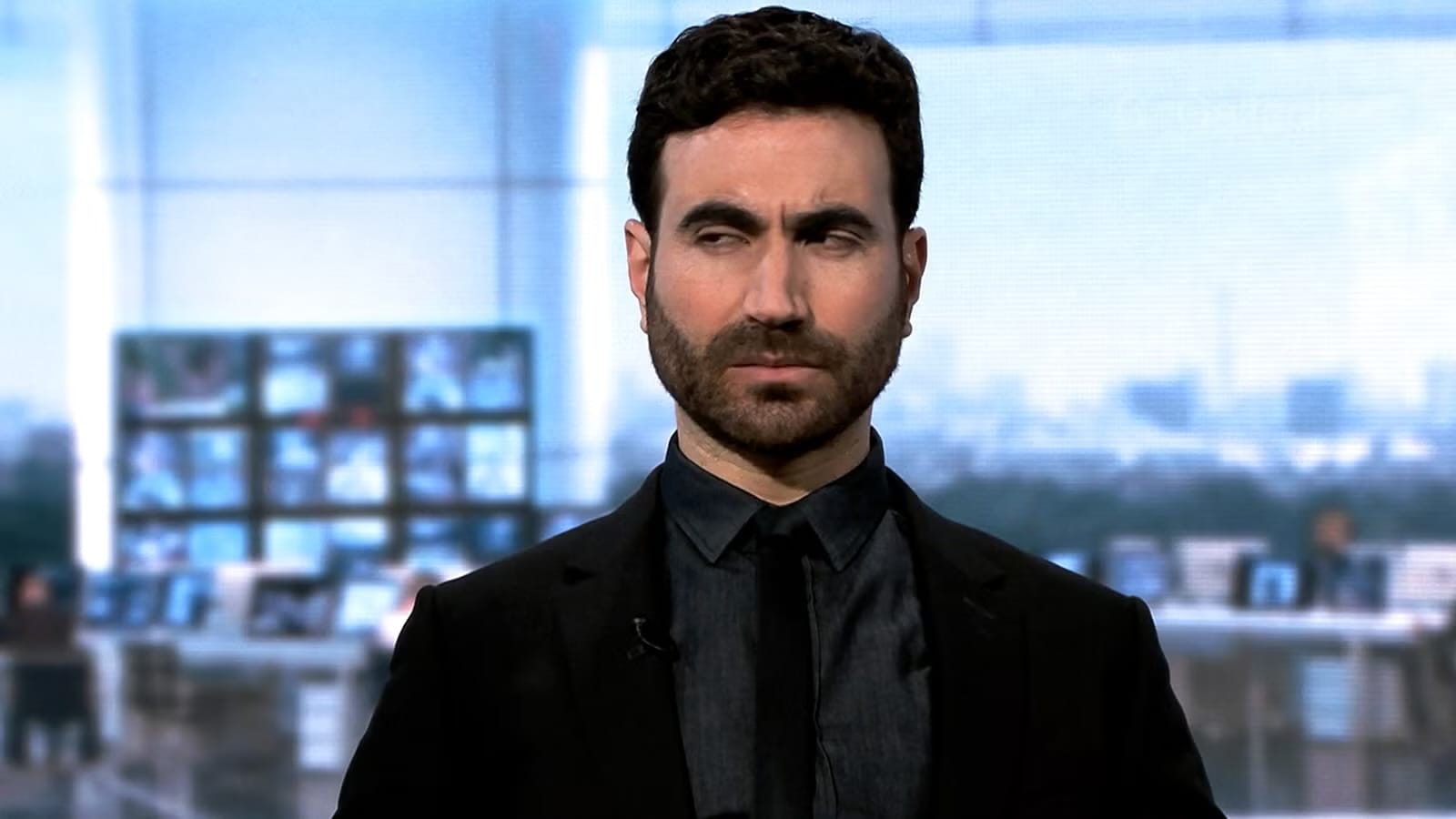
We’ll take it from another match day in the TV studio. Roy gets a question about how he thinks a rookie player is going to play, and after a curt and profane shrug of an answer, his heart cracks open again, a little wider than with Isaac:
We don’t know. We’re not in the locker rooms with them. We’re not on the pitch with them. We can’t look ‘em in the eyes and encourage them to be better than they ever thought they were capable of being. We’re just on the outside looking in. Judging them.
–Roy Kent, almost getting it
From there the host segues over to Roy’s former team, and points out McAdoo having fun doing a goofy secret handshake warm-up with the whole team.
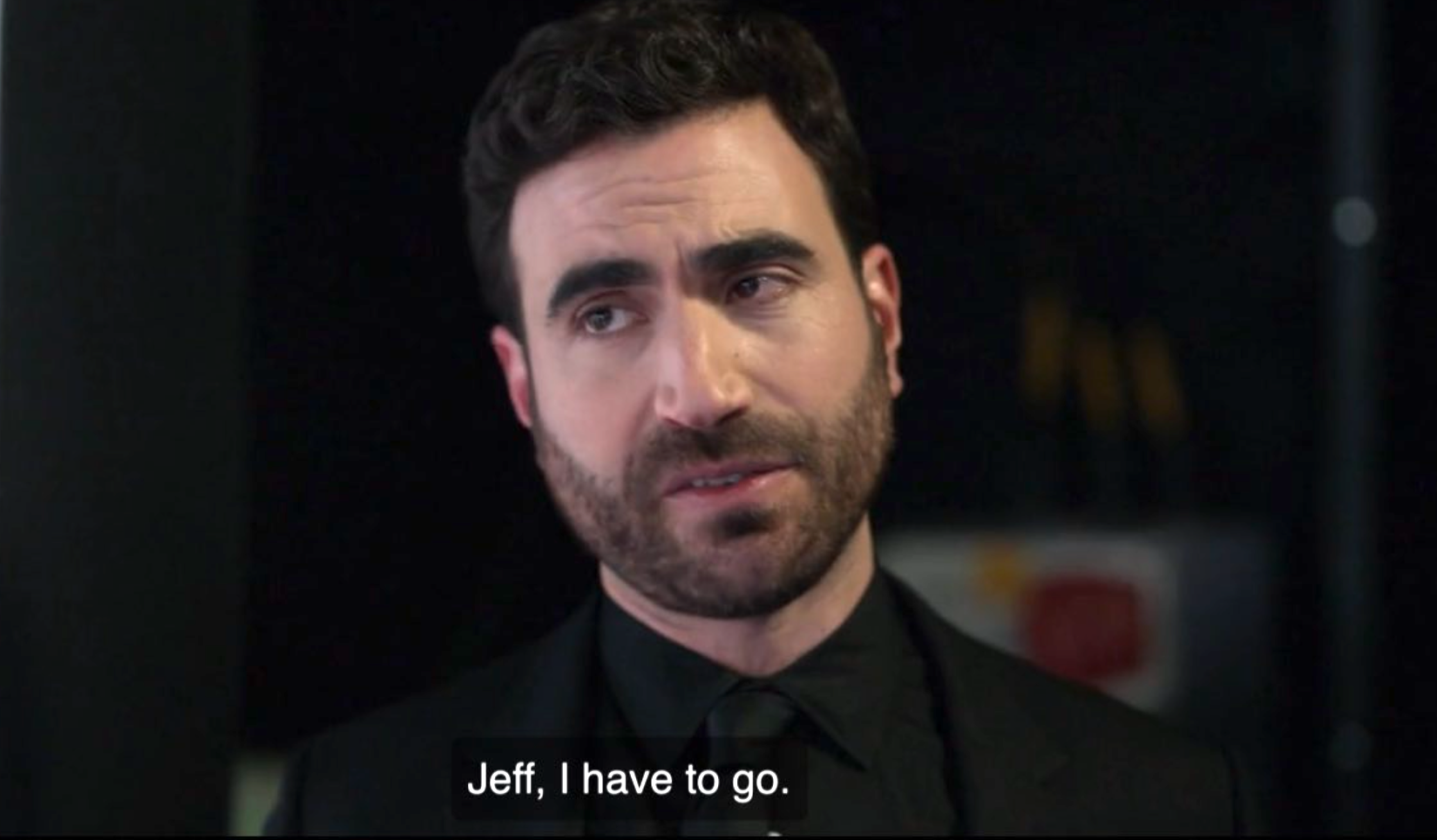
While the other pundits talk about how it’s unprofessional and shows a lack of seriousness in the captain, Roy gets his moment of realization.
He helped Isaac remember it’s a game. He helped Isaac remember himself. Roy Kent can be a good coach.
Roy Mostly Sort-of Running
Back to Rilke for a moment, because while Roy starts his dash back to Nelson Road to be with his team, he needs to slay the dragon first.
In this case, the dragon was the front he put on about loving the television job, and all the comfort it could provide for him. That dragon was protecting Roy from exposing his vulnerability to the world again. Roy’s deep love of the game, and his love for his fellow athletes is something he’s afraid of feeling. That internal dragon lets him hide that side of himself.
It starts with yanking off the mic pack in the studio. Roy untangles himself from it and lets the host know “This isn’t what I’m meant to do.”
Outside he runs to a cab, because nobody’s going to run that whole way before the game starts. As he gets in:
CAB DRIVER
You’re Roy Kent!
ROY
No, I’m not.
(beat)
Alright, I am. Take me to Nelson Road.
Roy still doesn’t feel like himself. He’s still guarded. Still hiding.
The cab driver tells him he can’t drive him because he needs to clock out and go buy an anniversary present for his wife. Again we’re conflating the romantic with the athletic: Roy needs to get back to his love, but it would mean keeping this driver away from the one he loves.
Roy digs into his wallet and takes out all of his cash. Like the mic, this is another step in ridding himself of the life of a pundit. The cabbie decides that cash is a good gift for his wife, Roy unbuttons his collar, and they’re off.
Roy unbuttons his collar: Casting off the TV-ready appearance. Opening himself up. It’s all there...
But the cab won’t take him all the way. The road is blocked off around the stadium for match day. Roy’s back to running, but uh-oh...
Roy’s knee pops out of joint. One of the main reasons he retired was how much punishment his body was taking. As he gets closer to his goal, he’s reminded of the toll the game took on him, and how even with all the pain he misses the pitch.
Roy hobbles up to a man with a pedicab. Since he just gave away his cash, he offers his new watch in exchange for a ride to the stadium gate. One more piece of the TV job cast off. One more stab at the dragon.
Roy’s Arrival
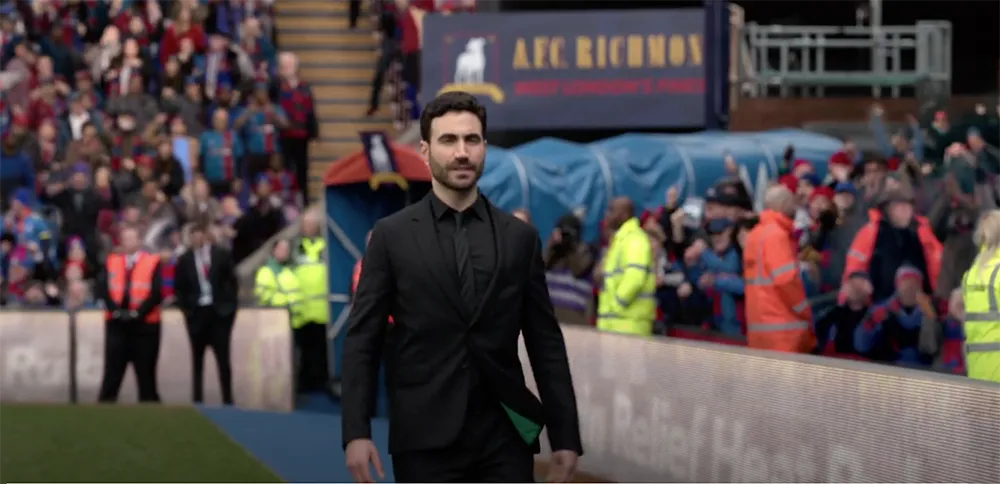
Roy hobbles up to enter, but there are literal gatekeepers preventing him from getting inside.
GUARD ONE
Can’t get in without a ticket.
ROY
I’m Roy Kent!
GUARD TWO
He does look like him, a little.
It’s a funny bit, but it’s playing back into a central question: Who actually is Roy Kent? Something’s still missing. So he goes to the ticket booth and plays along with Ted’s game, asking for the ticket reserved for Reba McEntire.
And as soon as Roy hands over the ticket and drops an f-bomb, it clicks for one of the guards: “It is you!”
Roy reconnects with himself as he reconnects with the team. He’s gone from lying that he’s not Roy Kent to not being believed to heading toward that moment where his inside matches his outside.
But that hobble. Roy stops in the hallway before stepping out to the pitch and wrenches his knee back into place. It’s painful, but he can do it now. He’s done running. He’s home, and now he's healed.
And as he steps into view of the crowd, the cheer begins:
Roy Kent!
Roy Kent!
He’s here. He’s there.
He’s every-fucking-where!
A few minutes ago, he wasn’t there. A few minutes ago, he wasn’t really Roy Kent. But the unity of identity, desire, and place are back as they should be. The fans form a chorus singing in celebration that all is once again as it should be.
Roy Shares His New Understanding
Gradually the staff and players from the team recognize Roy’s back, and understanding what that means as he walks up to Ted, Beard, and Nate on the sideline:
TED
Hello, Coach. I’m really glad you --
ROY
Shut up. Just shut up. You had me at ‘Coach.’
BEARD
(gasps)
This is Roy Kent, but it’s a Roy who accepts Ted’s corniness. It’s dropping the mask and allowing the emotional vulnerability he couldn’t muster before. Ted is an earnest goofball, and to meet him halfway, Roy allows himself to get a little cringe.
It’s Roy admitting that he was trying to be someone he wasn’t out of fear that it could hurt or diminish him.
And the sequence ends with Roy taking his place with the other coaches, breathing the frosty air, having slain the dragon that kept him from sharing his deepest treasure.
Post-Game Thoughts
If you think you need a mad dash to bring your story to a proper ending, consider:
- Realizing how deep their love is means that a character previously rejected their own feelings. What’s the reason your character refused to see the truth until this moment?
- How is the resolution not only about love, but identity? Example: At the end of The Graduate, there’s a clear difference in values and attitudes between Ben and Elaine’s fiance. Choosing one over the other says something about who Elaine wants to be, not just who she wants to be with.
- Running isn’t the only option. Getting from one place to another requires movement, but don’t forget opportunities to play with audience expectations or find a novel wrinkle for getting your protagonist from Point A to Point B.