V.O. vs O.S.: Voice‑Over & Off‑Screen Dialogue Explained
V.O. (voice over) and O.S. (off-screen) are similar terms, but they have slightly different applications.

V.O. vs. O.S.: What’s the Difference?
V.O. (voice over) and O.S. (off-screen) are similar terms, but they have slightly different applications. Both are used to indicate that dialogue is spoken by someone not currently seen on the screen; the difference isn’t where the speaker is not, but where the speaker is.
O.S. is used when the character is in the scene location, but not currently on screen. If Sally walks to the other side of the bedroom and into the walk-in closet, and yells unseen about how she’s out of clean socks, O.S. should be used. In television, especially multicam sitcoms, it is not uncommon to see O.C. (off-camera) used instead of O.S.
V.O. is used when the speaker is not physically in the scene. The speaker could be someone on the other end of a telephone line or radio broadcast, an unseen narrator, or a character’s inner-monologue. This last example is important to note, as it is somewhat counter-intuitive: if an on-screen character’s thoughts are heard, it is V.O., not O.S.
What Is a Pre-Lap (and How to Format It)?
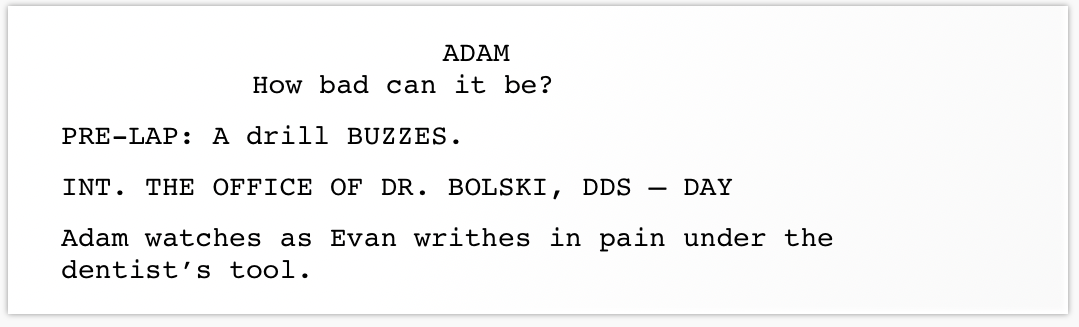
A pre-lap is when the dialogue (or any sound) from the next scene starts before we cut away from the previous scene. They are a common and useful transition. Pre-laps are often inserted in editing, but they can also be written into scripts.
Dialogue pre-laps are indicated with the parenthetical “(PRE-LAP)” next to the character’s name — not below it — and in all caps:

If the sound is something other than dialogue, it can be set off like this:
How to Format a Telephone Conversation in a Screenplay
There are a few ways to deal with telephone conversations in screenplays. If only one party is seen and heard, treat it like other dialogue, with pauses or beats or actions to break up that character’s dialogue and indicate when the other party is talking.
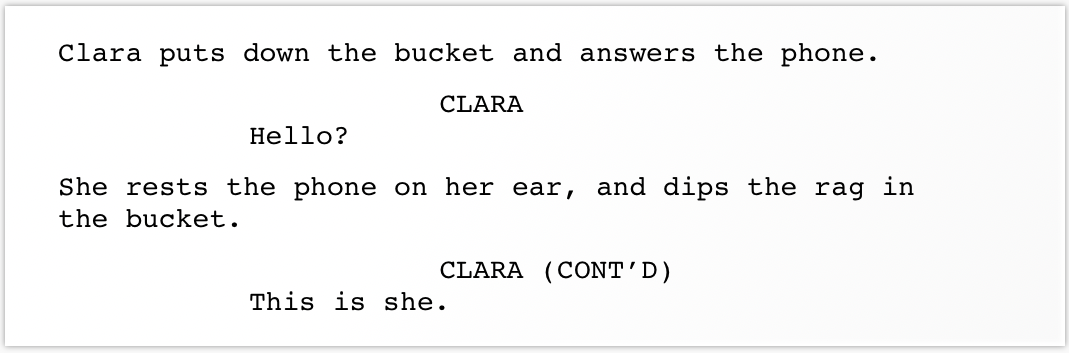
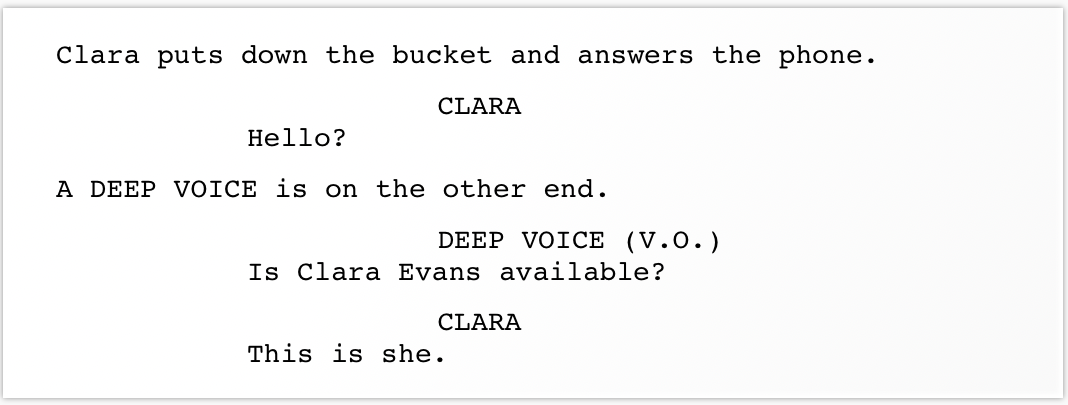
If one party is seen and the other is heard but not seen, indicate the unseen’s dialogue as voice-over (V.O.) and treat it like any other scene.
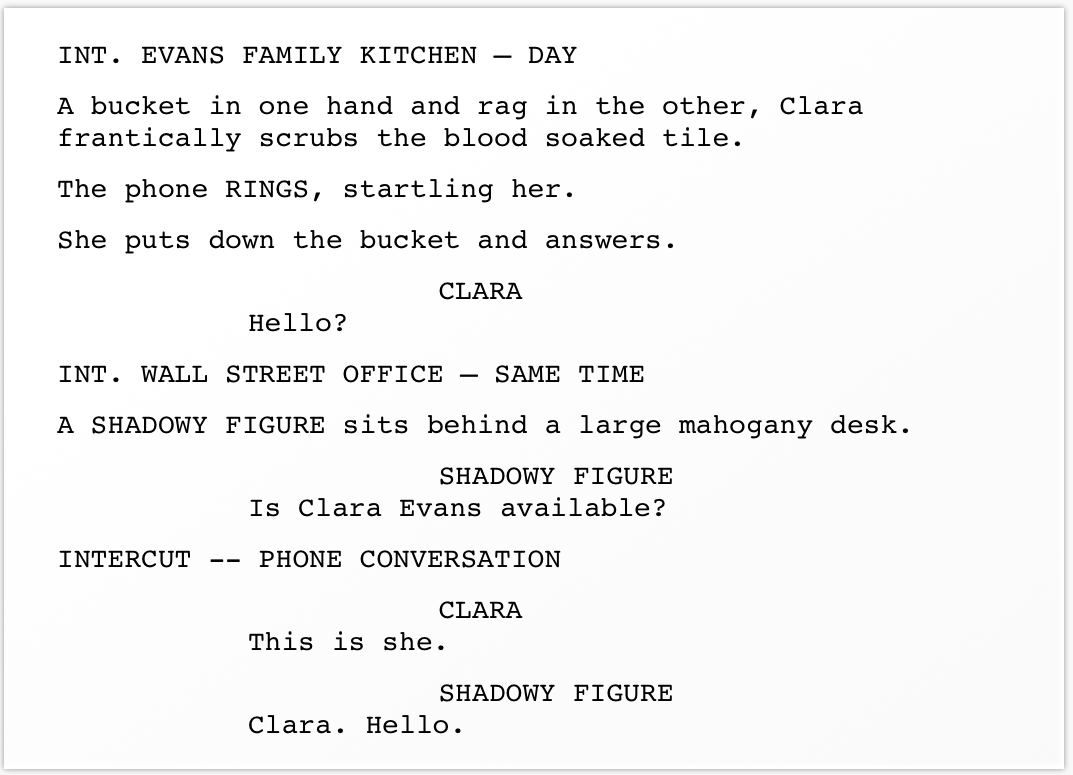
If we are cutting between the two locations (called “intercutting”), and both parties are seen, there are two clean ways to handle this. You can use the slugline “INTERCUT — [LOCATION 1]/[LOCATION 2],” or you can establish each location with its own slug and description, and then use the slug “INTERCUT — PHONE CONVERSATION” or some other clear variation. Another option is to have a full scene header between each cut. This can get unruly, but it is perfectly acceptable.
As with all formatting advice, there is no hard and fast rule. Your goal is to be both clear and clean, and to not confuse the reader or take him out of the screenplay.
Supplemental Links: