Villaintine's Month: Miles Morales vs. Kingpin
This month we're looking at pairings of heroes and villains that have more chemistry than some romantic couples. What does it mean to be an archnemesis?

A story’s villain is often a dark mirror of the hero–someone with many similarities, but also a crucial difference. Their specific nature takes the audience beyond the simplicity of good vs. bad and highlights what differences matter in how a person acts toward others.
This difference hinges on a question or event that both characters wrestle with. Let's look at the example of Miles and Kingpin in Spider-Man: Into the Spider-Verse, and how they are on opposite sides of how to respond to grieving the death of those closest to you.
Miles witnesses Spider-Man/Peter Parker’s death and sees Kingpin murder his Uncle Aaron. Kingpin’s family runs away from him when they witness him viciously beating Spider-Man, and they die by car accident during their escape.
They’re both grieving throughout the story, but their paths take completely different directions.
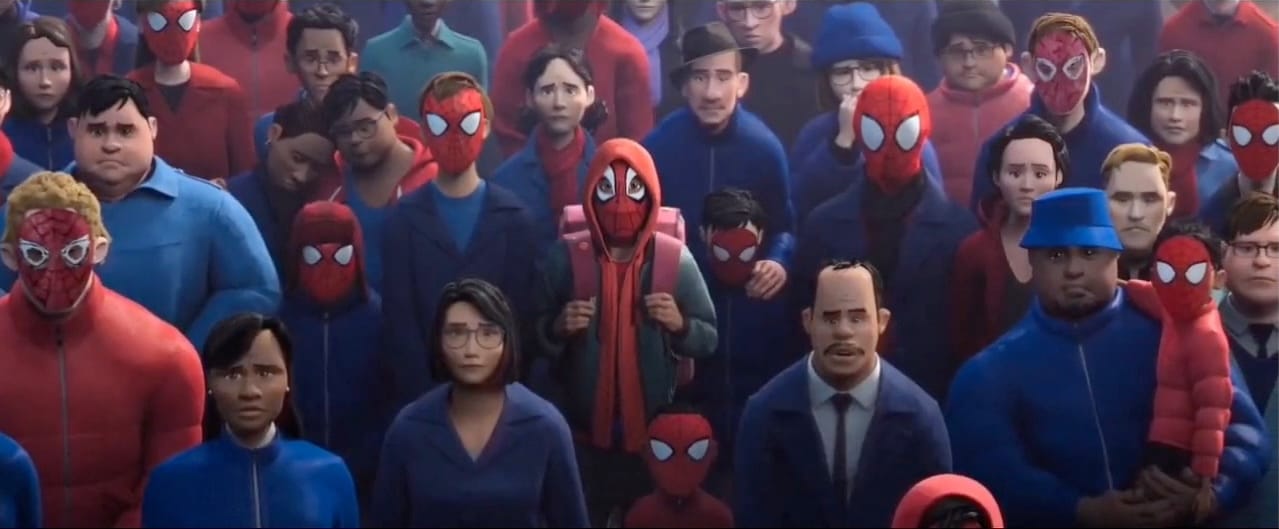
Creating Perfect Opposition
Kingpin wants his family back, or at least an exact-enough substitute. He contracts Dr. Octavius to build an interdimensional supercollider so he can snatch another version of his wife and son from the multiverse and start over. He’s not concerned about the dangers of running the collider, and the obvious ways it’s twisting the world around him. He is willing to bring down everything around him to replace what he has lost. He wants to end his grief.
Initially, Miles is on a similar path. Before his death at the hands of Kingpin, Peter entrusts Miles with the flash drive that can shut down the collider. But Peter is killed, Miles is almost caught, and suddenly that flash drive feels a lot heavier for Miles.
He puts himself to work, trying to train himself to become the new Spider-Man. Unable to control his powers, and unwilling to test their limits, he comes up short. He’s not going to overwrite his grief by immediately stepping in as the new Spider-Man.
Even when he finds allies like Peter B. Parker and Gwen Stacy, he can’t compare. He’s had a few days with his powers, while they’ve had years. It’s as clear to them as it is to Miles that a Spider-Man who can’t do his powers on command isn’t going to do much against Kingpin.
But there’s a turn when Miles sees his Uncle Aaron killed by Kingpin. When his father comes to his dorm to share the news about his uncle, Miles is unable to move or respond (tied up by the other Spider-People to stop him from following them to Kingpin’s tower). All he can do is listen to his father:
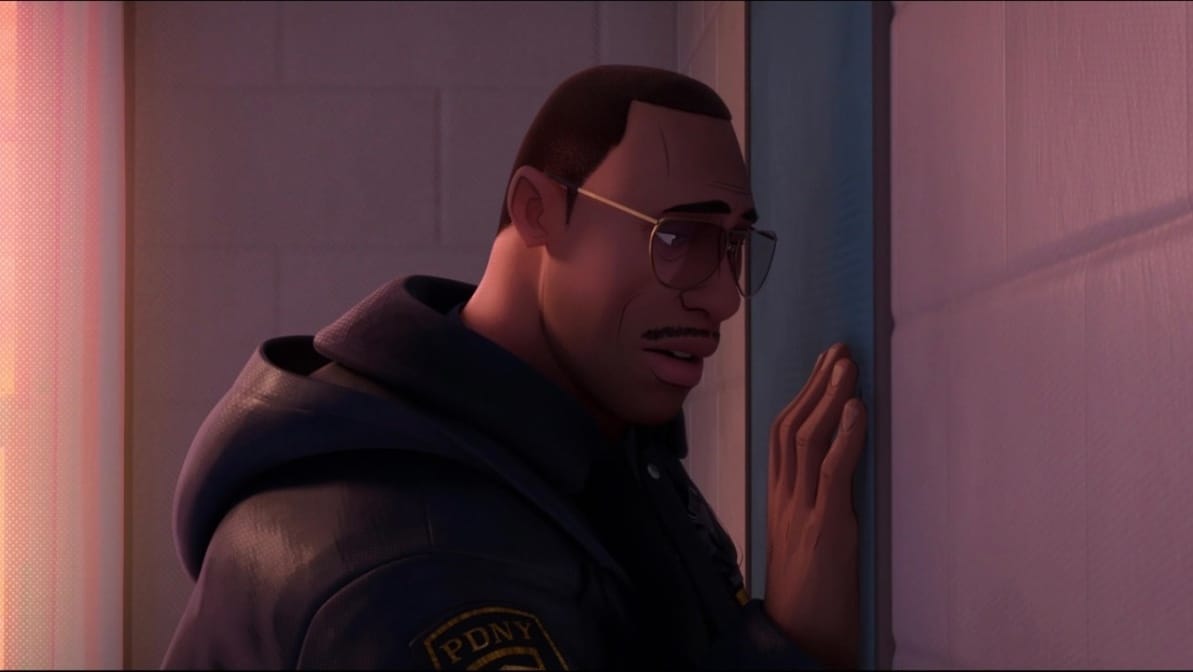
“Look, sometimes people drift apart, Miles. And I don’t want that to happen to us, okay? Look, I know I don’t always do what you need me to do or say what you need me to say, but I... I see this – this spark in you. It’s amazing. It’s why I push you. But it’s yours, and whatever you choose to do with it, you’ll be great.
Miles knows what his father came to tell him. But what’s more important for him to hear in that moment is how his father chooses to break the news.
He tells his son that his relationship with his brother fell apart, and he doesn’t want the same thing to happen with Miles. Instead of wishing for his brother back, Miles’s dad is sharing a lesson about how you can lose someone important forever if you let them drift out of your life. He’s applying that lesson to his relationship with his son, moving forward through grief.
This is modeling to Miles a way for him to work through his own grief. And, this being a superhero story, there will be some serious punching to help process his emotions.
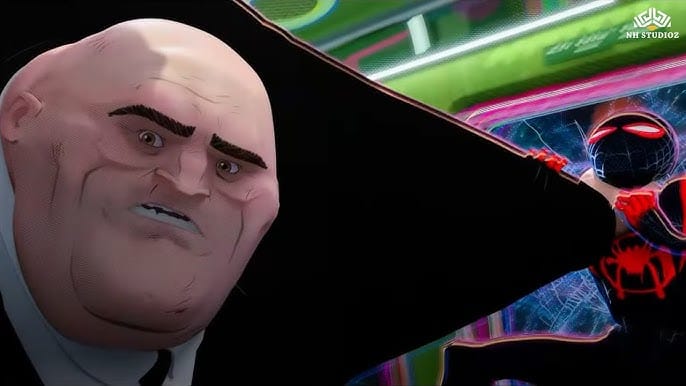
To carry the weight or be crushed by it
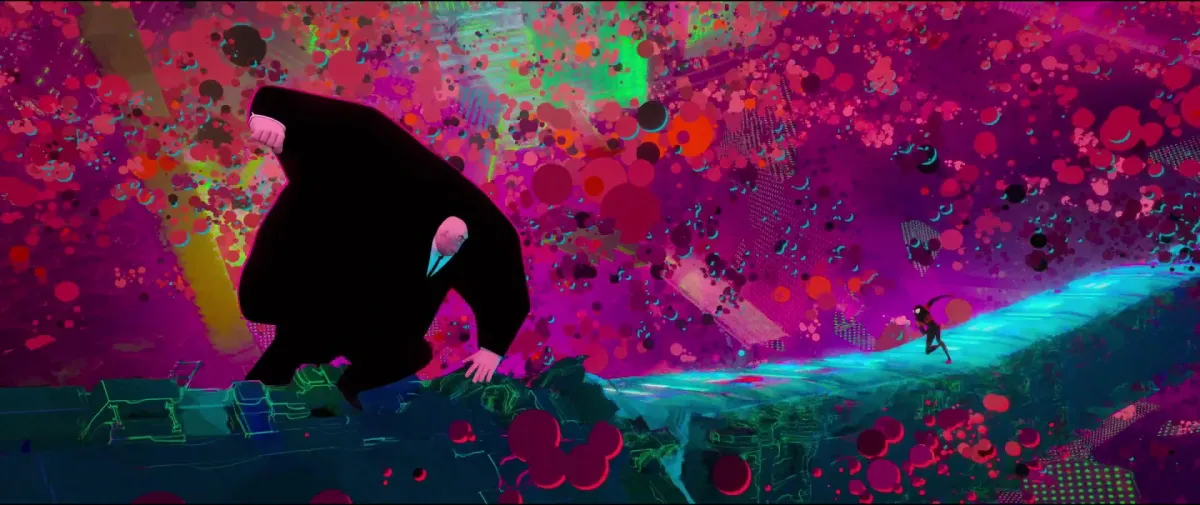
As Kingpin and Miles fight inside the collapsing collider, Kingpin discovers the major flaw in his plan. While punching out Miles, variants of Kingpin’s wife and child appear from the multiverse, witnessing him punching Spider-Man and running away, just as his original family did.
By trying to overwrite the past and pretend he has no reason to grieve, Kingpin failed to learn from his grief. It did not bring about change inside him, and so he repeats his same mistake.
No matter how many universes he searches, he always runs the risk of driving his wife and son away because he thinks that if he erases the one specific act of fighting Spider-Man that one time it will make everything alright. Without learning from his grief, he is doomed to repeat his failure.
Miles isn’t trying to restore something that he has lost. Miles deals with his grief by remembering. By holding those memories close and carrying forward the best of that lost relationship so that he can bear the weight of the grief. It’s not a coincidence that the move that finally takes out Kingpin is a Venom Strike-charged version of Uncle Aaron’s Shoulder Touch.
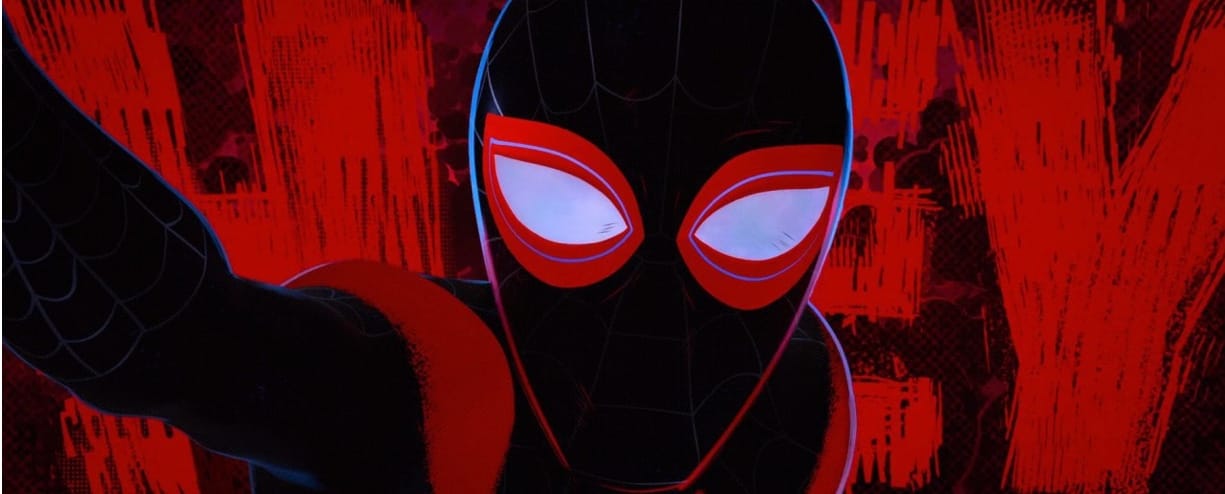
This settles the argument from the point of view of the story: Grief can block our path, keeping us stuck in a moment of loss and pain. But grief can also be something we carry with us as a reminder that our future still matters, and we have a say in what that future is.
Into the Spider-Verse argues that a true hero chooses to bear that weight and will eventually become stronger for the effort.
Making the spark your own
Pulling our attention back from ground level details to looking down from the web-slinging heights, what can we take from this example?
- Start with an open question: We may not agree with Kingpin's method of grieving through evil super-science, but the story gives space for the audience to see how desperately he wants to succeed, and how certain he is this will work. Miles gets time to try and fail instead of just being told to sit things out and stew in his grief. Can you focus your story on a question that doesn't have an immediate answer?
- Tip the scales, but not too far: The audience will likely understand that the villain's actions are the wrong answer because they're the villain. But there is still room for doubt. Consider the motivations. Kingpin breaking the multiverse to gain power seems obviously wrong, but wanting to restore his family touches on something human and relatable. Can you make the argument that the villain has the right idea?
- The story resolves when the question is answered: Miles isn't just putting on a cool new costume and finally learning to control his powers. He’s honoring those he's lost with the person he's becoming. He's taking something from them, but adding his own touches. His actions show his answer. Can your hero’s choices resonate with their answer?
Planning for thematic symmetry between your hero and villain means moving between the cliché of “we’re not so different, you and I.” By aligning their central dramatic questions – and finding opposing answers – you’ve built natural conflict that can drive every scene and sequence.