Scriptnotes Recap: Ep. 676 - Writing while the World is on Fire with Dennis Palumbo
It's like Hemingway said: "Boys, Shakespeare got there first and better, so relax and start writing."
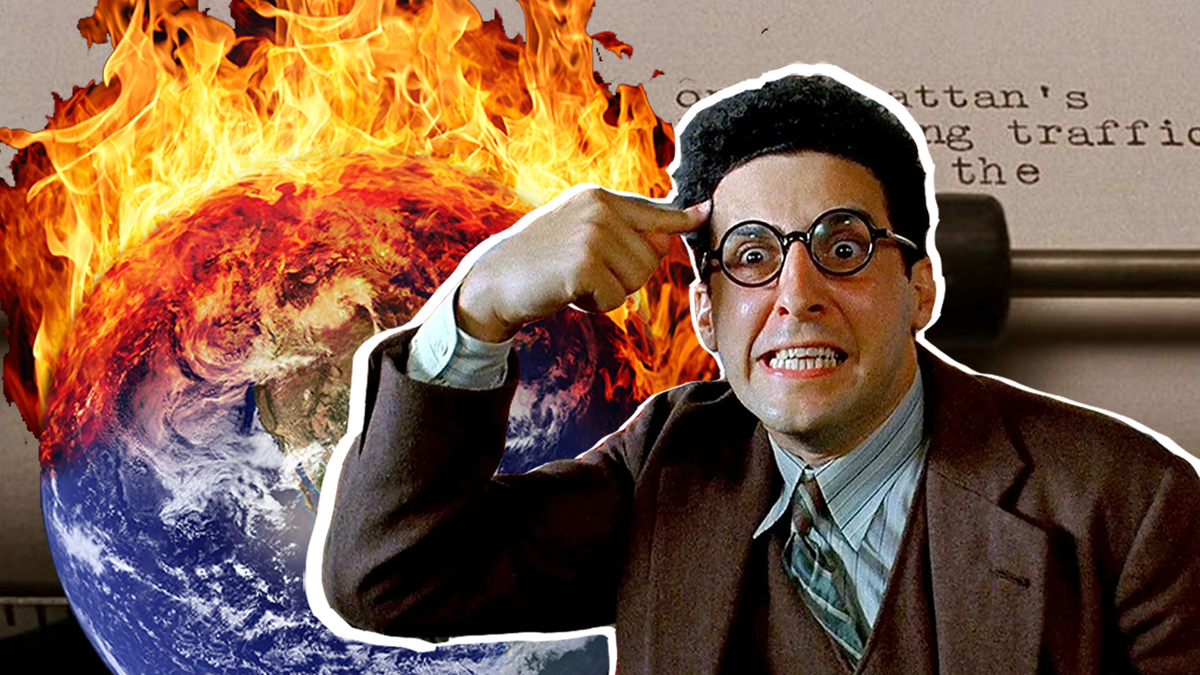
At the time that this episode was recorded, the 2025 L.A. fires had just ravaged the city, from the Palisades all the way to Altadena. As if it weren’t already a rocky time in the industry, now, writers faced another question: Does what I’m doing even matter?
That’s where Dennis Palumbo comes in. He’s an accomplished writer and screenwriter, yes, but he’s also a psychotherapist. There's practically no one better acquainted with the burdens that cloud creative minds.
In this episode, Dennis discusses the existential question of one’s relevance, imposter syndrome, survivor’s guilt, and the courage to just keep going, even in the darkest of times. He considers this the true gift of the writer. A candle against the darkness. No matter if it's a joke or a jump scare, what you're writing may be very meaningful to someone. And that matters.
My favorite nugget of wisdom? Dennis reminds us, “It’s like Hemingway said, ‘Boys, Shakespeare got their first and better, so relax and start writing.’”
The Two Things That Stop Writers: Relevance and Perspective
John: Today on the show, how do you keep doing creative work when it feels like the world around you is burning to the ground, sometimes literally? Dennis Palumbo is a licensed psychotherapist in private practice, specializing in working with creative patients like writers. His screenwriting credits include the feature film My Favorite Year. Welcome back to the program, Dennis Palumbo.
What got me thinking about you in this moment was an article you wrote titled, Am I Just Fiddling While Rome Burns? Can you give us a little setup behind why you wrote the article and what you were finding?
Dennis: What got me writing about it, frankly, was the LA fires. One of the things that writers deal with all the time, the two aspects are relevance and perspective. Is what I'm doing as a writer relevant in the world today? And perspective. Relevance to me means, does anybody care about what I'm writing about? Does it help anybody? Is there a reason for it to exist? And perspective is like, here I am complaining because I can't get the second act to work and people are dying in Syria. People are dying in Gaza. From the 10,000-foot perspective, what I do doesn't matter.
That really came home to me during the LA fires because I had so many patients who were just saying, look, people are losing their homes, what the heck am I doing writing my fourth mystery novel? What am I doing writing my 28th episode of an NCIS series? When you are an artist, in particularly in a commercial marketplace, it's really hard sometimes to justify what you're doing in the face of difficult times.
John: Let's take it from the perspective of the extreme case of a writer whose house burns down in the fires. If you are the therapist talking with that writer about getting back to work, what are the things you're trying to get that writer to see?
Dennis: First of all, I think it's important for someone to acknowledge the traumatic impact of something like that. You end up with two kinds of patients. There are those who are bowled over by an experience like that and become immobilized. Then you have another kind of patient who says, "I don't care that my house burned down yesterday, I'm going to get this in on deadline." To me, they're two sides of the same coin. They're magical thinking.
People are going to have PTSD symptoms after a tragedy like that. The kind of symptoms you have is a hyper-vigilance about bad things happening again, a belief that maybe you could have avoided this. Then if your house didn't burn down but your friend's did, you have survivor guilt. These traumas have to be experienced and processed and held by the therapist so that the person can move through them. I'll make the argument it's crucial that you do write. But I also think it's crucial that you allow yourself the initial experience and the feelings that you're having about it, and then challenge the meanings that usually associate themselves with a trauma, primarily meanings that are self-recriminating or self-blaming.
John: Some of us will have a chance to channel what we're feeling into art, but some of us are going to have to write that next episode of that comedy series and go back and do that. The folks who have to go back and write comedy — that tension is going to be hard to balance.
Dennis: It's hard to balance unless you look underneath it. If you're not angry and aggrieved and filled with pain and bitterness, you're not funny. The reality is you can write comedy coming out of tragedy, because sometimes it's the only way you can survive. There's a great story where a former German officer was looking at Guernica on the wall and said to Picasso, "How did you do that?" Picasso said, "Actually, no, you did that."
The thing that's really important to remember is you don't have to write directly about something to write about its emotional impact. If the stakes are real and the people's feelings are real, anyone can relate to it. You can write an episode of a sitcom in the wake of a tragedy, because every character in that sitcom wants something, has felt denied something, yearns for something. You can craft a story about the smallest thing, like not getting invited to the prom, but you can work in it all the ideas about yourself. All the things that concern us about ourselves can be filtered through something as silly as a sitcom.
What to Do When the World Feels Unstable
John: I feel like I'm grappling with this sense that I'm not sure that the world, as I understand it, is going to exist in two or three or five years. Those are all anxieties I have that the stuff that I'm working on right now may not be relevant. I find myself in some cases racing to do certain things, but also holding off on some projects that might take a little bit longer because I feel like, wait, is that even going to be meaningful when it comes out?
Dennis: My overall view is that art speaks to something when we are in existential angst that science and reason cannot. Yes, the world seems incredibly unstable right now and quite dangerous. It's very, very tempting to become overly pessimistic and go, everything's going to hell in a hand-basket, so what I do doesn't matter. I would flip it on its head. I would say, because you feel everything's going to hell in a hand-basket, it's never been more important to do what you do.
In my column, I talk about Sullivan's Travels, the Preston Sturges film, about a comedy filmmaker who thinks that what he's doing is irrelevant given the troubles people are going through. He learns throughout the film that his work provides solace and relatability to people. Even at a further end, in Woody Allen's Stardust Memories, when he's speaking to some aliens who have come down from outer space and he says, "What can I do to make things better?" and they say, "Write funnier jokes." The role of art is to transcend and help us cope with stuff that reason and science and logic cannot contain.
John: Your point, which Craig often will get back to as I spin into my, not quite apocalyptic nihilism, but approaching it, is that our job is to provide that storytelling, to provide that sense of reflecting the moment that we're in, but also carrying people outside of that moment.
Dennis: Where I would differ slightly is I don't think of entertainment as outside of relevance. I think there's value in any kind of creative entertainment that you do because it's an expression of what's in your mind and heart. An expression of what's in your mind and heart, no matter how silly or outrageous it is, is relevant to others. You don't have to have been Rocky Balboa to know what Rocky wanted in that boxing match. He wanted to be taken seriously, to feel like he wasn't a bum. We all understand that.
John: A natural tendency when you see things going crazy is to retreat. That's not generally the right instinct. The instinct is to reach out and to find connection with others and making art, sharing art, being part of a writer's group — that's probably what gets you through it.
Dennis: My feeling is why give the world more impact on you than it needs to have? If you don't create because you're battered by what's going on in the world, you've allowed the world to take away your skill set, which is the thing that is so important to your self-concept.
Psychiatrist Rollo May wrote a book called The Courage to Create. The goal for a human being is to be authentic. Then out of that authenticity, where do they find meaning? There are people who find meaning in animal rescue, but there are also people who find meaning in writing a 700-page book about their family history. All of it is okay, because art pushes against existential angst. Humanity has managed to get through the Holocaust, going through the Black Plague, going through the Dark Ages by somehow finding a mode of expression for what's in their mind and heart.
How to Deal with Imposter Syndrome
John: Shiloh writes: "Pixar movies have some of the cleanest and densest storytelling in the business, but I've heard of the Pixar Brain Trust and I find it disheartening. If it takes 15 of some of the most creative people in the business five years to make a brilliant Pixar film, that's about 75 years of brainpower being directed into one story. How can one screenwriter writing specs ever hope to compete against that?"
John: Listen, Shiloh, you don't have to make a Pixar movie. Make your own movie. It doesn't have to be done in a Pixar-y way. Dennis, dig in.
Dennis: First of all, I've had a number of writers who've worked for Pixar and it's like the Bataan Death March. It's not a great experience. I used to work in sitcoms, and we had writers rooms with 10 or 11 funny people in a room so that by the time the script came out, I didn't know who wrote what joke. One thing I knew for sure is the script wouldn't have been as funny if it had just been me. But one of the reasons Neil Simon left Your Show of Shows and began writing plays is because he lost his own voice in the writers' room.
It's not your job to compete with anyone. I always remember one of my patients who won an Oscar for best screenplay. He brought his Oscar in and I said, "Congratulations." He said, "Thanks, but I'm no Billy Wilder." What I didn't tell him is that in an interview where people were praising Billy Wilder, Billy Wilder said, "Thanks, but I'm no Ernst Lubitsch." It's like Hemingway said: "Boys, Shakespeare got there first and better, so relax and start writing."
Listen to the full episode on Scriptnotes or wherever you get your podcasts!
The full transcript is available at johnaugust.com