Scriptnotes Recap: Ep. 721 - Preparing to Direct with Eva Victor

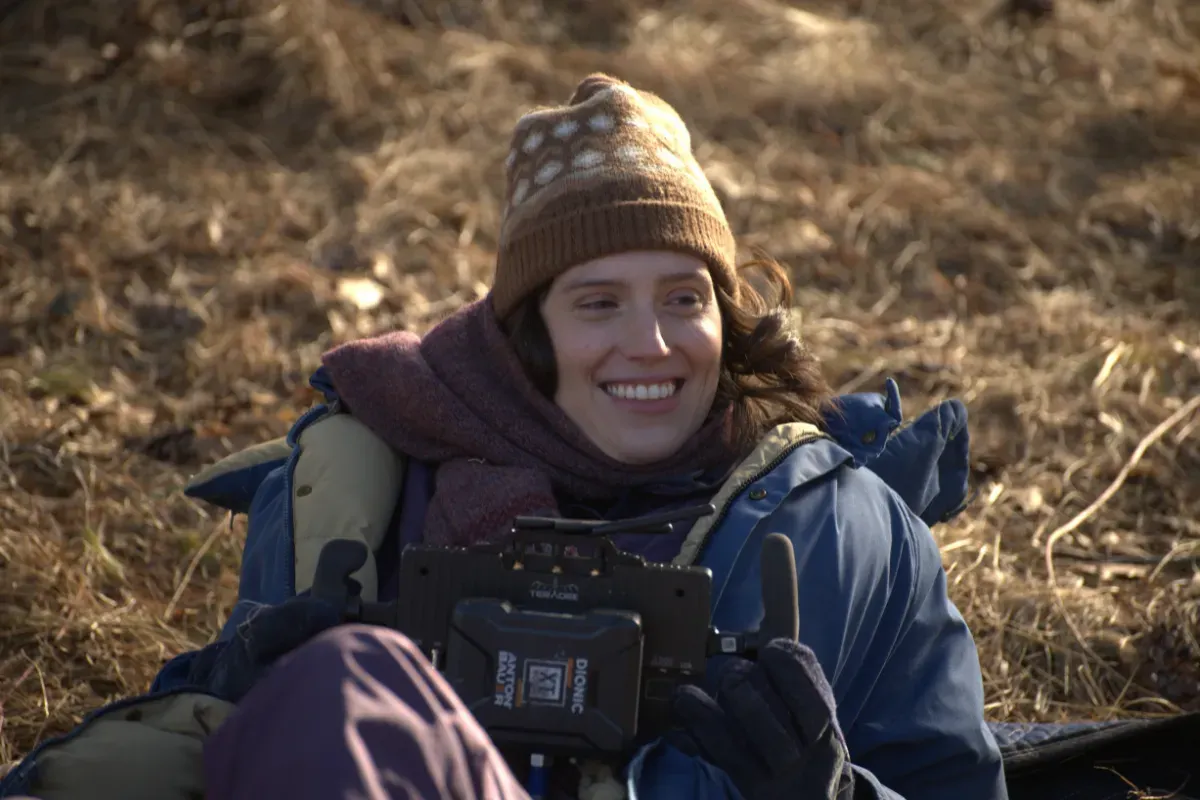
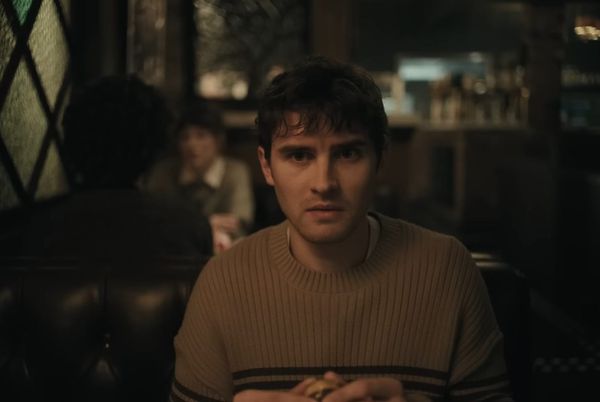
True confessions: I saw Sorry, Baby three times. First time was because I got a screener for Scriptnotes and loved it, the second time was when it came out in theaters I had to show my wife the movie I wouldn't stop talking about, and then I took myself to see it for a third time because sometimes you just need to see a certain kind of movie on a rainy night.
Sorry, Baby belongs to a rare and specific set of movies that absolutely destroy me, but for some reason I can watch them over and over again like they're a beloved rom-com on basic cable. The Florida Project is one, too. Wendy and Lucy. Fish Tank. I've been sitting here trying to figure out what that magic thing is that makes me want to live inside these movies, and I think it's as simple as: they ring true. They all get at something lived and uncomfortable and hard to articulate, but also never forget the weird, often funny, messy, unpredictable humanity that pops up at the strangest times.
You feel alive in these movies, and oddly proud of human beings. Or, at least I do.
But it's not enough to just write a biographical story. There's a lot of those movies out there too, the ones that feel like a two million dollar therapy exercise. You don't doubt that it all happened, but you can't shake the feeling that the artist never quite figure out what the point of the experience was before they demanded we witness it. To paraphrase John and Craig, just because it happened doesn't make it interesting.
Eva figured it out though, and then some. Their work felt at once meticulous and effortless, and I was dying to hear how they constructed every second. Luckily, Eva was generous and open about their process, and the result was one of the most instructive episode of Scriptnotes I can remember. Just like Sorry, Baby, I plan to revisit it over and over again.
If you need convincing to listen to the whole thing, here's just a few morsels of of their development process that I think about constantly:
Becoming an Advocate for your Work
John: You wrote the script not even necessarily intending to direct it. Can you talk us through the journey to this is a script and now this is a script I’m going to try to direct?
Eva: I think that theme is very relevant for me. I feel like there was a moment that I realized my career would never be made by somebody else. There was this realization of you are the one who has to get you where you want to go. I have always been like, “Well, I’m not going to fail because I don’t work hard. I’m going to fail because I’m missing some intrinsic quality that people have.” I was like, “It’s never going to be because I don’t put in the hours.”
I had a development deal with the studio that happened because of my internet videos. That was a very difficult experience because I was turning in page one drafts for, honestly, years thinking that if I just wrote the perfect draft, then I would get the momentum and attention from the people I needed to make that film happen but that didn’t come. That made me lose my goddamn mind. It made me really internalize something about I am fraudulent, I can’t do this, I’m not meant to write.
Then I wrote scripts for a body horror thing that didn’t make sense, but it had a lot of heart. The one person I’d met before I sent this script to read it and said, no, but the rejection letter meant everything, was Pastel, Barry Jenkins’ company. When I met Barry, he was like, “Your videos…” which I was, even at that point, ashamed of or whatever. He was like, “It’s filmmaking. It’s just not the way that other people do it. It’s a small version, but you are directing this. You’re making decisions about how people look, where the camera’s going, and what people are saying.”
Then I had been, over the course of five years or so, been stewing on the idea for Sorry, Baby, but was like, “Man, the words, if I start writing them down too soon just for this particular project, I’m going to get too depressed about how bad it is compared to what the story means to me.” It took me a really long time to piece together the writing of it. Then finally, I sat myself down in a cabin in Maine and was like, “It’s time. You’re writing this.”
I sent it to Pastel again because I was like, “They get me.” They were like, “Okay, what do you dream of for this?” I was like, “Well, I’m going to act in it…”
Craig: Yes, but there’s that concern that, oh, well, if we had Jennifer Lawrence or someone, then maybe we would get the blah, blah, blah. You’re like, “No, it’s going to be me.”
Eva: It was very clear that when I’m the lead actor, that means that the film is much smaller. I was like, “I’m willing to sacrifice whatever thing that is for what I want it to be.”
Teaching Themself to Direct
John: Can we rewind and talk about how you learned to make that film? You have a script and you have people say, “We agree you should direct this. Now learn how to direct a film.” What did you assign yourself? What’s the process?
Eva: First off was like, okay, you didn’t go to film school, so there’s a lot of fraudulence around not knowing things about film. I started with the encyclopedic ordering of books from film school, reading the books from film school. Research that was very dry, but I was like, “Let’s just read this. Let’s put post-its through it.” Quickly realized like, “Okay, this is simply information that actually I need.” Then it became, I need to watch a million movies. I’d been watching movies, which is why I wrote a movie, but I was like, “I need to watch films. Then as I’m watching them, not fall into just watching them, instead studying them.”
I became very into backwards shot listing films. A photo of every setup and understanding when we return to the same set, it was very mathematical. When are we returning to the same setup? How long are we on Laura Dern’s face in Certain Women before we get to the next face? Why? I became more aware of my taste. I was like, “Oh, I like the economy of not moving until we have to.”
Then I created a "shot list" for my film, which instead of shot listing, because that felt random, I drew storyboards of everything. You could go through the storyboard and watch the film, which some of the shots are really what is in the initial storyboard.
Watching Directors On Set
Eva: I shadowed my friend Jane Schoenbrun on I Saw the TV Glow. When you’re on set sitting behind a director with nothing to do on the set besides watch that person, you realize how different people advocate for their film and the different styles of how people advocate, but also how a film is built moment to moment. It’s non-miraculous.
John: Seeing Jane direct on the set for her movie must have been so illuminating, “Oh, this is what it’s actually really like. This is what the actual decisions look like in the field where it can’t be perfected.”
Eva: We did shoot two scenes from the film in a very small setting. Me and my DP and a group of my DP’s students at NYU came to shoot in an Airbnb in New York where we did two scenes, and the prompt was, two scenes that scare you. I did a scene that was terrifying for me to direct because I didn’t understand the mechanics of the movement of the people. Then I worked with an editor, Kate Broca, which was the moment when I was like, “Oh, you cannot cut from a wide to a wide.” I didn’t really realize it was a test, but then there was this moment when they were like, “What would you have changed about how you shot it?” That was the moment when they were like, “Okay, yes, you understand what you would change.”
Craig: I think what you just laid out there is probably worth more than four years of film school. You taught yourself what you needed to learn. The thing about lenses, I don’t need a semester on lenses. I need 30 minutes on lenses to get the basic breakdown of it, and then I need to be on set and go, “Can we try something longer?” The cinematographer’s like, “Yes.” Then you’re like, “Oh my God, that’s the thing.”
John: As I went through my career and as I’ve met and worked with some great directors, it’s always been such a revelation. It’s like, “Oh, you’re just working really hard.” I think it’s a thing we talk about a lot on the show, but it’s under-appreciated. There is talent, but it’s all these things adding up to support that talent.
Eva: There are so many layers of reasons why I didn’t think I would want to direct Sorry, Baby that all have to do with not understanding what the job entailed – but you always learn things to do a job. You’re not born with information, even though it feels like you should be. The college I went to, I never had any interest in directing. I had no interest because I was like, “Well, this kind of guy does that and that kind of looks this way and talks this way. I don’t want to be in charge like that because I’m not compelled to be him.” It’s like, “Oh, I have my own way of doing that.”
Craig: I love that you overcame the internalized image of what is because I honestly think that’s the thing that hurts us the most is we just start with a belief that we’re not.
Listen to the full episode on Scriptnotes or wherever you get your podcasts!
The full transcript is available at johnaugust.com