Scriptnotes Recap: Ep. 739 - The One with David E. Kelley

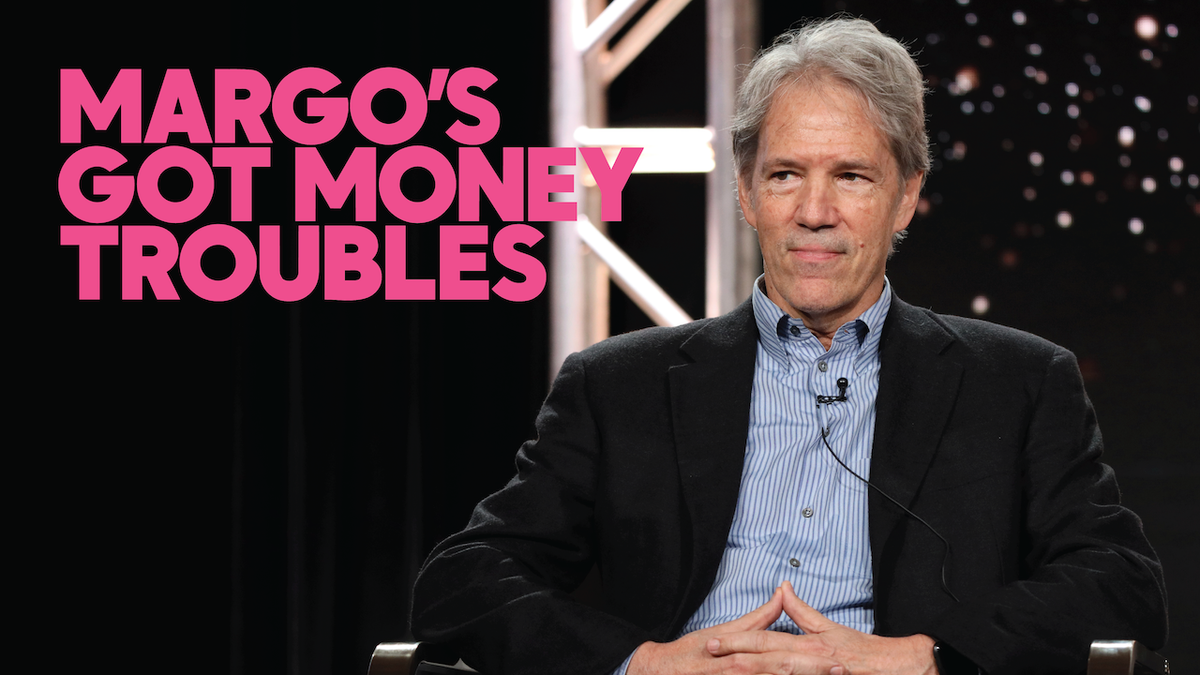
David E. Kelley likes a courtroom.
Who can blame him? He went to law school, his first writing job was on LA Law, and he created (among twenty other legendary TV series) The Practice, Boston Legal, Harry's Law, Presumed Innocent, The Lincoln Lawyer, and Ally McBeal.
Even when the show isn't about lawyers, he finds a way to get us in a courtroom. What do we do for season two of Big Little Lies? Courtroom. How do we end Margo's Got Money Troubles, our series about sex work? Courtroom.
A courtroom is incredible for drama. It lays all your characters' flaws and conflicts bare, and it forces a decision to be made. And when you write characters as complex and interesting as David E. Kelley does, it's hard to get much more exciting than that.
David stopped by the show to talk about his career and his most recent series, Margo's Got Money Troubles. He has decades of wisdom to impart, and gave us a real glimpse into his process, specifically his approach to adapting books into TV shows:
Getting Started on L.A. Law
David: That was the job that imprinted upon me like no other. My first boss was Steven Bochco, who gave birth to L.A. Law. I was a lawyer back in Boston, and I didn’t really even watch much television. One thing I did watch was Hill Street Blues. I was really quite blown away by how good it was, the storytelling, the depth of the characters in it.
I had written a project, a movie idea of my own, mainly because I didn’t know anybody in Hollywood to write it with. It wasn’t that I said I wanted to become a writer, but I thought it made for a good story, and I liked to write as a hobby. That happened as L.A. Law was being developed by Steven Bochco, and he was looking for lawyers who also wrote because he was seeking some authenticity to the show. I came out and met him, and that went very well, and I became a member of that staff, and it was an incredible writing staff.
First and foremost, Steven really stressed finding stories that were not just good stories in terms of plot and engaging entertainment, but stories that were conduits into the characters — that allowed you to explore the characters as you were moving the plot. He was very ferocious in his storytelling approach that way, and he set a bar for all of us.
The first show that I did on my own after L.A. Law was Picket Fences. Steven wasn’t part of that show, but then again, he was, because his standard was in play. We never worked on the same show again after L.A. Law, and I was never in his writer’s room again, but he was always in mine and is still in mine, because his work ethic, his discipline — everybody showed up at 9 o’clock — his attention to detail and his respect for the audience. Those tenets made a big impression on me.
We’ve all gotten the note: make it simpler so that the audience will follow this or understand that. Steven rejected that note out of hand. He was going to write up to the audience, not down. That was a great lesson that I learned, and I try to live up to this day.
Craig: What are the things in your work that feel like a united thread? Are there themes that you approach? Are there particular characters that you like to find?
David: I don’t know. I’ve never tried to look at the wiring. I’m afraid if I try to — it’s like asking the golfer, do you breathe in or breathe out as you take your backswing; you can ruin them forever. My compass for any given show is it’s got to be characters that have some dimensional staying power because, in success, you’re going to spend a lot of time with them.
My radar is: if I can find characters and a story that resonates with me, go to that, and then just cross your fingers and close your eyes and hope that there’s a constituency big enough to support it. I think it’s folly to try to look at the marketplace and say, well, this kind of idea is popular at the moment. The shows that I’ve had the most success with, looking backwards, were the characters that were most dear to me. The characters that I would mourn once the series ended.
Challenging Yourself Creatively
David: There was a point where finding something new did become a challenge. I actually felt that it was around the time I was doing Harry’s Law, which I loved doing, but I felt this is a track I’d run around before. I think there’s a danger for any creative person, especially a writer, when things start to feel facile — and the best thing you can do is to go outside of your lane and try to challenge yourself.
The risk is you may fall off the high wire and bloody your nose. I think I got a little lucky there because I started adapting projects, working off IP that was very well baked and hatched by excellent authors. My first adaptations were Big Little Lies by Liane Moriarty. It was just a fantastic book, well-characterized and well-plotted. The second one was Mr. Mercedes by Stephen King. He’s the master of horror, but he’s also brilliant at character. Both of those particular projects — especially Mr. Mercedes, which was well out of my lane — having the training wheels of Stephen King, having him hatch that plot and develop those characters, that gave me the confidence to walk out on a plank that I hadn’t walked before.
I always felt, well, if you strip me of the idea, I’m going to not have the fuel, and it’s going to be all work and no play. To my great surprise, it was neither of that. You could take the ideas of others, infuse ideas of your own, and give occasion to hatch something that was original in and of itself.
John: You have so many broadcast shows from the peak of broadcast television, and now many streaming shows. What was it about broadcast that you actually loved?
David: I actually quite loved broadcast television and miss it a little bit still. I never felt that I was constrained creatively on broadcast television. Certainly, you couldn’t use all the words that you can use on cable, and some violence and nudity are not allowed, but that was never my thing anyway. What was great about broadcast for topical ideas, socially relevant ideas, is it was so fast. I could be writing something today that would be on by the end of the month. By the end of the season when you’re doing 22 episodes, you’re writing episode 21 and 22, which could be airing in 10 to 12 days. You can be very timely. I loved that.
Now in the streaming world, you don’t have that. You’re expected to have all your episodes written before you even roll camera. What I got tired of on broadcast is the show length shrinking. When I was doing L.A. Law, I think we were 48, 49 minutes. By the time we got to Harry’s Law, we were down to 41 minutes. It became increasingly more difficult to tell stories with any kind of soft build of emotional momentum because it’d be interrupted by a loud commercial. It was just every six, seven minutes you were cutting to commercial and then coming back and having to restart.
Adapting Margo's Got Money Troubles
John: Can you talk us through the process of Margo’s Got Money Troubles? Elle Fanning is attached to the book, it enters your orbit. What was the process for figuring out how to make this adaptation happen?
David: You’re told that you’re going to series, but I think the dirty little secret for all these shows is, yes, you are writing a pilot first, because if they don’t like that first or second episode, they can pull it. I don’t know for a fact, but I’m told that HBO came very close to pulling the plug on Big Little Lies a week before we started shooting. The executive said, “It’s just about a kid being bullied at school.” I said, “Do you have a child that’s gone to school?” He did not. I said, “Well, if it’s your child and he’s being picked on, that story takes on a certain severity.” Our job as writers is to convey the storytelling so the audience feels the emotional stakes and the severity of the offense.
On Margo, I don’t think there was any pause. Everyone was pretty excited from the get-go. The actual process for me was part triage — there’s so much great stuff in that book that you can’t use at all. The biggest challenge was there was a lot of third-person storytelling that you could easily convey in the book, but on film, it wouldn’t be as quite coherent. A lot of that interiority of the characters was so rich. The goal is, how do you get that out behaviorally?
My mantra for both Mr. Mercedes and Margo when I first started was: don’t screw it up. The writer knows what they’re doing. The author had a plan, and it was a good one. Live up to the bar that they set.
I wrote the first three episodes. Then Eva Anderson came on, and she ran the writer’s room with the other writers. I have never been particularly adept at a writer’s room. Steven Bochco was genius at that — there were times where Steven couldn’t break a story in his head, he would call all the writers into the room, and he would suddenly break the story. He said, “Sometimes I need an audience to tap into my acuity.”
My process was completely the opposite. I can be in a room full of writers and I can’t solve something, and I have to throw everybody out, because my process is to go inside the characters themselves and let the characters speak to me. They tell me more often than not what they want to say and where the story wants to go. Many times, a script will come in and I’ll do a rewrite, and a writer will look at me and go, “If you were going to go left like that, do you think maybe you shouldn’t have directed me to go right?” My answer, invariably, was I didn’t know that left was the correct way to go until I got into the pond myself.
Listen to the full episode on Scriptnotes or wherever you get your podcasts!
The full transcript is available at johnaugust.com