🕵️ #311 - You're not paranoid (enough)
What should writers know about depicting surveillance today—or in the future?

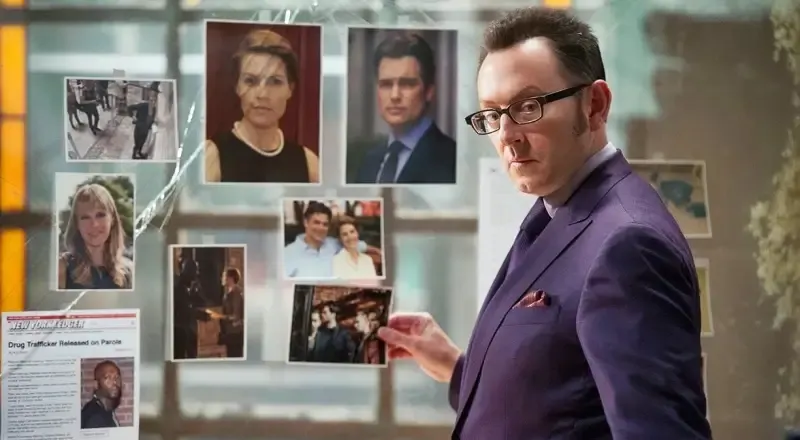
The idea of mass surveillance comes from reality, but finds form in people's imagination based on fictions. Philip Agre takes a deep dive into the films 1984 and Enemy of the State, contrasting their depictions of a surveilance state and their portrayals of what resistance to such a state could look like. But there's something quaint about the fears of these types of surveillance when you look at the world currently being built around us.
The disruptions caused by being seen existing in public aren’t limited to having affairs exposed on a stadium Kiss Cam. The offense can be smaller, like making a couple feel hurt seeing their relationship turned into a meme, but those stakes can still feel important to those particular people. Erika explains the story of how her family went viral when the broadcast booth for a San Francisco Giants game riffed on what they imagined she and her husband were saying as she carried food back to their seats with their baby strapped to her chest in a carrier.
Maggie Harrison Dupré covers the emerging trend of teenage boys using Meta glasses at school to harrass female students and teachers. It’s easy to say that the moral of the story is: If you see a teenage boy wearing Meta AI glasses, break his Meta AI glasses. Writers looking to future bad ideas should consider how often we see technology being deployed where there are easily foreseen consequences for that new technology that the designers and marketers ignored, overlooked, or decided were an acceptable trade-off.
Rachel Levinson-Waldman and Ivey Dyson examine the wide range of possible abuses when police have unfettered access to AI tools. Beyond the potential inaccuracy of data, and the ease of misuse of the technology for stalking or other non-law enforcement purposes, they highlight the cognative dissonance where increased confidence in the technology can lead officers to trust the computer even when they have facts that directly contradict the machine’s output. Jen Golbeck explains the concept of “data colonialism,” where the government and corporations work together to undermine privacy, consent, and democratic ideals. Golbeck also outlines actionable avenues for resistance to the policies and laws that allow this abuse of personal data.
Samuel Levine and Stephanie Nguyen cover the customer loyalty data funnel from a legal perspective, looking at the carve-outs in laws that allow for extensive collection, and highlighting the likely exploitation of this knowledge by corporations and the danger of insecure data storage.
Reece Rogers requested McDonalds send a copy of the data it gathered and analyzed from his use of their phone app. He received 515 pages explaining how they were engineering his experience to keep him a regular customer for life.
”You eating this burger or liking that musician itself may not be private, but the aggregation and collection of this information, as well as its processing through AI, can create pretty invasive and personal information about when you're going to be there, what you do during the day, and so forth,”
-Ari Ezra Waldman
Understanding the present surveillance environment and finding meaningful ways to extrapolate fictional future scenarios requires the leap forward in the goals of these technologies from 1984: Documenting people's actions isn't the goal anymore, but the first step toward predicting future actions.
Tracy Durnell explores the relationship between surveillance and aesthetics, wherein people conform to an aesthetic style as a means of belonging to a specific in group, and that performance feeds that information far beyond the desired audience. “We perform for the panopticon, but we also are the panopticon.” Addie LaMarr has a Beginner’s Privacy Action Toolkit, along with an explainer video that covers the specific tactics necessary to actually mask your identity online, but also covering what tactics are outdated or generally useless.
Because for every Flock camera there's a Safe Driving App. Like vampires, people invite the surveillance into their lives without a full awareness of the consequences. Sara Harrison looks at the example of Moxie, an AI-connected robotic companion marketed to families with neurodivergent children on the autism spectrum. There’s a lot here: The questions of if Moxie is an effective form of therapeutic intervention, the concerns about a children’s companion being used for surveillance (and whether the children are aware), and the moment when the company needed to shutter and announced that all the Moxies were going to die.
Whether the writer intends to find a suitably doomy, cyberpunk panopticon which manages to go further than the existing reality, or someone wants to craft a story based in a world that meaningfully moves away from monetizing and expanding tracking people, these stories need grounding in a clear sense of the probable possibilities of our current predicament.
👋 Are you new here?
Inneresting is a weekly newsletter about writing and things that are interesting to writers. Subscribe now to get more Inneresting things sent to your inbox.
And if you can't wait until next week for more Inneresting, check out the Quote-Unquote Apps Blog where we keep previous issues and other posts about screenwriting and things interesting to screenwriters.
In case you missed it...
In the most clicked link from our last issue, Ayushi Thakkar shares suggestions for using presence in any moment to make it feel meaningful.
What else is Inneresting?
- Jananie K. Velu takes us through the tradition of writing the villain as the protagonist, going back to Paradise Lost.
- SwannyTheMike unearths ToonStruck, a 90s PC adventure game featuring Christopher Lloyd, Tim Curry, and a deep bench of recognizable animated voiceover talent.
- The Writer Emergency Pack helps writers stuck at the scene level, trying to figure out what happens next in a story. But what about for writers looking for a tool to help define their characters? If only there was a tool just as easy-to-use that could fit in the palm of your hand…
And that’s what’s inneresting this week!
Inneresting is edited by Chris Csont, with contributions from readers like you and the entire Quote-Unquote team.
Are you enjoying this newsletter?
📧 Forward it to a friend and suggest they check it out.
🔗 Share a link to this post on social media.
🗣 Have ideas for future topics (or just want to say hello)? Reach out to Chris via email at inneresting@johnaugust.com, Bluesky @ccsont.bsky.social, or Mastodon @ccsont@mastodon.art