Character Power Dynamics: Strong opinions vs. facts
Is there a wrong way to eat an Oreo cookie? Is there a specific order of operations for cleaning your bathroom? Why do some characters demand others agree with their opinions as if they were objective facts?

Not everything has a right or wrong answer. There's more than one way to do your work, clean your kitchen, or organize your bookshelf.
But what about when you're confronted by a person who disagrees? Someone who tells you that there is a right way, and it's definitely not what you're doing?
It's a tactic called moralizing preferences, where a person attempts to control or manipulate by asserting the superiority of their opinion as an objective fact. It's abusive, petty, and an easily observable human behavior.
And having a character moralize their own preferences can be a way to bring a strong sense of character into conflict, showing what opinions they refuse to concede and when they feel the most pressing need to assert control.
"How can it be bullshit to state a preference?"
–Rob, High Fidelity
Take the example of High Fidelity's record store scenes. Arguments about personal preferences can easily shift into bitter arguments if someone asserts there is a right or wrong way to answer the prompt. Like here, when Barry bursts into the store, defines Belle & Sebastian as sad bastard music, then forces everyone to listen to his mix tape which he declares the exact music they need:
Look at the moment where Dick recognizes the song "Little Latin Lupe Lu," and tries to reach out an olive branch to Barry. He recognizes it as a song by Mitch Ryder & The Detroit Wheels, but Barry shuts him down, affirming that the only version worth listening to is by The Righteous Brothers.
"It's like everything else in this place. If you don't do it yourself, it never gets done."
–Ace Rothstein, Casino
Ace sees the difference in the muffins as a problem. It's unfair for one person to get more blueberries than another, and he thinks this rises to a level of problem where he needs to directly micromanage the in-house baker to change his workflow.
In Casino, Ace Rothstein interrupts a meeting because he's bothered by the blueberry muffins on the table:
Ace sees the difference in the muffins as a problem. It's unfair for one person to get more blueberries than another, and he thinks this rises to a level of problem where he needs to directly micromanage the in-house baker to change his workflow.
This man runs the day-to-day operations of an entire casino. He's diverting his attention away from the potentially existential problem of firing an employee related to a state gambling commissioner to antagonize a baker. It's about control.
Consider how the moment before Ace fixates on the muffins, he's being told about how there could be consequences for running the casino the way he wants, and that he might not be allowed to fire some employees. That challenge to his authority is met with him flexing what control he does have somewhere else.
"I'd like to tell you a story about a time I was right. Now, I'm sure you're thinking, 'But, Sheldon, you're never wrong.' And you'd be right."
–Adult Sheldon, Young Sheldon
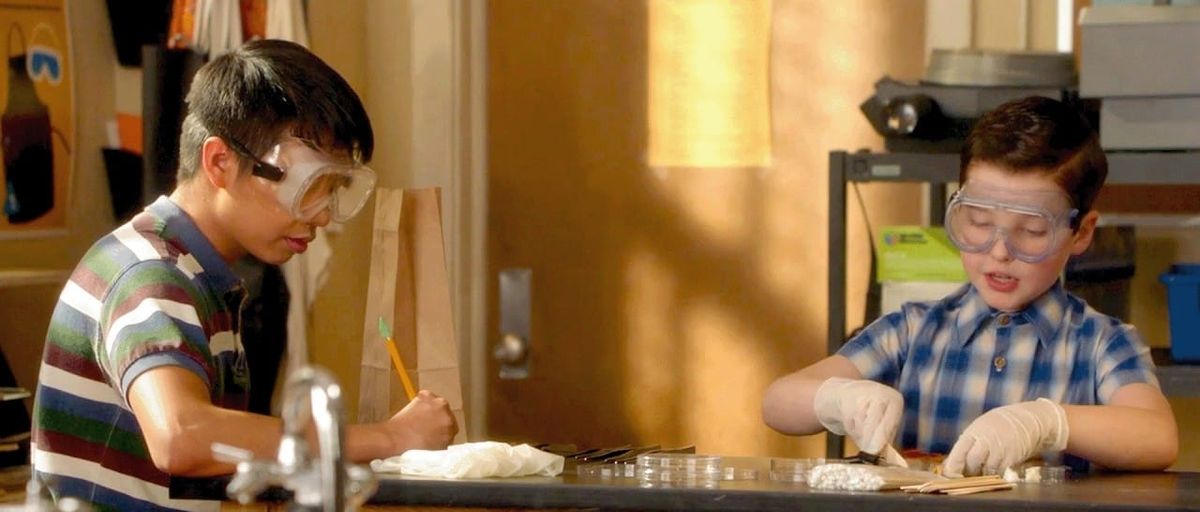
In the Season 2 episode of Young Sheldon, "A Loaf of Bread and a Grand Old Flag," Sheldon doesn't have a lot of immediate power, but he does have a preference. The brand of bread his mom uses for his peanut butter sandwiches changed their recipe. His food sensitivities alert him to this change even though other members of the family can't detect it.
So he attempts to organize a boycott of the bread:
Look at the change of framing that Sheldon uses when speaking about the boycott. It's no longer about how the bread tastes different to him, but about how a corporation bought the bakery and changed the recipe to a cheaper version. He's attempting to gain support by arguing against corporate greed, but it all stems from his taste preference.
And at the end of the episode, he concedes that the new bread is actually okay now that he's had some time to give it a chance.
While played for comedy, this reinforces the idea that Sheldon's motives lie in finding ways to control the larger world around him. His bread changed recipe without his consent, and this alters his routine. Personal preference becomes moral crusade, but the moralization falls apart once the personal preference is satisfied.
Takeaways
- How open are your characters to other people's opinions or methods? Are they open to conversation or disagreement? Are they defensive when questioned about their actions?
- What's an opinion your character holds so strongly that they see it as an irrefutable law? Who would be most likely to challenge their opinion?
- Is this character trying to assert control from a position of power or a lack of it? Are they punching down, or David taking on Goliath?