Scriptnotes Recap: Ep. 734 - A Box Full of Teeth with Katie Dippold

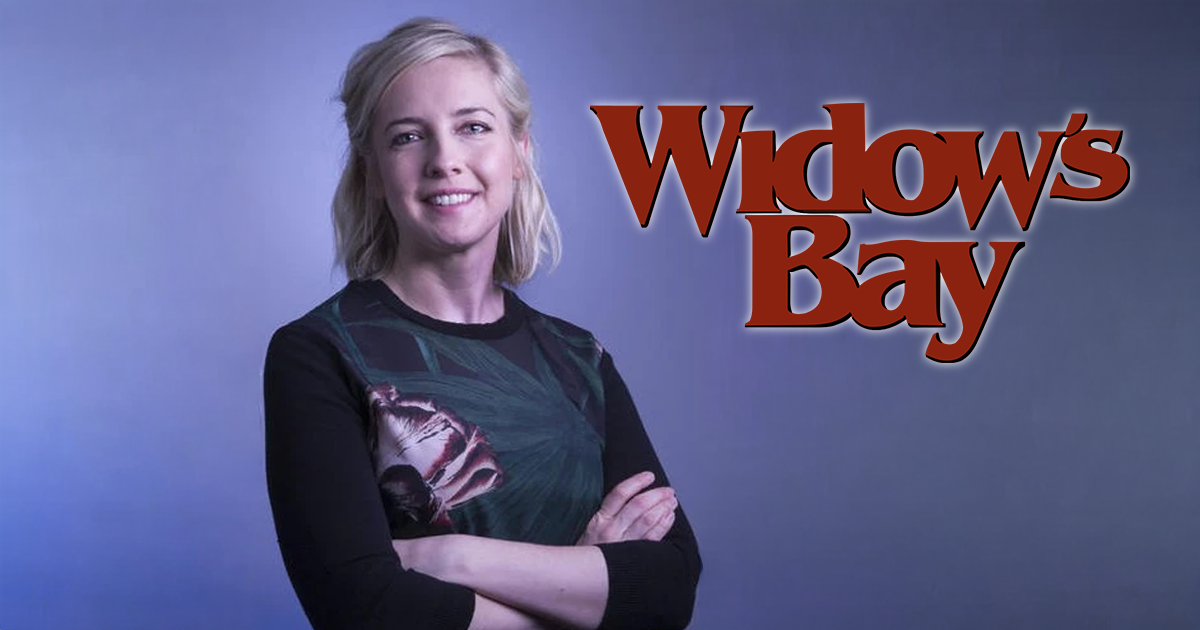
I love Widow's Bay so thoroughly, so fiercely, that it strangely makes it difficult to write about. If you're reading this, you've either: Not seen the show, in which case my enthusiasm would be so intense it might put you off actually watching it, or; You have seen the show, and anything I write is likely going to omit all of your favorite parts, because how do you distill this show down into a punchy 300 word intro? Every bit of this show is brilliant. Either way I'm going to look like an idiot.
So maybe it's best to just talk about Katie Dippold.
I've heard that one of Lorne Michaels' golden rules is "Don't get caught trying to be funny." It's an oddly useful tool for separating truly funny people from the folks who just insist they're funny – the real rabbits from the velveteen. I thought about this idea a lot when Katie came in to record, because Katie is one of the most effortlessly funny people I've ever met, and yet is so soft-spoken, even-tempered, and incredibly kind that if you passed her in the supermarket, you might assume she was a beloved High School science teacher. She doesn't need to make you laugh the way so many entertainers do, and it makes her jokes infinitely better. She's never trying to be funny, she just is.
She has created a world that I want to go back to every week, and I couldn't be happier for all the success she's having.
As you can imagine the entire episode is a delight, and her candid insights on showrunning make the idea of creating a TV show feel approachable and exciting:
Making Widow's Bay: Tone, Trust, and the Room
Katie: I've been working on this since it was my Parks and Rec sample, 18 years ago. I had just finished at MADtv. I'm a comedy writer, but I love horror so much. I just wanted something like this to exist. Then I heard Parks and Rec was hiring, so I quickly wrote a pilot, and I think that got me the job.
I kept thinking when I would revisit it, "I don't know that I would watch this show. I want it to be taken seriously. I want to feel tension. I want to be scared." I had to keep taking it apart and putting it back together. There's years where it's been not funny or scary.
Craig: What a great mix.
Katie: That's what you want. Something after doing the last couple movies – they were hard to do – I just wanted to do something just completely original. I'm like, "You know what? I might as well just take one real crazy creative swing."
Craig: In the second episode, he has to go stay in the inn, which of course the locals insist is haunted. They're correct. He wanders into the parlor where they have board games. The board games are wrong. One's called Daddy's Home, but the daddy is clearly drunk and angry. Then there's a box that looks like it would have puzzle pieces in it — it's a picture of a tooth and it just says "Teeth." Then there's a deck of cards. The card game is called Run. I love the specificity of that. I could smell that room. Part of the process of getting something like that to be that perfect is you working in tandem with a lot of people. You hadn't run a television show before.
Katie: No. It's very hard. But it's rewarding. You don't really get a say in much when you're in features.
John: Did you realize that things were hysterically funny while you were filming them?
Katie: This show is a lot about little details and specifics. The way of approaching it is a lot of blink and you'll miss it, and that's okay. It's less presenting a big joke. There's a lot of times the director, Hiro Murai, we would just be looking at each other like, "Does this feel right? This feels bad." It's a lot of following your stomach. When something feels bad in this show, it really will take you out of it, so it's harder.
Craig: People get excited when they work on something they like. People are sometimes mostly working on stuff they don't like. They work on things that they read and they're just like — that's just how it goes.
Building the Writers Room
Katie: It was a great room. I had the pilot written, and I did something that was a little tricky, but I'm so glad I did — it was not a room full of all comedy writers. It was a couple of writers that came from shows like WandaVision. A couple of my old-time comedy friends, one that was a writer on SNL — Neil Casey, who also plays the innkeeper. Colton Dunn from Key and Peele, Kelly Galuska has done a ton of comedy. Then I also had a playwright, and another writer who'd worked on Mrs. Davis. It was a real stew, because I felt like this show was going to need a lot of different kinds of thought process. In the beginning, it was tricky navigating this, but then it got to a point where the drama mythology people are pitching jokes that are hilarious, and the comedy writers are really passionately arguing story points. It was very rewarding to see that all come together.
John: This was your first time running a room. How did you approach that? How many weeks did you have?
Katie: We had 20 weeks, and I kept the hours about 10:00 to 5:00. I would leave and then keep thinking about it until I go to bed. There's no reason to keep everyone there. You're the one that needs to do that, I think.
We blue-skied for about four to six weeks. I knew some of the dilemmas I wanted to happen, but then working through it. It was a very creative, organic process. We just would talk about, "Well, this just feels fun right now. Let's just do this now."
Craig: When you assembled the room, did you have, "I know how this begins, and I know how it ends"?
Katie: Yes. Even how it ended, there's some choices that came up through the room, which was a very fun debate. I knew the basic. I knew where it was going, but we found so much along the way.
John: How much are you having to communicate out with producers, with Apple?
Katie: I would send a 30-page outline to the producers and Apple. Very, very detailed and very specific. I would start off with this summary at the top, like, "This is what we're trying to do here." Because the show is so totally tricky, I just wanted to be as detailed as possible.
Craig: I think there is a value in looking at the people that give us all the money as people that deserve a little caretaking. I think they work with writers who are so internal sometimes that they get nothing back. Yes, some caretaking documents go a long way. They don't abuse it. I find that it's the opposite — that they give less input, the more detail you give.
Katie: Our execs, Dana and Spencer — I never dreaded their feedback, which is unusual to say. If they called on the phone, I'm like, "Pick up the phone." I don't like picking up a phone. That's the biggest compliment I can give. Apple really just let us do it.
Listen to the full episode on Scriptnotes or wherever you get your podcasts!
The full transcript is available at johnaugust.com