👹 #303 - Sympathy for the Monster
Don't reach for that pitchfork! We're talking about writing sympathetic monsters, and how offending the delicate sensibilities of a community is enough to set off an angry mob.

Monstrous characters aren't necessarily evil. Sometimes they're misunderstood, the targets of evil, or operating on a non-human set of instructions that seem inscrutable at first glance.
When a writer wants to tell the story with a creature that's the protagonist, what can they do to get the audience on the monster's side?
Stephanie Malone digs in to the classic cycle of Universal monster movies, highlighting the way that the creatures embodied the fears of society at that time. Brenna Goodwin-McCabe takes a broad perspective on the Universal Monsters canon, pointing to recurring elements like the angry mob as a way of critiquing society’s dehumanization of The Other:
The mob is always mistaken and selfish in these films, as unlike the monster, they have no development, redemption, or intelligence. The monster knows that there is something wrong with them and the world, the mob wants to maintain that wrong rather than change. The monster has everything to lose; the mob is privileged in their ignorance.
–Brenna Goodwin-McCabe
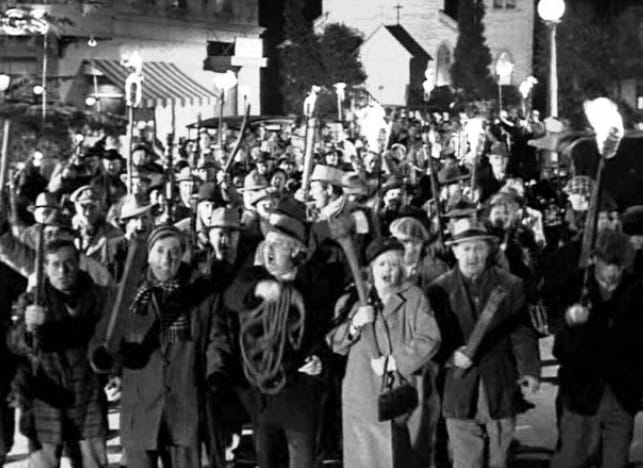
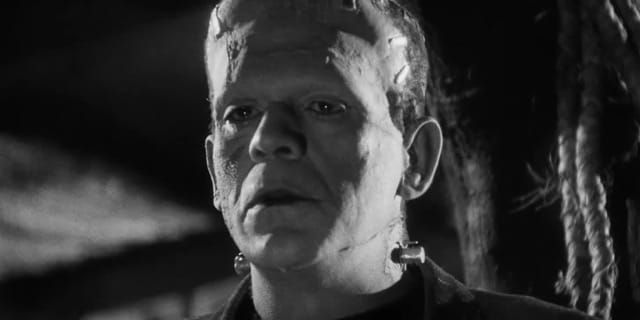
Richard T. Jameson focuses on Frankenstein and The Bride of Frankenstein, describing Boris Karloff’s titular character as an outsider "feared and rejected by society even more for what and who he is than anything he has done."
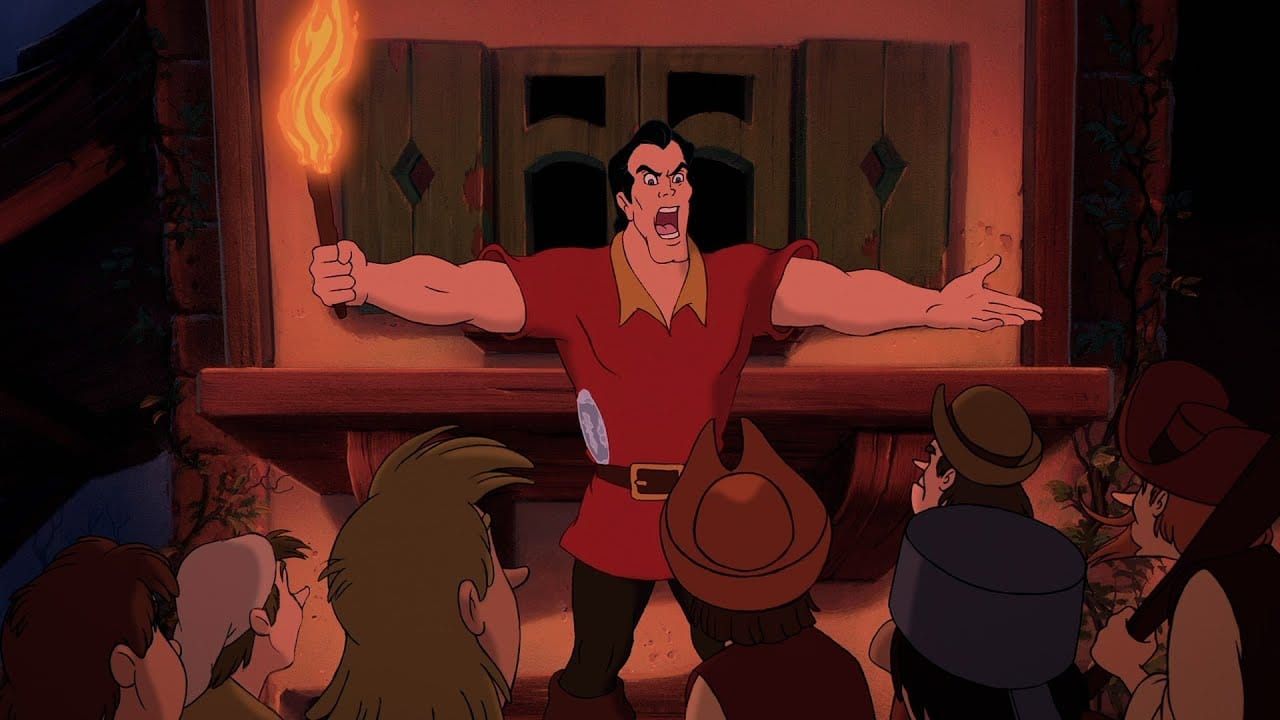
Going backwards and forwards in time from the heyday of Universal horror, C. Grace Honeycutt looks at the original Beauty and the Beast, as well as its adaptations, highlighting the way that the 90’s Disney interpretation is a tale of two outsiders, each condemned by the deeply traditional village community, who find each other. It’s not just the pitchforks and torches that connect this version to classic horror, but the way that The Beast’s main affront is his very existence.
Scott Barnard looks at the themes of Edward Scissorhands, paying special attention to the suburban community’s attempts to make Edward conform while still seeing him as Other. The old-timey European village setting of Universal’s monsters is replaced with a hyper-stylized version of contemporary suburbia. It’s a story where Edward’s appearance and existence are all the evidence the angry pastel mob needs, and its only when they turn their violence against him that he commits a murder. Ellie-Jean Royden talks about how the film shows that fascination and disgust are two sides of the same coin, and how the film’s angry mob of suburbanites briefly accepts Edward only when he provides them with a direct benefit to his presence. Their appreciation of him is purely transactional, which makes it easy for them to slip back into disgust as soon as he declines to fulfill their expectations.
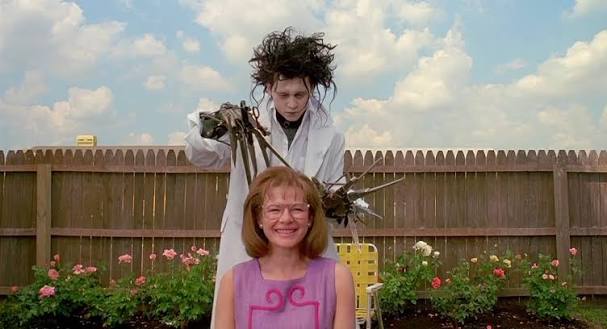
Sarah Emily discusses the relationship between Frankenstein and Edward Scissorhands, and how the warmth of Vincent Price’s Inventor is a sharp contrast with Dr. Frankenstein and the Mad Scientist characterization.
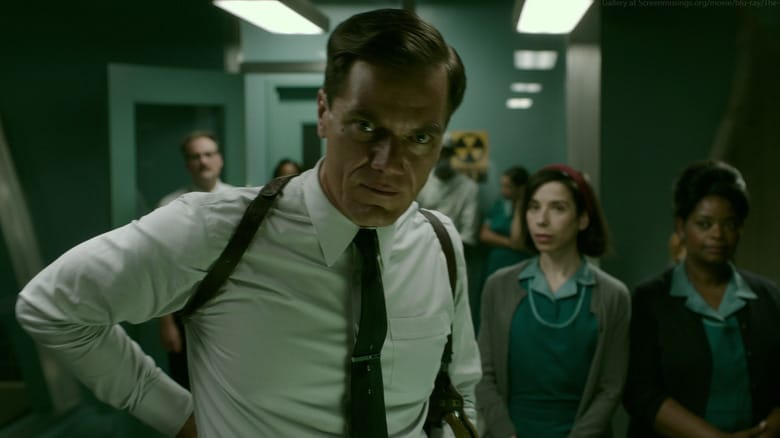
Ben Siegel interweaves horror movie and religious references to argue how The Shape of Water acts as both a subversion of Universal’s Creature from the Black Lagoon and colonialist white supremacy. Zero Woolfe considers how The Shape of Water is neither parody nor pastiche, but an earnest retelling of The Creature from The Black Lagoon that allows for the Creature to survive. The earnestness is essential to the audience forming an emotional bond with the creature, since there is no pressure release of self-debasing lampshading to diminish the stakes or mock the premise.
Takeaways
- The differences between a monster's appearance and the other characters are physical manifestations of the fear they stoke in society. Without the bolts sticking out of his neck, Frankenstein's monster could be just another zombie instead of recognizable as a product of science run amok.
- Angry mobs are made up of people. Think about the antagonists leading the mob. Why do they see your monster as a personal affront to their beliefs?
- From Strickland to Jim to Gaston, the figure that wants a one-on-one fight with a beast feels like an idealized opposite according to the norms of the community. What does society look for in its champion? How would this character signal his seemingly virtuous nature to others?
- It's hard to feel sympathy for a monster if they aren't taken seriously. A character doesn't need to be human to create an emotional connection. There needs to be space to see their vulnerability.
👋 Are you new here?
Inneresting is a weekly newsletter about writing and things that are interesting to writers. Subscribe now to get more Inneresting things sent to your inbox.
And if you can't wait until next week for more Inneresting, check out the Quote-Unquote Apps Blog where we keep previous issues and other posts about screenwriting and things interesting to screenwriters.
In case you missed it...
In the most clicked link from our last issue,
What else is Inneresting?
- Zoe Blade explains the Boolean colour palette (aka an old-school set of colors from the era of CRTs).
- Parker Molloy on how Dylan Mulvaney lives rent free in unserious minds; the federal government's campaign to dehumanize transgender people.
- GO GHOST, the theme song for the current Ghost in the Shell series is a high-octane bop.
And that’s what’s inneresting this week!
Inneresting is edited by Chris Csont, with contributions from readers like you and the entire Quote-Unquote team.
Are you enjoying this newsletter?
📧 Forward it to a friend and suggest they check it out.
🔗 Share a link to this post on social media.
🗣 Have ideas for future topics (or just want to say hello)? Reach out to Chris via email at inneresting@johnaugust.com, Bluesky @ccsont.bsky.social, or Mastodon @ccsont@mastodon.art
Parting shot
The apotheosis of the angry mob turning on itself, the ending of the Twilight Zone episode “The Monsters Are Due on Maple Street.”