
💬 #296 - Strong Feelings. Few Words.
In the heat of the moment, characters are allowed to not know what to say. This week's Inneresting covers how stress and emotion change how we speak.

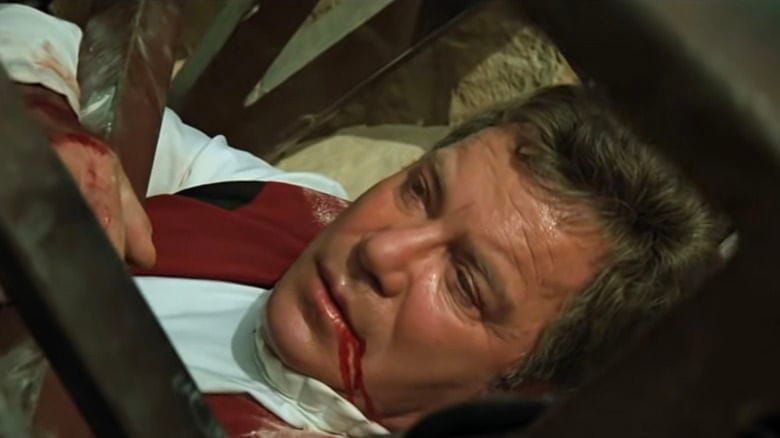
The dying breath soliloquy. The deeply felt confession of love passed off as a spur-of-the-moment realization. Moments when the stakes are high and the pressure is on, but characters carry on conversationally without context.
We've seen these moments and felt how they fall flat.
Moments of high stress or emotion cut off a person's ability to reason logically and speak eloquently. This is tested biological information. For example, a study called "Speaking under pressure" calls out how stress reduces the complexity of people's speech. The Harrison Riedel Foundation describes the idea of the amygdala hijack, where fear, anger, or anxiety trigger a survival response. And it's not just in the moment, because traumatic experiences can trigger these responses, as described in Bessel Van Der Kolk's book The Body Keeps the Score.
So how can we apply this knowledge to writing scenes where stress and emotion exert pressure on our characters?
K.M. Weiland points out that highly emotional scenes suffer not necessarily because of what is said, but the context of what set up those moments, as well as the writer’s own ability to make themselves vulnerable. Along that thread, Russell Marks considers how enjoying The Baby-Sitters Club in middle age makes him see how being unwilling to cross the strict gendered division presented to kids when choosing what to read when he was younger kept him from a wealth of stories offering insight into emotional intelligence.
Part of the challenge of depicting heightened emotions reigning in a character's voice comes in finding ways to allow them to say what they mean, but with constraints. Shannan E. Johnson uses the example of the “Tell me you’re ____ without saying _____” as an example of how characters can speak more obliquely while still carrying the meaning you intend. She focuses on the idea that on-the-nose dialogue is based on a misunderstanding of the difference between having a conversation and conveying information in a story.
And yet sometimes saying things directly and simply can work for characters. Included with Jo Light’s dialogue tips, she makes the point that on-the-nose dialogue in and of itself isn't bad, but that it must be deployed with purpose (citing an example from Marriage Story).
Tony Stark's Three Goodbyes
Three scenes in Avengers Endgame produce three separate versions of how Mr. Stark says goodbye. The context of each of these moments highlights the differences in what parts of the character's voice are used.
Early in the film, Tony believes that he's going to die in outer space with Nebula on a broken ship, so he records a final message to Pepper:
His charisma and humor are still there, but muted. His train of thought is disjointed, and he doubles back and questions himself. It's a speaker on the verge of accepting that he may be Iron Man, but he's still a mortal man.
Jumping ahead to after the battle with Thanos, we get the recording he made before the Time Heist for his daughter:
He's more composed, because he's not suffering from a lack of food and diminishing oxygen on a space ship. He's able to use quips and callbacks ("I love you 3000."). This is a subdued Tony, but one that's also familiar. There's still a sense of swagger and tenacity even as he prepares for the possibility of death.
But his moment of actual death strips his dialogue down to a simple, emotional core:
"Hey, Pep."
Sit with that for a moment.
It's not about the battle. It's not about the team. It's not about heroism.
He's just happy to see someone he loves before the lights go out.
The surrounding performances help carry this moment. Peter Parker's desperate repetition trying to tell Tony that it worked and they won? Is it him trying to make sure Tony heard him? Is he hoping if he says it enough he'll get a reaction? Or does he realize that he's not going to get a response, and he's just trying to fill the silence so he doesn't need to confront what's coming? It's all of these, and it rings true for an exhausted young man still riding high on adrenaline as he sees his mentor dying.
And then there's Pepper. She gives him permission to stop. To not waste energy putting on a brave face, or come up with one more quip. She tells him to rest. She gives him the one thing he's been seeking through every film he was in before this: The assurance that people will be safe, and he doesn't need to worry about protecting them all anymore.
Tony doesn't have the strength to speak, so she answers the question she knows he'd ask.
Little Women balancing heightened emotion and loquacity
In Greta Gerwig's 2019 adaptation of Little Women, the film cuts between two threads of the story: Jo March negotiating with the publisher about the ending of her book, and Jo pushed to finally pursue Frederich Bhaer and confess her romantic feelings to him.
First off, Jo is a writer and hyper verbal conversationalist. We can forgive the idea that even in times of great stress she would be more articulate than your average character.
And yet, even writers get flustered! While under Bhaer's umbrella, Jo repeats herself and talks around her direct meaning: "I want you to stay." instead of "I love you." Her sentences are short and declarative, letting her emotions take the wheel from her razor-sharp wit.
But for those viewers who might question this shift in Jo's actions and dialogue, there's a framing device. Jo's final negotiation about whether or not the character in her book should end up married creates an ambiguity about the other scenes. Are we watching something that Jo March actually did, or a version of events crafted to appease the publisher?
It neatly ties together the character's previously stated beliefs, her development throughout the narrative, the expectations placed upon her and her writing by society, and the expectations of an audience. The ambiguity keeps the knot snug without over-constricting what it holds together.
General Takeaways
- Dialogue conveys information and emotion. A character's emotions can interfere with how they convey information, giving nuance to both the emotions and the information.
- It's okay for a character to not have the perfect thing to say, especially when they're in a situation where stress and emotion add difficulty.
- If a character needs to be able to give the heartfelt speech, are there ways to create a sense of anticipation, preparation, or distance from the peak of that character's emotions to help ground their ability to keep it together?
👋 Are you new here?
Inneresting is a weekly newsletter about writing and things that are interesting to writers. Subscribe now to get more Inneresting things sent to your inbox.
And if you can't wait until next week for more Inneresting, check out the Quote-Unquote Apps Blog where we keep previous issues and other posts about screenwriting and things interesting to screenwriters.
In case you missed it...
In the most clicked link from our last issue, Pranav Jain explores how adulthood seems designed to dismantle friendships and the invisibility of friendship grief.
What else is Inneresting?
- Adam Lehrer on Under the Silver Lake as a frustrating and fascinating mystery that reflects post-truth late capitalism in an uncanny way.
- Lady of the Library uses the concept of eternal recurrence to create permission to be herself online instead of crafting an algorithm-friendly persona.
- Chris Jones on disassociating into his reporter mind as he watched his marriage end over a text thread.
And that’s what’s inneresting this week!
Inneresting is edited by Chris Csont, with contributions from readers like you and the entire Quote-Unquote team.
Are you enjoying this newsletter?
📧 Forward it to a friend and suggest they check it out.
🔗 Share a link to this post on social media.
🗣 Have ideas for future topics (or just want to say hello)? Reach out to Chris via email at inneresting@johnaugust.com, Bluesky @ccsont.bsky.social, or Mastodon @ccsont@mastodon.art