
🍽️ #309 - Dinner is Served
You don't need a serial killer or a nuclear crisis to force characters to spend time stuck in a room. We're setting the table for dinner party storytelling in this week's Inneresting.

In Episode 744 of Scriptnotes, John and Craig sat down with Rashida Jones and Will McCormack about their script for The Invite. During the conversation, the writers brought up the challenges of writing a story centered on a dinner party:
Rashida: We loved the idea that it was this chamber piece. We loved the idea that we were restricted to these walls, and that our job was to find the turns, and the human emotion, and the dynamics, and the secrets that are kept and the secrets that are revealed within this confined space. That was exciting to us.
Will: Yeah, I think as you get deeper into the writing process of the movie, you start to see the claustrophobia as an advantage, and think, “Oh, my gosh. They’re trapped. We’re trapped in this room.” Then I think we gave a lot of time and attention to make sure that the turns of the movie really land. There were some incredible turns, but because you’re in this confined space, you really want to make sure that those turns turn and are meaningful. A lot of time was spent on making sure that we got that right.
To answer those questions for an individual story, thinking through the core elements of what makes a dinner party (and what can break it) create a solid launchpad.
Why the writer has gathered you all here today
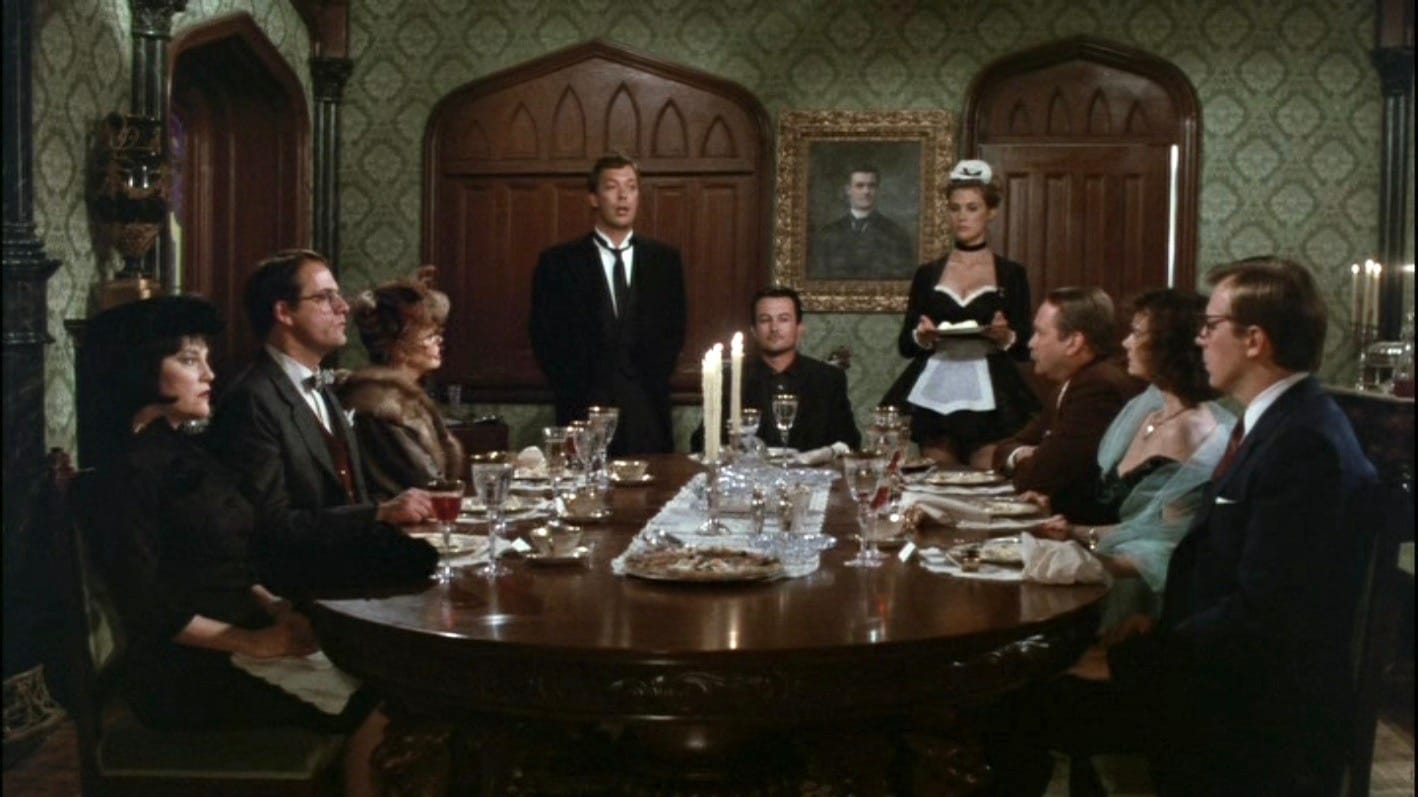
What kind of tensions are inherent to the reason for gathering together? Is it a holiday, with a mix of traditions and familial conflicts? Is it something that feels potentially casual, but builds meaning over time like a group of friends who meet every few months, or Sunday Night Dinner with the family? What if there's a celebration of some milestone or event that only happens once? Or what if it's a mystery?
Within these broader questions are the seeds of more specific stories. Pieces of April has the broader Thanksgiving framework, but focuses on the tension of an estranged daughter trying to cook the Turkey when her oven breaks down (and she attempts to borrow cooking time from other people in her apartment building). Miss Posabule considers the way the film's two through lines about imperfect meals and imperfect families tie together into an empathetic whole.
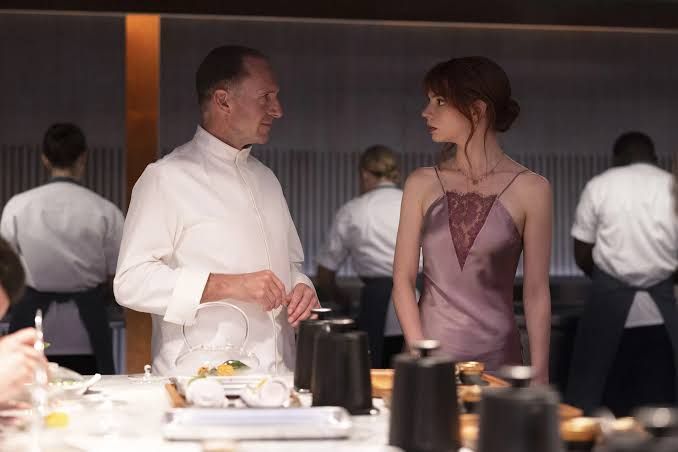
The Menu structures itself around an elite restaurant presenting a tasting menu from a celebrity chef, dividing the story into chapters based on the meal's courses. Within that structure, it focuses on a chef pushing back against the very forces that made him famous. What The Horror looks at the class war underpinning the narrative and how it relates to the culture around any art form with critics and fans who dissect every minor detail. Screenwriters Will Tracy and Seth Reiss take time with Alma Avalle to discuss how their direct observations of chefs and the world of fine dining gave them plenty of material to draw from when crafting the sumptuous satire.
There's a relatable, or at least legible, element to the event itself that helps guide an audience into the story. But then the writer needs to put some people in it.
Guest lists and seating arrangements
How well does everyone know each other? Is there an outlier who doesn't know anyone (or who knows more than anyone else)? Is this a tight knit group, or strangers brought together for the first time?
No matter how simple the menu, there's plenty of flavor to draw from the characters invited (or not at all invited) to join for the feast.
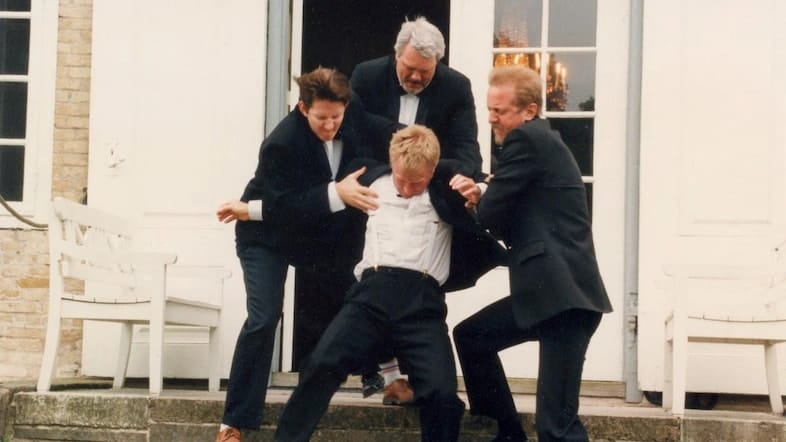
In Festen (The Celebration) the guests are all well-acquainted. It's a 60th birthday party for Helge, the family's patriarch, on their estate. All the guests are either relations or long time friends. Which makes it all the more devastating when the Christian announces to all assembled that his father Helge sexually abused Christian and his twin sister throughout their childhood. Michael Koresky highlights the juxtaposition between Helge's heinous crime and the casual pacing and shooting of the film as Helge and other guests encourage the party to continue after Christian's announcement. Brian K. Mahoney focuses on how the film allows for no neat confrontation to conclude the narrative, but instead focuses on the attempts to maintain decorum and the structure of the birthday weekend despite the great disparity in the stakes between getting justice for Christian and his sister versus having a nice party.
Are we going for more Emily Post, or Post-Apocalyptic?
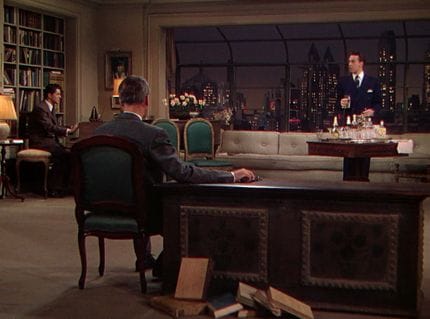
Based on the events of the party itself, the worst you might accuse the hosts of the dinner party in Rope is selecting impolite conversation topics. But, this being a Hitchcock film, the audience is aware through the entire meal that the two young men have killed one of their friends and have his body hidden in the room with all their guests. The opening scene lays it all out, that this is a murder as performance art, and the killers believe their manners and position will help cover their tracks.
Peter Dellolio explores the use of space in the story, and how having a single, unified interior to play out the story allows for ironic juxtapositions and different plot threads to trip over one another to keep up the tension for the audience (and the killers). Ruth Bushi looks at the true crime that inspired Rope's story, and also the way that dinner guest Rupert is implicated in the murder as well, since his philosophies lit the flame that drove Brandon and Philip to attempt an academically justifiable murder.
Luis Buñuel loved to ruin a dinner party with existential dread. Melissa Acker analyzes the repeated narrative interruptions and dream-within-fifteen-other-dreams structure of The Discreet Charm of the Bourgeoisie to suggest the film was not only critiquing the morals of an entitled, leisurely affluent class, but that the film attacked the stuffy traditions of narrative cinema itself. Tom Whittaker introduces a screening of the film, highlighting how the ordinariness of the screen craft and characters lulls the audience before the increasingly surreal interruptions take over.
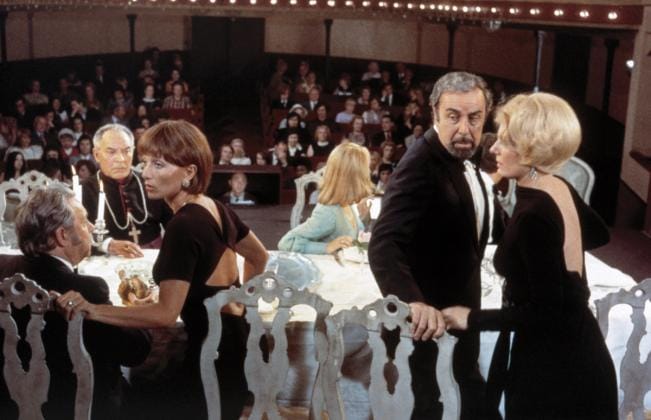
With The Exterminating Angel, Buñuel takes a dinner party full of guests and makes them believe it's impossible for them to leave the party. It's not an alien invasion or a dream or food poisoning. Just a feeling, that the only way to be safe is to not leave this one room. Chris Flackett looks at the breakdown of social order among the party guests as the party is never allowed to end. Marsha Kinder compares the dinner guests's and the audience's increasingly absurd attempts to find a logical reason for the guests' captivity.
The dinner party offers up an understood reason for people to gather together, and an order of expected events. But as these examples show, the benefit to a writer isn't about creating a quick and tangible checklist of beats. The familiarity and design creates opportunities for a writer to upend audience expectations and find ways to disrupt supposedly safe, comfortable, traditional spaces.
👋 Are you new here?
Inneresting is a weekly newsletter about writing and things that are interesting to writers. Subscribe now to get more Inneresting things sent to your inbox.
And if you can't wait until next week for more Inneresting, check out the Quote-Unquote Apps Blog where we keep previous issues and other posts about screenwriting and things interesting to screenwriters.
In case you missed it...
In the most clicked link from our last issue, Dimitri Vorontzov explains the four-act structure more commonly used in Chinese films, breaking it down step-by-step through a cat-and-mouse crime drama that gradually evolves into a survival story of two shipwrecked men.
What else is Inneresting?
- Jason Kottke on the unexpected emotions a half-used jar of paprika can dredge up after moving house.
- Cory Doctorow on how management requirements to use AI at work is a logical extension of the early days of workplace efficiency consultants: micromanaging how tasks are done to meet criteria someone who doesn't do the job themselves can understand.
- Tracy Durnell on how traditional jobs provide stable labels to provide other people and the larger job market, and how striking out on your own or working your own stitched together Frankenjob puts the onus on the individual to create an understandable explanation for others.
And that’s what’s inneresting this week!
Inneresting is edited by Chris Csont, with contributions from readers like you and the entire Quote-Unquote team.
Are you enjoying this newsletter?
📧 Forward it to a friend and suggest they check it out.
🔗 Share a link to this post on social media.
🗣 Have ideas for future topics (or just want to say hello)? Reach out to Chris via email at inneresting@johnaugust.com, Bluesky @ccsont.bsky.social, or Mastodon @ccsont@mastodon.art