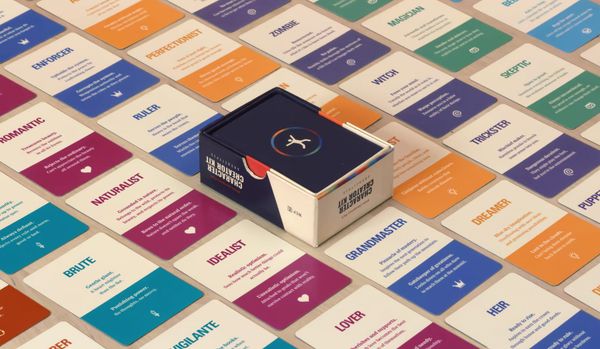
👤 #317 - Supporting Character Thinking
How can a character support the protagonist without seeming to know that's their only job in the story?


Are your protagonist's allies always ready to charge ahead with the main character's plans? Are they supportive, sympathetic to a fault, and even more on call than ER doctors? Are they calmly waiting for their next opportunity to be useful to someone else's dreams?
Then they might be doing some Supporting Character Thinking.
What can you do about it? Let's break it down into the different reasons why these people seem to be all support and no character.
Does the writer see them as a person?
"Being a main character is now about how much agentic power one has, whereas being an NPC is about the lack of such agentic power. To be a main character of one’s life now isn’t to make meaning, but to take control." This comes from Hannah Kim's examination of Main Character Syndrome.
Kim compares and combines worldviews based on narrative storytelling and gaming, looking at the way that labeling one's identity is both a form of giving meaning to actions as well as articulating a relationship with others. How a writer perceives these relationships in real life can inform what comes out on the page.
hannahhellhounddd performs a concise "POV the throwaway best friend character in every fanfic you read in middle school," giving an accurate and extreme version of when a writer uses a supporting character as a sounding board or enabler for a protagonist. It's recognizable not only of an immature writing style, but also an immature worldview still rooted in self-primacy and still-developing empathy.
Jack Perez expresses the idea as "characters that motivate the plot are more interesting than characters that serve the plot." When an audience can anticipate how a character is likely to act in a situation, it means they have a specific sense of who that character is and how they think. Identifiable specificity makes the difference between a cast of characters and a chorus following a protagonist.
Take it back to cinematic ur-text The Wizard of Oz. Who are Dorothy's supporting characters? They each have their own goal. Their goals, presentation, and behaviors define how the audience might anticipate them to act when pushed into a dangerous situation.
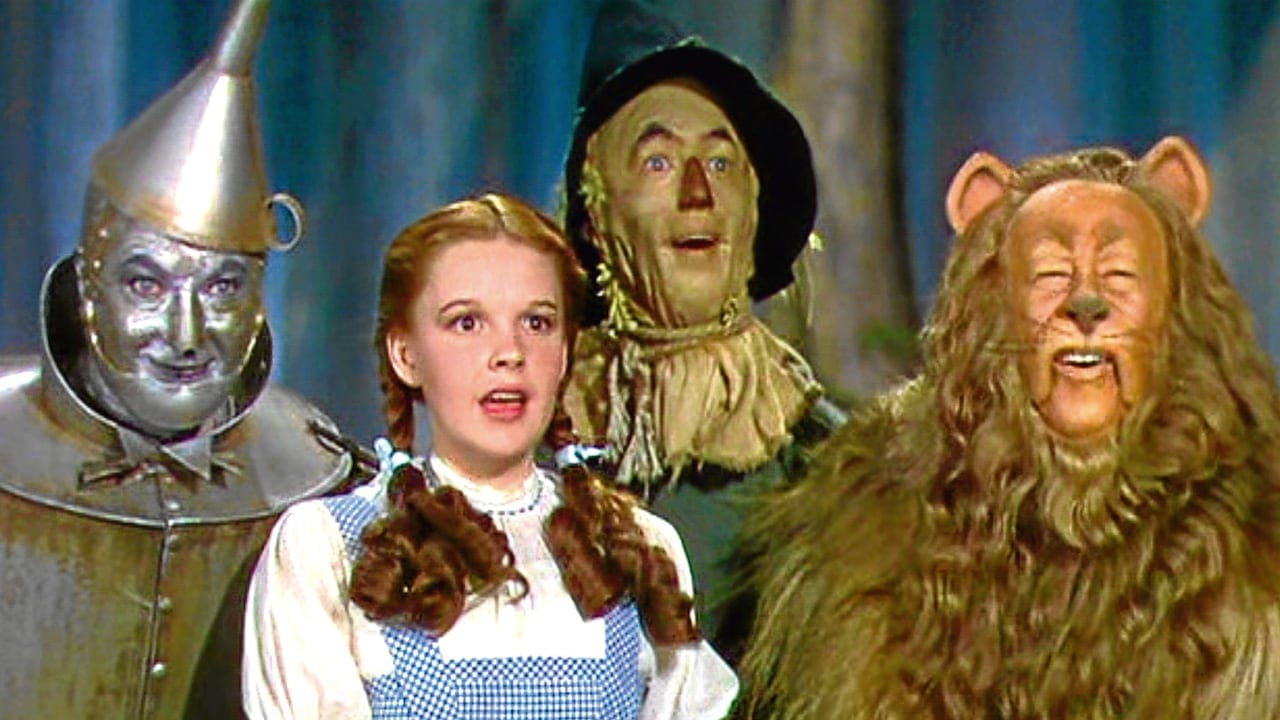
Giving supporting characters parallel goals and desires to the protagonist doesn't necessarily weaken the protagonist or diffuse the narrative momentum. Consider how inspiring allies shows a strength of leadership and reaffirms the value of a protagonist's goal.
Does the protagonist see them as a person?
I'm sorry. I'm so, so sorry... But we need to dip a toe into the SNL "Sister" sketch discourse.
The concept builds on an uncomfortably relatable imbalance in family responsibilities, highlighted when a doctor explains how internalized sexism creates Sister's motivation to take over care of an aging parent.
The audience is told she has her own life and responsibilities, but this is shown as dumping clothes into a suitcase and cutting off a flustered husband's comment. The sketch aligns with the detached and uninterested narrator/protagonist. He sees an aging parent as a collection of burdens, and a sister as a time-saving tool. He dehumanizes them into a standard medical commercial format of illness -> prescription -> relief.
He doesn't know much about her, so the audience also doesn't get to.
It's a sketch, so the amount of emotional investment isn't the same as if it were an episode of a show or a feature. These are generalized stand-ins representing a dynamic more than specific characters. It's also a highly condensed version of writing to suggest who the audience is meant to emotionally bond to.
Sister doesn't get to address the audience directly. All her dialogue is reactive to other people's needs, if she even gets to speak in the shot at all. Just about every line from the men calling in their sisters is smug and self-serving. Because it's all direct to the audience, has a conspiratorial feeling.
They're jerks. But they're jerks who get their perspective privileged in the telling.
Contrast this with Vanessa Bayer's series of commercial sketches for Totino's Pizza Rolls:
There's still the recognition of Bayer's character as someone whose internalized sexism puts them into a den mother role for her "hungry guys." She's playing a supporting role in their story.
But notice how she's allowed to address the viewer directly through her rictus grin. Each time the sketch comes up, there's a variation on how while she's seen as just a courier from the kitchen to the living room, her hungry guys are a uniform infantilized chorus, oblivious to anything other than the game and their hunger.
Each sketch plays with the uncomfortable gap between her agency and her objectification. While her own needs and desires may be invisible to her hungry guys, the audience is privy to a deeper understanding of who she is:
"Hi, my name's Sabine. What's your name?"
"I've never had one."
Whose story is being told? If a character treats others as a means to their goal, where does the writer show the audience the reality of that dynamic, or do they allow it to pass without comment? What moment gives the supporting character the dignity of specificity?
A protagonist can see other people in their story as extensions of themselves or helpers, but how should the audience understand that dynamic?
Bob Cratchit.
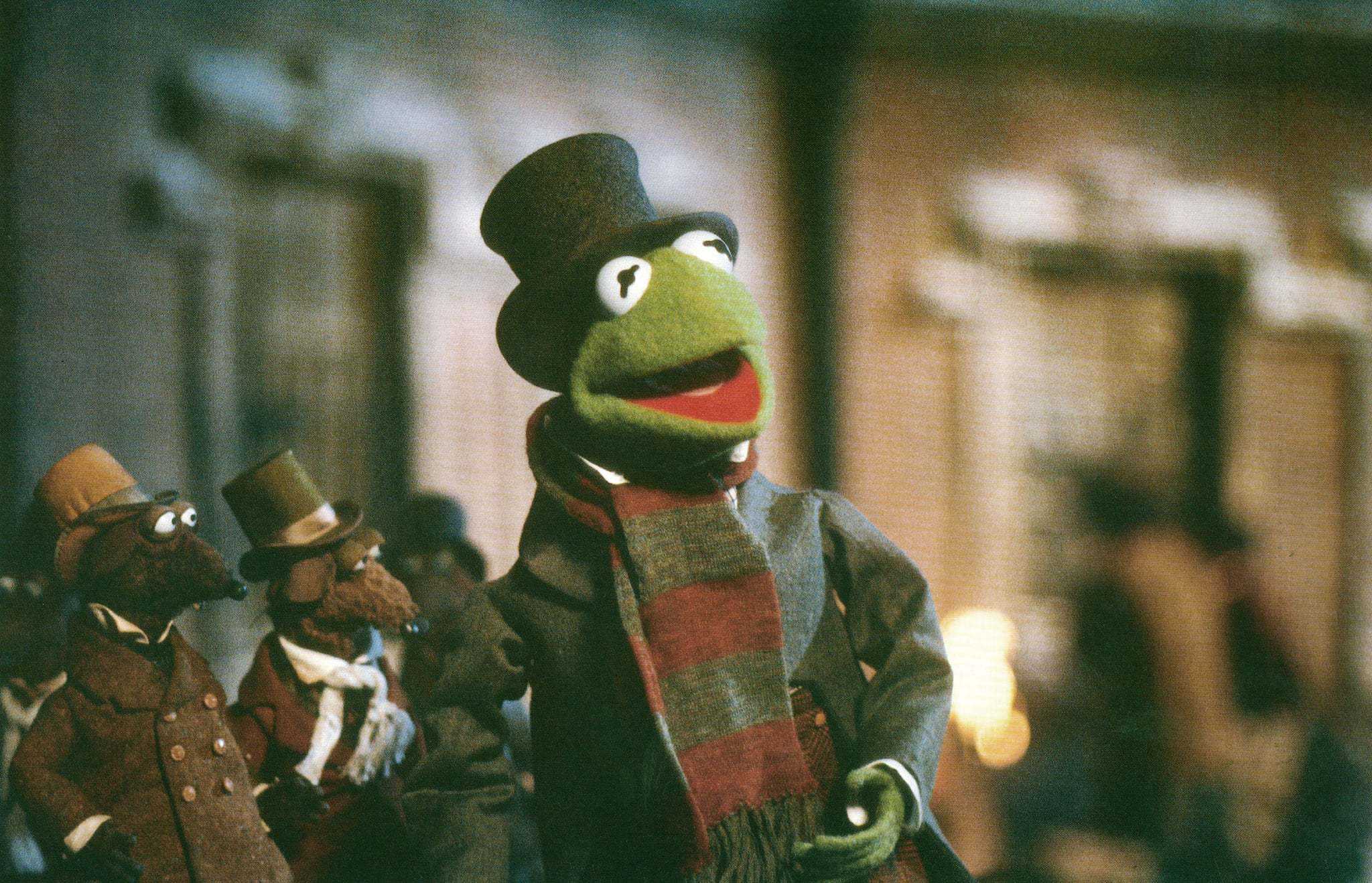
Ebeneezer Scrooge is the unquestioned protagonist of A Christmas Carol. So why do we need to know anything about bookkeeper Bob Cratchit?
Because the story would be worse for the omission.
The audience learns about Cratchit the same way that Scrooge does, and the details that humanize him for the audience also humanize him for Ebeneezer.
He has a family he cares for deeply, including a deeply ill son. He is a man of faith, applying that lens to his son's struggles. And what's more, he is not cynical about his employer or his lot in life. Toasting his employer as the "founder of the feast" when his family sits down to dinner is not an act of bitter sarcasm.
The story's goal is to rewrite Scrooge's worldview and remind him of the joy of connection, kindness, and respect for your fellow people. It lays out the details of Cratchit's life in such a way that it seems it should pain him to affirm that Scrooge deserves kindness. But he does so without hesitation.
This story isn't an op-ed suggesting that happy workers are more productive workers. It's not a droning sermon about the inherent dignity of each and every person in general. Bob Cratchit serves as a better tool for the story of Scrooge's redemption because he is not written merely as a means to that end.
Scrooge doesn't see Cratchit as a person until he does, and that mindset shift continues to rewrite his beliefs until Christmas morning.
Could anyone be a protagonist?
There's a moment near the end of Jurassic World between Control Room console operators Lowery and Vivian that undercuts not only a dramatic movie trope, but the idea that these two characters just exist as extras with dialogue:
It's a small moment between two tertiary characters, but it nods to their lives outside that room. Lowery's moment suggests that in his mind, he could be the protagonist of his own story.
But this is not that story, and the writer and audience understand that. The moment builds on the previous scenes between Lowery and Vivian, reinforcing this idea of a world full of people, not types or tools.
What about yourself? Do you make time for your needs and desires in the crevices between other people's demands, or have you given yourself permission to act like a protagonist?
Are YOU exhibiting Supporting Character Thinking?
If you're wavering in your answer, Derek Walcott's "Love after Love" might offer some comfort and direction:
You will love again the stranger who was your self.
👋 Are you new here?
Inneresting is a weekly newsletter about writing and things that are interesting to writers. Subscribe now to get more Inneresting things sent to your inbox.
And if you can't wait until next week for more Inneresting, check out the Quote-Unquote Apps Blog where we keep previous issues and other posts about screenwriting and things interesting to screenwriters.
In case you missed it...
In the most clicked link from our last issue, Bea Isaacson draws the connections between modern day thirst traps and the self-portraiture of artists such as Elisabeth Vigée Le Brun and Albrecht Dürer.
What else is Inneresting?
- We regularly find Patrick (H) Willems interesting, and with good reason. Make time for "How Did Interstellar Become Every Dude's Favorite Movie?" Featuring: The COVID-19 connection, permission structures for male tears, and how you may have misremembered Anne Hathaway's monologue.
- CJ Chilvers reminds us that clichés were the original AI slop.
- Adam Mastroianni considers the lack of data proving government interventions or philanthropic giving can actually change human behavior. It's a call for greater humility and continued effort instead of throwing up hands in surrender.
And that’s what’s inneresting this week!
Inneresting is edited by Chris Csont, with contributions from readers like you and the entire Quote-Unquote team.
Are you enjoying this newsletter?
📧 Forward it to a friend and suggest they check it out.
🔗 Share a link to this post on social media.
🗣 Have ideas for future topics (or just want to say hello)? Reach out to Chris via email at inneresting@johnaugust.com, Bluesky @ccsont.bsky.social, or Mastodon @ccsont@mastodon.art