Scriptnotes Recap: Ep. 738 - Building Your Audience with Courtney Kemp

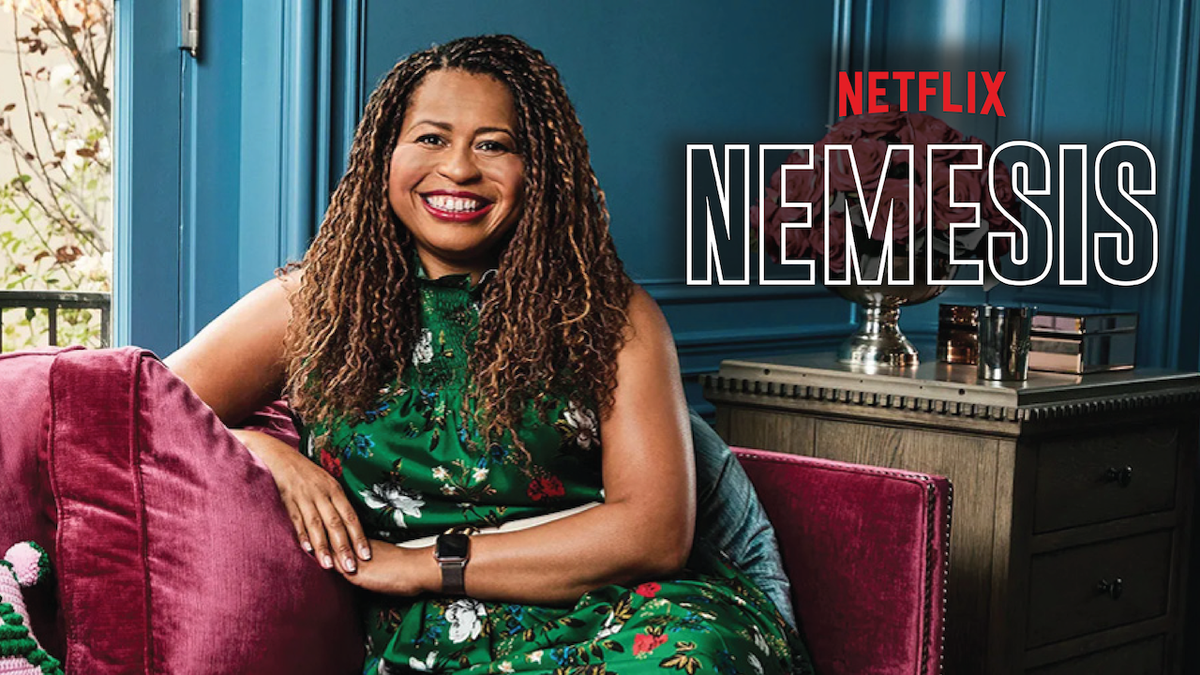
Courtney Kemp has the life, man. She created Power, one of TV's biggest franchises that solidified her as one of the industry's premiere showrunners. She co-created and ran Nemesis as part of her overall deal with Netflix, and now has a newer, shinier overall deal at AppleTV. She commands incredible respect within the entertainment industry, but miraculously, she is not yet a household name.
The general population is now aware of showrunners in a way they never used to be, especially with massive properties. Look no further than Craig with The Last of Us. Your parents can probably tell you who ran The White Lotus, Game of Thrones or Blackish. When I go for breakfast at Max & Helen's, there's inevitably someone in line who is a vocal Phil Rosenthal groupie. And that's not even touching the super-showrunners like Shonda Rhimes and Ryan Murphy. They're celebrities now, which is great for the broader awareness of writers in the filmmaking process, but also must be a pain in the ass for the showrunners themselves – if people don't like a storyline, they'll find you.
But for as ubiquitous as her properties are, Courtney Kemp has so far managed to sidestep this notoriety (although it's coming for her, I'm sure). She can make the biggest shows on television and still go to the store without getting mobbed. She can travel in peace. And as a result, she's remained incredibly down to earth.
Courtney's advice to writers was tangible, relatable, and felt like she always had your back. Here's some of my favorite moments:
What Writing TV Actually Teaches You
Courtney: I'm so grateful for my journey. My story has a lot of ups and downs, but I think the most important part of my story is that when I came out here, my first job was on The Bernie Mac Show. That was huge. Then I got fired. I got fired at the end of the season because I'm not funny. I really had to pivot.
My agent said to me, "Do you want to go in that direction, or do you want to write drama?" I was like, "I would much prefer to write drama." My favorite show was Law & Order. I was never supposed to be a comedy writer. I just was supposed to be a person who puts jokes in violent dramas. The reality is being fired was the best thing that could have happened for my career. I always try to tell young writers that. That's actually an important step, is figuring out what you should actually spend your time doing.
John: In Injustice and then on The Good Wife, what are the things you learned that helped you both as a staff writer and moving up those ranks?
Courtney: On Injustice, the showrunner of record was Jeff Melvoin. He taught me a lot about how really to run a show. The Kings, (Robert and Michelle King, showrunners of The Good Wife) in terms of story — that first year of The Good Wife, basically Julianna was in every scene. They had to figure out a way to not have her be in every scene but keep the story going. I learned how to create a proxy character, characters that kept the story going even if your main character wasn't in the scene. If you look at the first season of Power, Tommy, even though he's the best friend, he's also a proxy character. He's moving that forward.
That's a difference between a feature writer and a television writer — the television writer has to think about how many days a week is this person going to be working, and am I going to be able to give them a break? If they're in every scene, I can't actually shoot two scenes at once. Whereas in a feature, you can have one person in every scene.
In the first three seasons of The Good Wife, we would always have to build to, at the end of the third act, what is Alicia's dilemma? She has to make a decision, one way or the other, that's about her morality and her character. It was a way of having plot feed into character. That's something I learned from the Kings about how to structure an episode and then structure a season.
John: What did you learn about running a room?
Courtney: The biggest things I learned about running a room came from Greg Berlanti, the year I was on Eli Stone. I run the room like this to this day. We come in and we first start talking about scenes we want to see. What are the scenes we want to see this season? What are the scenes that are necessary? We start with that. Just a big board where there's no wrong answer. No one gets trashed, hurt, or judged because they come up with a bad idea. Then the other thing that Greg was very good about was a great idea can come from anyone. It does not matter who you are or what your title is. The best idea in the room wins no matter what.
John: How long is that blue sky, no bad ideas phase before you start breaking episodes?
Courtney: I do a good three or four days of that, but the writers know, come in with it. We're not going to just shoot the shit. We're going to come in with it. Once you get the scenes you want to see, and if it's a secondary season, you need to have, what do we owe the audience? That's another day. What do we owe them? Because we've already asked a question and we have to answer it. Once you get those down, you can start to actually structure your season. You can actually start to put those places, in what order. Now you start to thematically look at what is each episode.
Building the Power Franchise
John: Talk to me about the transition from you're on these shows, you're moving up the ranks, to "Okay, now let's have you do your own show."
Courtney: I was working with Andrew Miller, who was working with 50 Cent and with Mark Canton. They wanted to do a music-driven drama, but neither one of them really did TV. Andrew set me and Mark and 50 up on a creative date because I was really wanting to write in this Black exploitation space, and they really didn't know how to get into TV. Then this idea for Power — that lead character Ghost is a combination of my dad and 50. My father had just died prior to this. I was trying to figure out a way to write about him. That's where the idea was born.
John: You were staffed on one show, but you're creating another show. That balance is tough.
Courtney: It's so great to have employment. It doesn't matter. You figure it out. I was very lucky to be able to have a check.
John: Stars is such a weird case. It's just like, they make really good things that no one sees. Yet your show found an audience which not only brought it through the first season, but brought other spin-off varieties. You had not just a series, but a franchise.
Courtney: Stars was very much a mom-and-pop shop back then. It was just Carmi Zlotnik and Chris Albrecht, and whatever Chris wanted to put on, he just put on. It's not the layers of asking and begging and waiting that you have now with the streamers. It was just like, daddy likes what daddy likes. Taste has gone out of our business, but he had taste.
Our first season, we doubled our audience from the beginning to the end. Then we grew every year. We got bigger every year. By the time we were done with it, 50 very much wanted us to keep going. I was like, "We can't. There's no more story to tell." I feel, really importantly, get off the stage when you've nothing left to say. That's when the spin-offs started. I said to them, "I can't make more of this show, but I can make something else in this world." That's when those ideas of Ghost, Raising Kanan, and Force came up.
John: You were talking about Power and the frustration that people want to describe it as a Black show as a containment strategy. That's putting a lid on it and not recognizing the overall potential. How do you make sure a place sees the potential in it beyond just one audience?
Courtney: This idea that white people will not watch shows with Black people in it is so foolish. When I was growing up, everybody watched The Cosby Show. Everybody watched The Fresh Prince of Bel-Air. Everyone still watches Abbott Elementary. It's so foolish, and yet it's still there at the higher levels of conversation at the streamers. Human beings have so much more in common than they do in terms of difference. I was told the reason a certain place would not make Power was that it would only appeal in America. The experience of Nemesis obviously shows that's not true.
Advice for New Writers
John: If you were to arrive in Los Angeles now as a 26-year-old getting started, what would you do first?
Courtney: If I were under 30, I would make a 5-episode series with 8 minutes for each episode that I would shoot myself or with some friends. Not make it just about our fun lives, but about a specific story that you can tell in those 5 episodes. I would make that, edit it, make it tight, put it on YouTube, have all my friends who were in it post about it, and get it so that people start to see it. Then I would get my specs together: a couple of spec episodes of existing shows, two pilot episodes, and one short story. I'd have my writing, but I would shoot something that was working for me while I was sleeping, because that's the thing we couldn't do. Our scripts did the work, but now you've got a phone. You can make a show, so make it. That's the Issa Rae model. She made Awkward Black Girl, and then we got Insecure.
John: You said people should write spec episodes of existing shows, which is not a thing I hear a lot about anymore. Do you like to read specs of existing shows as you're staffing?
Courtney: I only read specs of existing shows as I'm staffing. I do not read your pilot. Because I'm not hiring you to come in and write your pilot over again. I'm hiring you to come in and ape the voice of the show. If you can ape somebody else's voice, you can do the math of going, "This is what one character would say that another character wouldn't say." I always say to young writers, "You should be able to cover the character name, and by what the line of dialogue is, I should be able to know which character said it." If I don't, then you didn't make it specific enough. You haven't drilled down into your characterization enough.
When you read a weak pilot from a young writer, it's not their fault. They just don't have the 10,000 hours. When you read a great spec script from a young person, you know they studied the show. I got hired by Greg off of a spec Grey's Anatomy. I really believe in them still to this day.
Listen to the full episode on Scriptnotes or wherever you get your podcasts!
The full transcript is available at johnaugust.com