⚠️ #300 - I'm in danger.
For our 300th issue, we're feeling the fear and writing about it anyway. We're looking at examples of the moment a character realizes that they're in trouble.

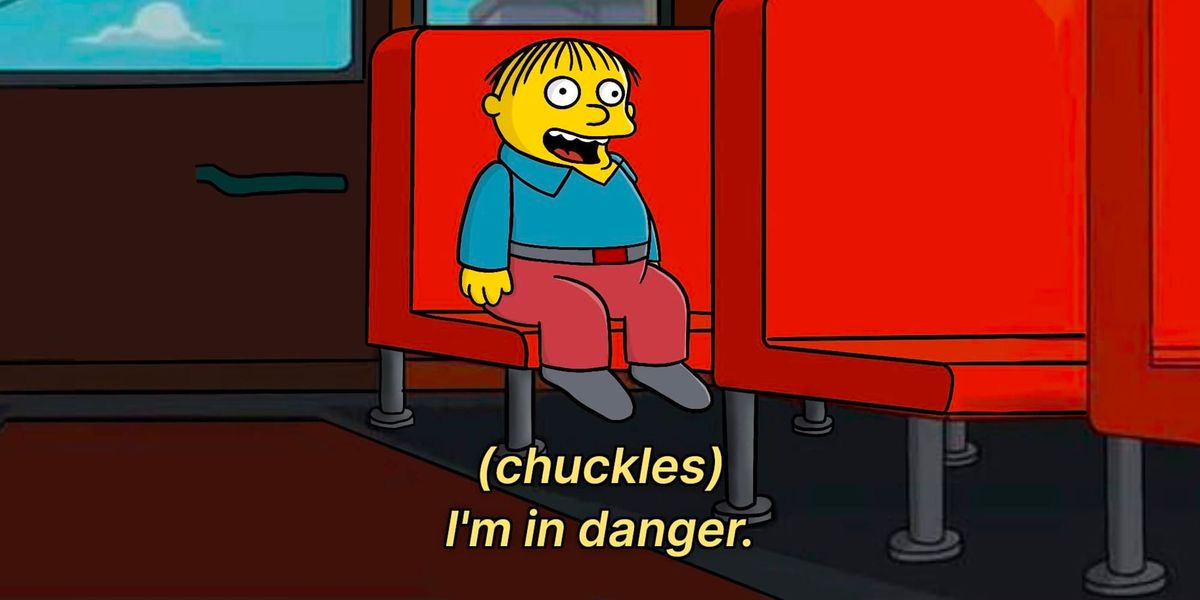
You know that look. The moment a character understands that they are in trouble, and there may not be anything they can do about it. The moment fear truly kicks in.
What fear actually feels like, and how it's caused can give writers a way to create a more nuanced take on how characters respond to it. Brianna Hoge offers a layperson-friendly explanation of the chemistry going on inside our bodies when we feel fear. The Saskatchewan Science Centre breaks down how the brain processes stimuli that prompt a fear response, as well as the positive and negative aspects of when a person feels fear.
Let's see some of this in action. Take a look at this scene from Dracula:
The scene itself creates moments of release for Renfield's fear, but creates tension for the audience since they know more than the character.
It's a spooky, dilapidated castle at night, and Renfield's alone. He's afraid, and so is the audience. Then, Count Dracula appears at the top of the stairs. Renfield feels relief, because he sees the person he's supposed to meet. But there's no relief for the audience, because even if they're not genre savvy, the title of the film gives a pretty big hint that this guy is hiding something behind his hospitality.
This dance continues throughout the scene, with Renfield finding more reasons to fear for his safety, and Dracula brushing the concerns aside. It highlights an important dynamic for the fearful character: frequently a character will deny the danger they're in, because they're uncertain, or have some other compelling reason to not run back out the way they came.
If Renfield can't be completely safe, he at least wants to feel safe. There's a dark humor to the situation.
Also playing off of the audience's awareness of shifting tones, Lancelloti dissects the cinematic and writing techniques behind Weapons, and how it keeps the audience off-balance by mixing in comedy with the horror (and how making Aunt Gladys a comedic presence makes her unpredictable).
That (too) slow realization
Here's a scene from Pearl where the Projectionist attempts to give Pearl the brush off:
It's a scene full of daylight and bright colors. The Projectionist feels safe in his power over the situation to blow off Pearl's affections and walk away. But there are levels of discomfort for him that turn into fear as Pearl ratchets up the tension and confronts him.
He pulls himself inward, then shows exasperation, and as Pearl starts to yell at him, his hands go up in an unconscious defensive posture, and then he makes his getaway. Just not fast enough.
The Projectionist knows this is a tense situation, and he chooses to flee. But it's not until Pearl's right up next to his car screaming in his face that we see the full recognition of fear (coming a second before the recognition of a pitchfork through his chest).
He sees Pearl as meek and easily manipulated. Like how Renfield was willing to be convinced that he wasn't in danger, the Projectionist keeps trying to affirm that he's the one in this relationship with all the power.
But it's not always a mortal wound that brings in the reality check for a character denying their fear. In this scene from Get Out, Chris still catches on to the danger too late, but he shows that he's put the pieces together and understands the situation:
Asking Rose for the keys is that one lifeline Chris feels to safety. The belief that the keys are a means to reach safety. He gets increasingly frantic asking for them as the strangeness from the other characters builds up and closes in on him.
But look at the beat when he stops asking Rose to give him the keys and changes tone, asking her "Rose, where are the keys?" Chris clocks that the one ally he thought he had was never on his side at all.
This undercutting of an existing relationship creates a powerful moment of fear for both the character and the audience. His options have narrowed from one way out to no way out. The deliberate pacing of that realization makes it feel less like a gate slamming shut than a door creaking shut and a deadbolt locking.
Takeaways
- Is Pepsi okay? When you can't offer your characters actual safety and security, what might feed their sense of security and prevent them from acting? What gives them that sensation of control or calm that sets up the rug pull to come?
- What (or who) they think they know. People acquire fears through experience and learning. Are there ways to take something a character has learned not to be afraid of and twist that expectation? Are there other fears a character might hold that distract them from the real danger of a situation?
- Fear is a process. Thinking about the chemical reactions and parts of the body that react when someone experiences fear, it's not like flipping a switch. When does a character start to have their Spidey Sense kick in that something is wrong? How will that change their behavior and make it harder for them to stay in control of a situation, or at least appear calm?
👋 Are you new here?
Inneresting is a weekly newsletter about writing and things that are interesting to writers. Subscribe now to get more Inneresting things sent to your inbox.
And if you can't wait until next week for more Inneresting, check out the Quote-Unquote Apps Blog where we keep previous issues and other posts about screenwriting and things interesting to screenwriters.
In case you missed it...
In the most clicked link from our last issue, Chris Sparling shares how using specific goals to limit his scope when writing Buried took him from the desire to write something small enough that he could produce it himself to creating a terrifyingly claustrophobic film.
What else is Inneresting?
- Austin Kleon shares some funk music theory that resonates beyond bass riffs: If you always give us the 1, you can do whatever you want in-between.
- Liz Leatrice eulogizes the interesting, varied lives of people now resigned to spend their day moving from screen to screen and sharing how well they can reach for other people’s dreams.
- Neely Tucker traces how Eliza Hamilton’s copy of The Federalist essays made its way to Thomas Jefferson’s personal library.
And that’s what’s inneresting this week!
Inneresting is edited by Chris Csont, with contributions from readers like you and the entire Quote-Unquote team.
Are you enjoying this newsletter?
📧 Forward it to a friend and suggest they check it out.
🔗 Share a link to this post on social media.
🗣 Have ideas for future topics (or just want to say hello)? Reach out to Chris via email at inneresting@johnaugust.com, Bluesky @ccsont.bsky.social, or Mastodon @ccsont@mastodon.art